Biography
Parmenas
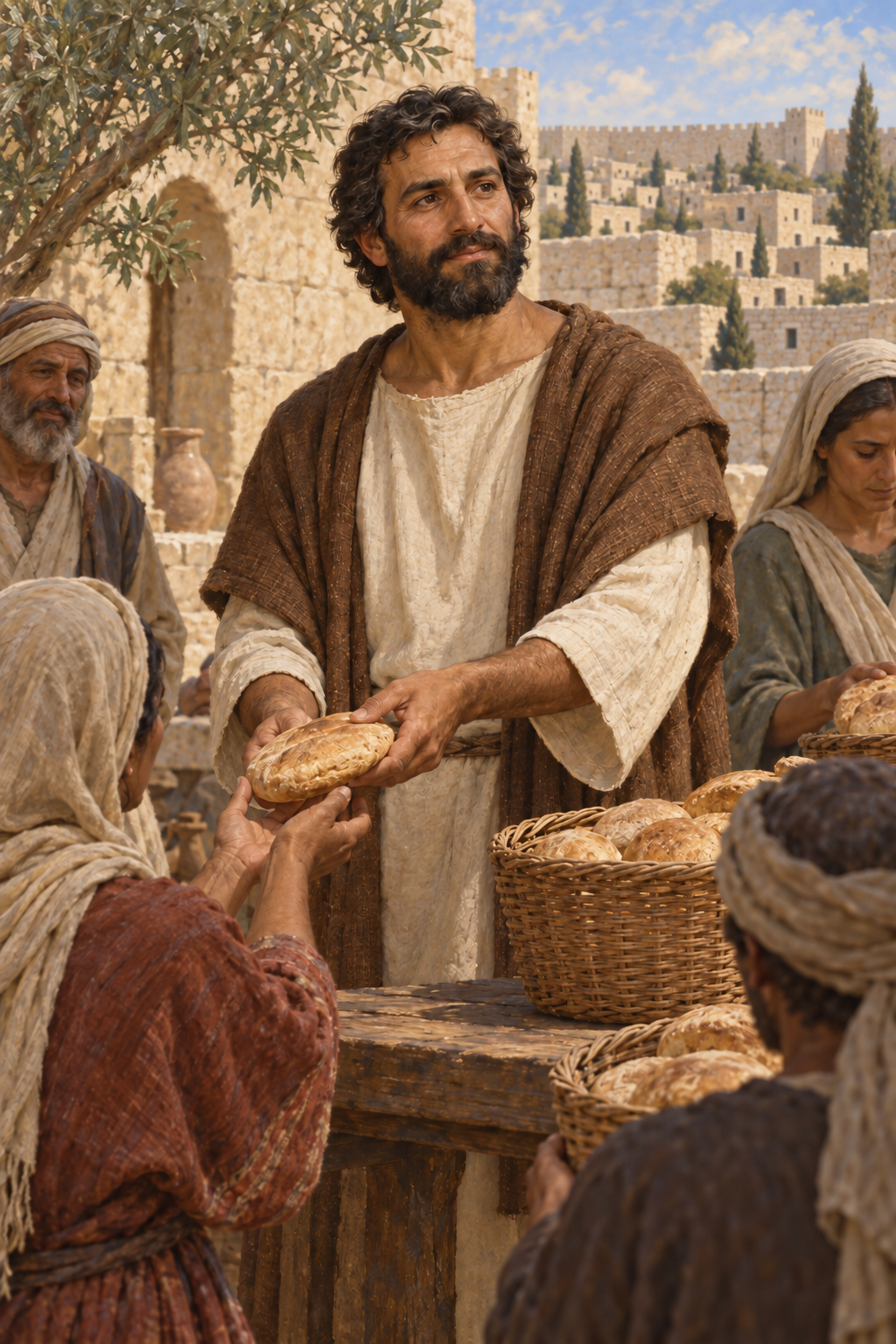
About Parmenas
Parmenas appears by name in the Acts of the Apostles, in a brief account of a problem within the first Jerusalem Christian community. As the group grew, Greek-speaking members complained that their widows were being overlooked in the daily distribution. The Twelve asked the community to choose seven reputable people for this work so that they could concentrate on prayer and teaching. Parmenas is named with Stephen, Philip, Prochorus, Nicanor, Timon, and Nicholas. Acts then says the seven were presented to the apostles, who prayed and laid hands on them. This passage establishes his place among the chosen seven. It says nothing about his age, family, birthplace, or individual words at that gathering.The work assigned to the Seven is often described as serving food, but the USCCB's notes explain that the passage may also concern administering the accounts for distribution. More importantly, Acts does not go on to show Parmenas personally carrying out the task. Its later narrative focuses on Stephen and Philip. A biography can therefore explain the group's purpose without inventing a scene of Parmenas visiting a particular widow or preaching at a particular place. Christians later came to call these seven the first deacons. An academic study of the passage's reception notes that this formal identification developed in early interpretation; Acts itself does not call Parmenas by that title. The title remains meaningful as church tradition when its source is clear.Later traditions supply more about Parmenas, but they do not agree. An older Roman martyrology remembers him on January 23 at Philippi in Macedonia and says he died as a martyr under Trajan. The Orthodox Church in America commemorates him on July 28 with Prochorus, Nicanor, and Timon. Its life says he preached in Macedonia and died after an illness, while acknowledging that some accounts instead describe martyrdom under Trajan. Illness and martyrdom cannot be converted into one verified event. The martyrology is a witness to later remembrance, not an eyewitness account of his death. No exact death year or place is secure enough for the catalog's structured fields.The calendar dates themselves have different homes: January 23 in the Roman martyrology and July 28 in the Orthodox commemoration of four members of the Seven. Neither date is demonstrated in Acts as the day Parmenas died. Nor does the title “Apostle of the Seventy,” used in some Orthodox liturgical accounts, add a separate New Testament biography for him. Acts is the earliest text that names him, and it keeps him within a collective response to an inequity affecting widows. That emphasis is worth preserving. The community saw a need, selected seven trusted people, and prayed over them. For Parmenas personally, what followed is mostly beyond the surviving early record. His page should hold that clear beginning together with the differing later traditions without disguising their uncertainty.
Wondering how to weigh the stories and sources? Learn how to read a saint biography.