Biography
Paschal Baylon
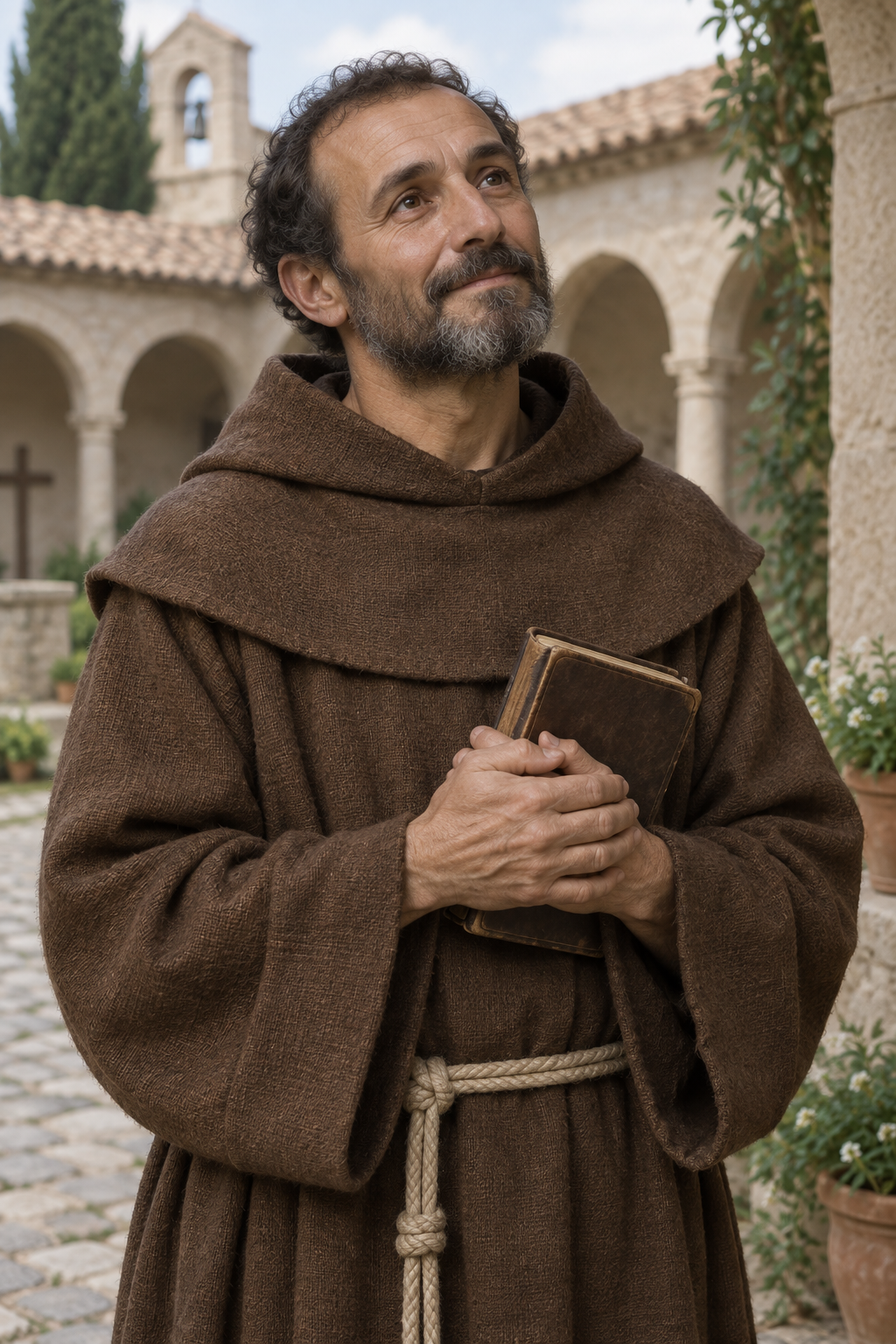
About Paschal Baylon
Paschal Baylon grew up in a poor family in Aragon, in northeastern Spain. The Friars Minor date his birth to May 16, 1540, at Torre Hermosa. He worked with sheep while still young. Later Franciscan memory links those years of outdoor labor with a habit of prayer that stayed with him after he entered religious life.
At about eighteen Paschal became acquainted with reforming Franciscans near Monforte del Cid. The account says he hoped to join them but was initially not admitted. He continued to work as a shepherd and spent time near their friary. His path into community life was gradual, shaped by work, waiting, and continued contact with the friars rather than an immediate change of status.
He received the Franciscan habit in 1564 and professed the following year. He remained a lay brother rather than becoming a priest. At Orito and other friaries he undertook tasks such as serving at the door and caring for visitors. These were visible points of contact between a religious house and people who came to it for help or counsel.
Paschal became known for devotion to the Eucharist. Franciscan accounts describe long periods of prayer before the Blessed Sacrament and an interest in explaining its meaning. His spirituality did not remove him from daily service; the order’s account also stresses care for fellow friars and people who knocked at the friary door. That combination of ordinary work and sustained prayer is the clearest recurring theme in the surviving institutional biographies.
In 1576 his superiors sent him toward Paris on business for the order. The trip crossed a France divided by Catholic and Calvinist conflict. Franciscan accounts say he faced insults and threats, especially during discussion of the Eucharist at Orléans. The broad fact of the journey can be reported while details of every encounter remain dependent on later biographies.
After returning, Paschal assembled brief writings about the Eucharist. The Holy See’s biography also links his writing to the teaching on Christ’s presence in bread and wine. These works help explain why later admirers called attention to his theological interest despite his limited formal schooling. Their importance lies in showing what the brother chose to study and share, without needing to treat every reported ecstatic experience as documented fact.
Paschal spent his final years at Villarreal, near Valencia, still engaged in the work of the friary. The Friars Minor date his death to May 17, 1592. The Dicastery for the Causes of Saints agrees on that day, while some Franciscan summaries give differing days for his birth or death. The structured dates here follow the Order of Friars Minor and the Holy See’s current biographical account.
Pope Paul V beatified Paschal in 1618, and Pope Alexander VIII canonized him in 1690. Leo XIII named him patron of Eucharistic works and congresses in 1897. He is commemorated on May 17. The public legacy of this lay brother rests in the connection of humble community service, prayer, and Eucharistic teaching.
Wondering how to weigh the stories and sources? Learn how to read a saint biography.