Biography
Pauli Murray
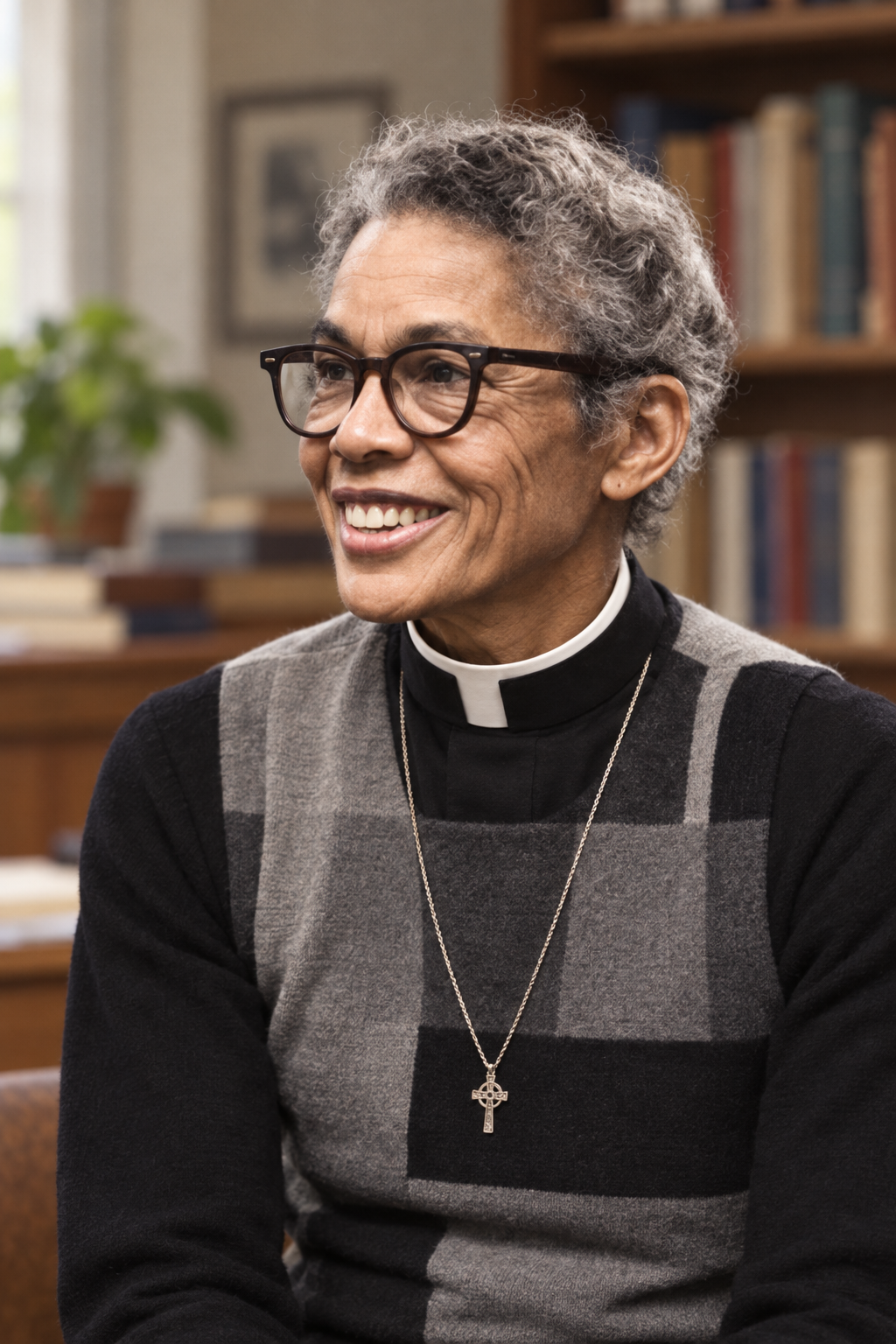
About Pauli Murray
Pauli Murray was an American lawyer, writer, and Episcopal priest whose work confronted racial discrimination and the exclusion of women. Born in Baltimore on November 20, 1910, Murray grew up largely with family in Durham, North Carolina, after their mother died in 1914. Their aunt Pauline and maternal grandparents helped raise them. Murray moved to New York after high school and graduated from Hunter College in 1933, supporting their education through paid work. The combination of study, employment, and financial difficulty accompanied the beginnings of a public life as a writer and activist.
The boundaries Murray challenged were also deeply personal. The Pauli Murray Center documents private writings that questioned the gender assigned to Murray, together with requests for medical examination and hormone treatment. Other writings, particularly later ones, used female pronouns and described Murray as a woman. The Center therefore cautions against claiming certainty about how Murray would identify today. These records should neither be erased nor forced into a single modern label. They reveal a person seeking language and recognition in circumstances where the available categories did not consistently express their experience.
In 1938, Murray challenged exclusion from graduate study at the University of North Carolina. Two years later, refusal to accept segregated seating on a Virginia bus led to arrest. The campaign to save Odell Waller, a Black sharecropper condemned to death, then brought Murray into contact with lawyers who encouraged further study. Murray entered Howard University’s law school in 1941 and graduated at the head of the class in 1944. Harvard nevertheless denied admission because it did not admit women; graduate study at Berkeley followed instead.
Murray connected forms of discrimination that institutions often treated separately. The phrase Jane Crow named the combined racial and sexual barriers faced by Black women. With Mary Eastwood, Murray examined sex discrimination in a law review article that later influenced Ruth Bader Ginsburg. Murray earned Yale’s doctorate in juridical science in 1965 and helped found the National Organization for Women the following year. These achievements belonged to an effort to make legal protections reach people excluded by more than one hierarchy.
Writing remained part of that effort. States’ Laws on Race and Color brought together discriminatory laws, while Proud Shoes explored Murray’s family history. Work took Murray to a New York law firm and then to Ghana, where they taught law. Later, at Brandeis, Murray taught in American studies before leaving academic employment for seminary in 1973. The move redirected a long concern with justice toward ordained ministry.
Murray’s own account of that change gives grief a central place. In an interview preserved by the American Archive of Public Broadcasting, Murray recalled caring for Irene Barlow during her final illness in 1973. Reading prayers and helping with the practical responsibilities of dying brought Murray face to face with their own mortality. The experience prompted a question about how to spend the remaining years of life and led to consultation with a bishop. The interview presents this as a religious call that demanded discernment, rather than a straightforward professional decision.
That calling also grew from earlier work within the church. Murray recalled urging a parish to give women fuller roles in worship and leadership, joining protests against exclusion, and serving on a church commission considering ministry. In the same interview, Murray linked the pulpit with a commitment to nonviolent action and the moral dimensions of public disputes. The priesthood offered a place to speak from faith about concerns that had already animated decades of legal and political work.
At General Theological Seminary, Murray examined Black theology and feminist theology in a comparative thesis. A copy of Dark Testament in the seminary’s library preserves a revealing inscription to Bishop Paul Moore from Christmas 1973: Murray hoped that he might eventually be able to ordain them.
Ordained a priest in 1977, Murray served Episcopal congregations in Washington, Baltimore, and Pittsburgh. The contemporary Episcopal News Service obituary records work at St. Stephen and the Incarnation and the Church of the Atonement in Washington, Holy Nativity in Baltimore, and Holy Cross in Pittsburgh. Murray died at home in Pittsburgh on July 1, 1985, aged seventy-four. The obituary remembered both the priestly ministry and the earlier work in law, education, and civil rights, rather than treating these as disconnected lives.
In 2022, the seminary honored Murray posthumously and acknowledged the racism and sexism encountered there. Former classmates recalled concentrated intellectual and spiritual work, while a chaplain remembered the continuing encouragement of Murray’s legal insight and devotion. These recollections describe a ministry that remained influential beyond its brief duration. The award was the first given posthumously in the seminary’s distinguished alumni program. Its presentation brought together classmates and others who knew Murray, making remembrance an occasion for examining the institution’s own responsibilities.
The Episcopal Church commemorates Murray on July 1.
Wondering how to weigh the stories and sources? Learn how to read a saint biography.