Biography
Pedro Arbués
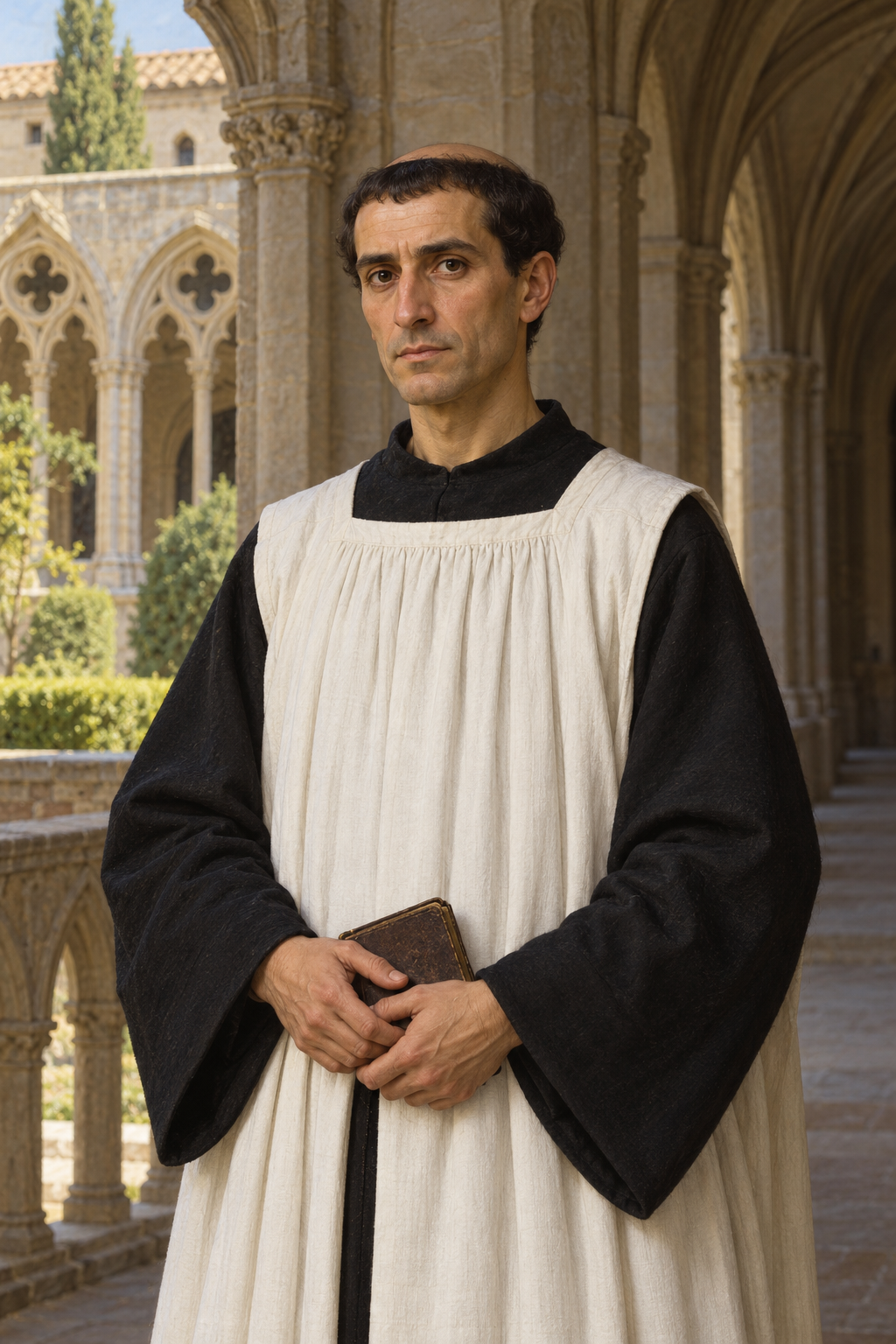
About Pedro Arbués
Pedro Arbués was a canon of La Seo in Zaragoza and an inquisitor in the kingdom of Aragón. He came from Épila and studied at the Spanish College of Saint Clement in Bologna. The cathedral community to which he belonged followed the Rule of Saint Augustine. His later recognition as a saint grew from devotion to him after his murder, while his inquisitorial office remained inseparable from the disputes surrounding his life and memory.
His formation combined philosophical and theological study. The Catholic Encyclopedia describes his graduation at Bologna and his return to Spain as a canon regular. Its early twentieth-century account emphasizes learning and piety, interpreting the later conflict from a strongly defensive Catholic position. It identifies Tomás de Torquemada as the official who appointed him inquisitor in Aragón in 1484. The office placed a member of the cathedral community within the expanding tribunal established under Ferdinand and Isabella.
His work also touched the practical provision of books for worship. Miguel Ángel Pallarés Jiménez identifies Arbués among the archdiocesan representatives involved in a printing agreement with Pablo Hurus in August 1484. The project addressed a shortage of missals, whose manuscript production was expensive. The ecclesiastical authorities promised exclusivity and purchases of the copies they needed, rather than directly paying the printer’s production costs. The resulting missal appeared in 1485. This documented transaction places Arbués within the early use of printing by the church in Zaragoza, alongside the judicial activity for which he became better known.
The surviving records do not present a uniformly admiring picture. Asunción Blasco Martínez discusses a complaint made by Domingo Bivián, a cathedral priest, in 1477. Bivián accused Arbués, then viceprior, of unjustified punishments and insulting language, including harsh treatment while he was ill. He asked the prior to intervene and threatened further legal action. Blasco could not establish how the disagreement ended. The complaint records an accusation by a colleague, not an adjudicated finding.
The same study records four proceedings initiated during Arbués’s brief inquisitorial tenure and two public acts of sentencing arising from earlier cases. Those acts included confiscations and death sentences. The distinction between older cases and proceedings he initiated matters, but it does not remove his office from the tribunal’s coercive work. The institutional setting included punishments that affected property, liberty and life.
Opposition to the new tribunal extended beyond religious disagreement. Historian Eliseo Serrano Martín describes resistance among converts of Jewish ancestry and defenders of Aragón’s laws, who regarded the institution as a violation of the kingdom’s legal protections. At Teruel, resistance to receiving inquisitors ended after excommunication of magistrates and royal military pressure. Within that conflict, Arbués became a target. He was attacked while attending prayer in La Seo, despite protective clothing worn beneath his habit. The wounds proved fatal in September 1485.
His murder brought further violence. Serrano records executions and repression reaching prominent families of converts, beyond the men who entered the cathedral. Some defendants were executed with particular cruelty; others were condemned in their absence. The response strengthened the tribunal rather than defeating it. Remembering the murdered canon therefore also requires acknowledging the suffering that followed his death, including the collective suspicion directed toward people of Jewish ancestry.
Art helped shape his reputation as a martyr. Michael Scholz-Hänsel traces representations from the years soon after the murder through the campaigns for official recognition. His study argues that the Inquisition influenced the images commissioned in its service. Later paintings could idealize the victim while making his attackers appear monstrous. Such works are evidence of how devotion and institutional propaganda developed; they cannot be read as neutral pictures of the historical encounter.
Scholz-Hänsel also places the seventeenth-century campaign within changing church rules governing images and unofficial cults. The promotion of Arbués continued through biographies, prints and paintings. His case linked a local shrine with the wider effort of an institution to establish one of its members as a recognized martyr. The history of those representations helps explain why his memory has remained contested as well as venerated.
The restrictions included a prohibition on displaying images of people whose cult had not received official approval. Yet representations of Arbués had circulated long before his recognition. Scholz-Hänsel describes the print by Pedro de Villafranca that influenced Murillo’s painting, placing this familiar image within an organized campaign to promote the inquisitor.
Pius IX canonized him in 1867.
The Archdiocese of Zaragoza names him as patron of Épila and Aguilón and records a parish dedicated to him in Zaragoza.
He is also patron of the Aragonese cathedral chapters.
His feast continues on September 17. A diocesan notice for 2021 announced a solemn Mass at La Seo, presided over by the archbishop, with the cathedral’s choir school participating. The celebration preserves a local liturgical remembrance alongside the historical questions raised by his career.
Wondering how to weigh the stories and sources? Learn how to read a saint biography.