Biography
Pedro Ortiz de Zárate
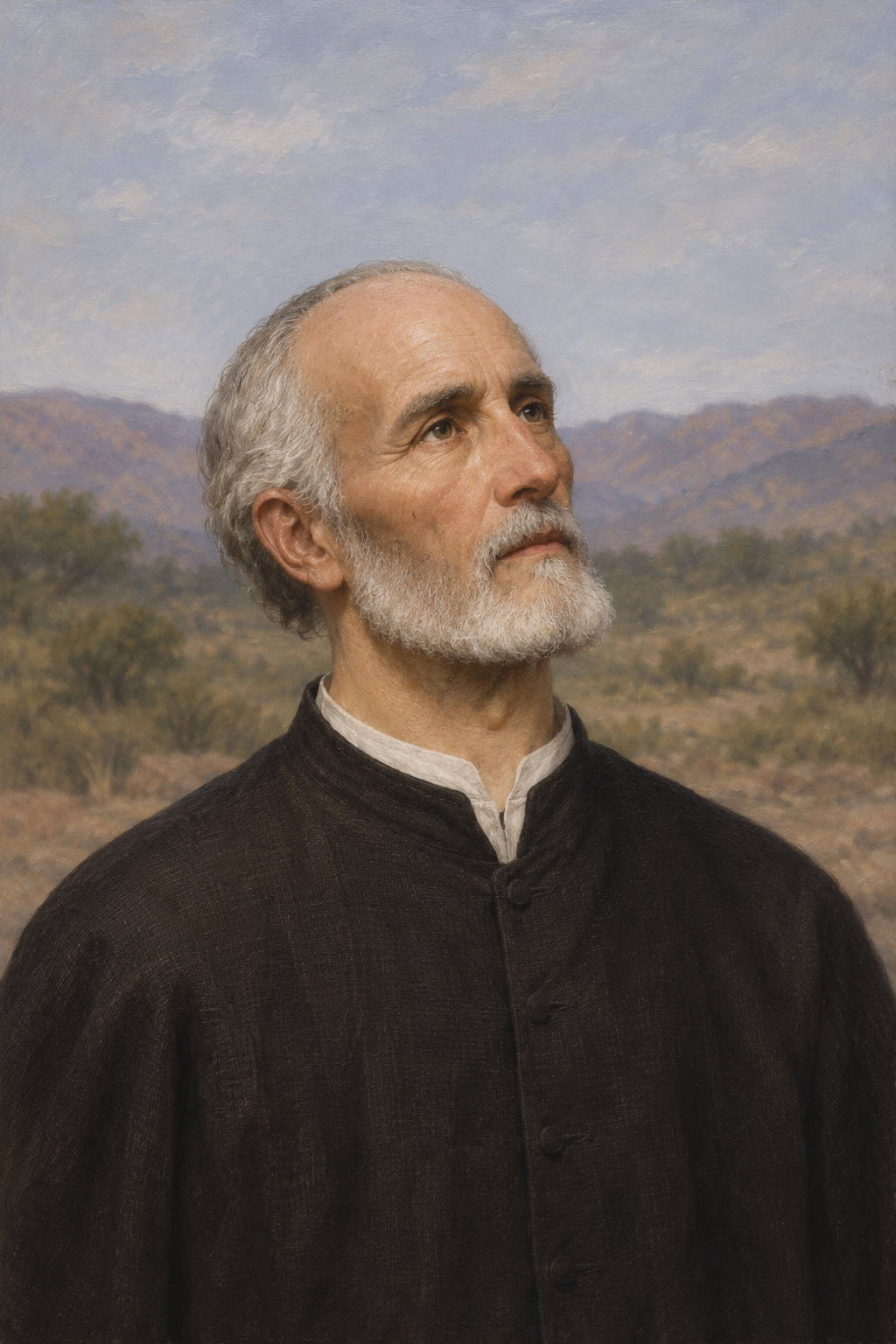
About Pedro Ortiz de Zárate
Pedro Ortiz de Zárate passed through different responsibilities before the mission for which he is remembered. He belonged to a prominent family in San Salvador de Jujuy, held civil office, married and became the father of two sons. Only after his wife’s death did he enter the priesthood. Historian Guillermo Ezequiel Méndez places this life within a colonial society marked by family rivalries, substantial inherited property and conflict over the treatment of Indigenous people. His position gave him influence, but also tied him to the institutions of that society.
His father, Juan Ochoa de Zárate, held an encomienda, and Pedro inherited both property and authority over Indigenous communities. Barriola’s historical summary describes the abuses associated with compulsory labor and the disputes they caused within the region. This background is essential to his story. He was not an outsider arriving without connections to colonial power, but a landholder and public figure whose later mission developed amid the tensions of the system to which his family belonged.
The chronology of his earliest years is less secure than some brief biographies suggest. Méndez discusses competing birth years in earlier histories, preferring 1622 while noting alternatives. Later church documentation supplies a different date. His marriage to Petronila de Ibarra linked families that had long been rivals. They had two children before her death, after which he entrusted the boys to their maternal grandmother and prepared for ordination. The surviving accounts give a clearer outline of these changes than a single uncontested date for his birth.
As a priest, he served first in the Humahuaca area and then at Jujuy. The official Catholic account remembers his attention to prayer, worship and sacramental ministry, his assistance to sick and poor people and his use of personal resources for chapels. Travelling considerable distances belonged to parish care in this region. These duties continued through many years before the final expedition to the Chaco.
A report by Bishop Nicolás de Ulloa, quoted in Barriola’s summary, offers a contemporary view of this work. The bishop described seeing Ortiz de Zárate personally helping to build chapels, including outside his own parish territory. He praised the condition of the Jujuy church and noted that its furnishings had been purchased from the priest’s resources. The report also recalls his wish to retire to a secluded chapel, and the desire to retain his example in the city. This is a published excerpt from the report; its archival original has not been inspected here.
The later bishop of Jujuy, César Daniel Fernández, recalled his care for liturgy, music and singing, alongside help for poor and sick people. His 2022 thanksgiving homily presented the successive responsibilities of husband, father, public official and priest as parts of one life of service. It also remembered his determination to organize a mission to the Chaco, using his own means and seeking other priests and lay collaborators. This religious interpretation preserves the breadth of his earlier life, rather than beginning his story only with his death.
Fernández’s homily also emphasized a present responsibility: building friendship across social divisions. He proposed Ortiz de Zárate as an example to people in different walks of life, connecting the remembered work of a colonial priest with a call for dignity and cooperation in contemporary Jujuy.
The expedition left in 1683 with Jesuit priests Giovanni Antonio Solinas and Diego Ruiz and a larger group of companions. Ortiz de Zárate and Solinas were killed in the Zenta valley on 27 October. Eighteen laypeople were also killed. The later Catholic cause ultimately concerned the two priests: the Dicastery explains that the companions were removed from the cause in 2002 because documentation was insufficient. Their presence remains part of the history, even though they did not receive the same formal beatification.
A modern message from the bishop of Nueva Orán asks that the missionary community also be remembered. It explicitly situates the expedition within colonization and interprets its significance through dialogue, cultural diversity and the dignity of each people. That contemporary church reflection should be distinguished from a claim that colonial relations were free of coercion. It invites a memory attentive to the lay companions and Indigenous Christians as well as the two named priests.
Jujuy honored Ortiz de Zárate before his beatification by giving his name to the cathedral’s arcade. The city council’s 2017 report records municipal recognition of the naming and the participation of civic and church representatives.
The naming took place on an anniversary of his death, while the cause was still being considered in Rome. The council reported that the bishop had decreed the name and that both municipal authorities and the deliberative council had recognized its interest. The arcade thus became a visible local reminder of a figure associated with both Jujuy’s civic institutions and its parish history.
His beatification with Solinas followed in Orán on 2 July 2022.
The Catholic Church recognizes them as blessed martyrs.
Wondering how to weigh the stories and sources? Learn how to read a saint biography.