Biography
Peter de Regalado
About Peter de Regalado
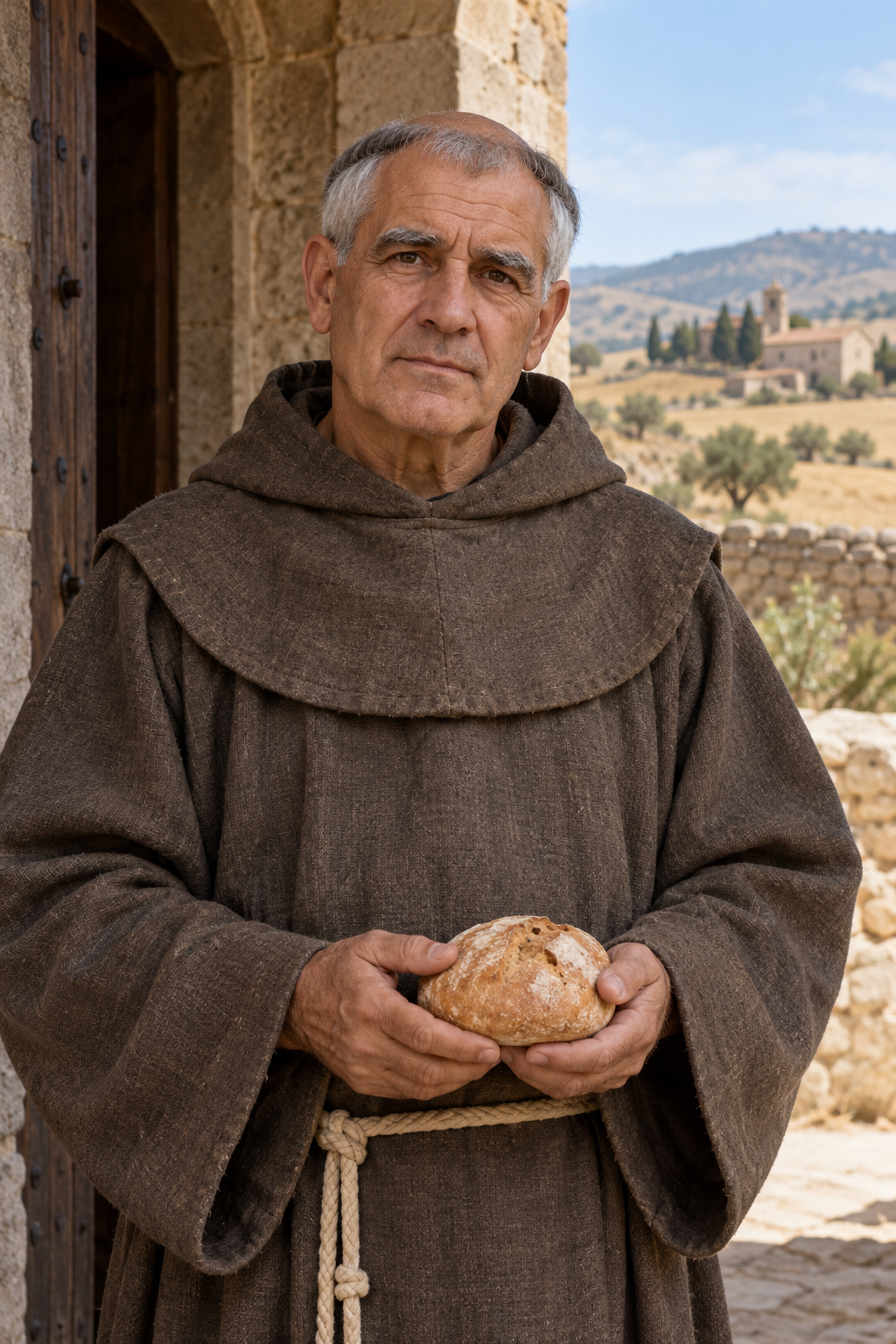
Peter de Regalado was a Franciscan priest associated with the communities of La Aguilera and El Abrojo in fifteenth-century Castile. Born in Valladolid around 1390, he followed Pedro de Villacreces into a form of religious life centered on poverty, prayer and a stricter observance of the Franciscan rule. He died at La Aguilera in 1456.
Amigo Vázquez notes that the first printed biography appeared in 1627, long after his death. Its details about his birthplace street, baptismal church and youthful profession rested on tradition, a reminder to distinguish local memory from contemporary documentation of his early years.
The Dicastery for the Causes of Saints describes him entering the Franciscans as a boy, after his father’s death. He entered with his mother’s permission. He joined Villacreces at La Aguilera, where the community offered the solitude and poverty he sought. The account emphasizes his care for sick and needy people alongside a demanding life of penance.
The movement was not simply a new order with Peter as its founder. In his history of spirituality, Ignacio Iparraguirre describes the followers of Villacreces as remaining subject to Franciscan provincial authorities while maintaining their own communities. After their teacher’s death, they differed over expansion. Peter preferred to preserve the small group of existing houses; Lope de Salazar pursued new foundations. Both belonged to the same reforming tradition, but their choices led in different directions.
Iparraguirre cautions against making Peter the founder of houses that already existed when he joined the movement. Drawing on research published in Archivo Ibero-Americano, he presents Peter’s significance as the preservation of his teacher’s spiritual inheritance. This distinction matters: his remembered leadership rested on sustained communal practice, rather than the creation of a large institution. The surviving chronology is less secure than the confident narratives of some later biographies suggest.
Marcelo González’s account describes practical duties within that community: asking for alms, helping in the kitchen, caring for the chapel and receiving people in need. It also associates Peter with the formation of novices at El Abrojo and with preaching in nearby settlements. His work therefore involved both the internal discipline of the friars and contact with people beyond their walls.
The same account describes an exacting daily regime. Prayer occupied much of the day and night, while manual labor helped support the houses. The friars restricted stored provisions and refused money. Peter’s remembered austerity included severe fasting and bodily penances. These practices belong to the history of this particular religious movement; they should not be treated as a general measure of faith or as instructions for readers to imitate.
The Dicastery’s biography records his participation in the 1427 agreement at Medina del Campo to remain united with the Conventual Franciscans. It also notes uncertainty about the authorship of writings attributed to the reform: only a short preface to the Memoriale religionis is securely assigned to him. He died on March 30, 1456, and Benedict XIV canonized him on June 29, 1746.
Miracle stories became central to his later reputation. The Fundación Joaquín Díaz identifies as legend the story of a loose bull becoming gentle at his feet near El Abrojo. Another tradition tells of angels carrying him between his communities. These narratives explain familiar devotional images and associations; they are accounts of how he was remembered, rather than independently verified episodes.
His patronage of bullfighters received formal recognition much later. Historian Lourdes Amigo Vázquez documents a proposal by the Junta Sindical Taurina in October 1951 and approval from Bishop Luis Almarcha the following month. She places the action within the labor organization and religious culture of Franco’s Spain. The connection with bullfighting thus combines an older miracle tradition with a specific twentieth-century institutional decision.
Valladolid venerates him as patron of both the city and its diocese, celebrating his feast on May 13. The archdiocesan directory dates that patronage to 1746, the year of his canonization.
Local devotion had already acquired a lasting home. The Cofradía de San Pedro Regalado records the construction of his chapel in the parish of El Salvador in 1709 and the foundation of the confraternity the following year. Its original membership was limited to thirty male parishioners. Alongside the saint’s annual feast, the members organized prayers for the dead and burials for members and their wives. The confraternity later developed the novena ending on May 13 and supported the revival of his procession in 1928.
His name also belongs to a parish in Aranda de Duero. The Archdiocese of Burgos records its establishment in 1990, during the sixth centenary of his birth, and its dedication to the Franciscan whose remains are venerated at nearby La Aguilera. The parish’s 2016 anniversary report describes catechesis, charitable work and volunteers caring for the church. This is a contemporary community bearing his name, distinct from the medieval houses where he lived.
Wondering how to weigh the stories and sources? Learn how to read a saint biography.