Biography
Peter of Alcantara
About Peter of Alcantara
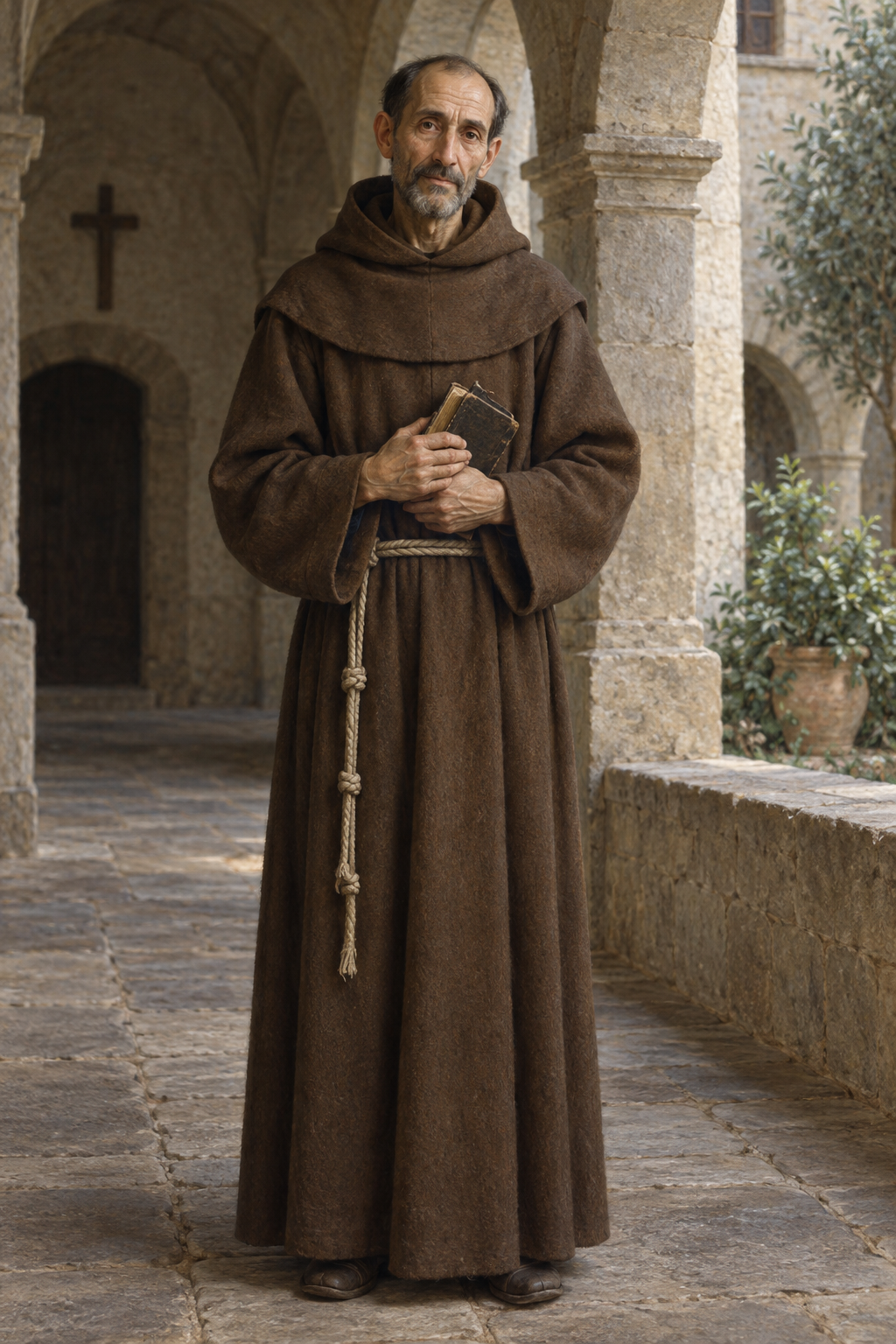
Peter was born in Alcántara, in western Spain, in 1499. The Order of Friars Minor says his birth name was Giovanni Garavita and that he studied at Salamanca before entering a Franciscan community at sixteen. It records his priestly ordination in 1524. Those details place him in the religious changes of sixteenth-century Iberia, but the sources reviewed here do not establish a precise birthday. His decision to join the friars led him toward a demanding reading of Franciscan poverty and common life. The Vatican Dicastery identifies him as a priest who renewed observance in Spanish friaries. His biography need not make austerity an end in itself: the clear historical work is the sustained effort to form communities around that observance.The Franciscan account says Peter became minister of the Province of Saint Gabriel in 1538. He set out rules for stricter observance, approved at a meeting in Plasencia in 1540. Resistance within the friaries followed, and he withdrew for a time to Portugal. Other friars gathered around him there, forming small communities in which he served as guardian and novice master. This sequence shows reform as a contested, collective process rather than one man's isolated act. It also helps explain why Peter became associated with a branch of Franciscans committed to a simpler way of life. His role is documented in the Order's own history, while the inner thoughts of opponents and supporters are beyond the short sources used for this profile.Back in Spain, Peter sought permission for new houses. The Friars Minor describe the growth of these houses and the establishment of the Province of Saint Joseph in 1561. They record a further approval of his reform in 1562. The dates show the work had an institutional shape before his death; they do not prove that every friar practiced it in precisely the same way. Peter also wrote a treatise on prayer and meditation. A profile of him can therefore account for both organization and instruction. The Order's narrative includes stories of extreme bodily penance, but those anecdotes are not needed to explain his documented influence. The record here focuses on the Franciscan communities, their rules, and the people he helped form.Peter's counsel reached beyond the Franciscans. The Friars Minor say he met Teresa of Jesus in 1560 and became an adviser to her Carmelite reform. The Vatican Dicastery independently names that advisory role. Teresa's own testimony, quoted in the Franciscan account, remembers the rigor of his life; the quotation is a witness to her assessment, not a license to infer every detail of his private practice. Their connection places Peter among several religious leaders engaged in reform during the century. The Order says he died on October 18, 1562, at Arenas de San Pedro in the diocese of Ávila. The Vatican Dicastery gives his beatification in 1622 and canonization in 1669. These recognition dates are well distinguished from the events of his lifetime.His calendar record needs a correction. The imported March 5 citation is a Roman martyrology entry for John Joseph of the Cross, a later Franciscan, whose description mentions Peter of Alcantara. A mention in another saint's notice is not Peter's feast. The Vatican Dicastery gives Peter's liturgical memory as October 18, the date the Friars Minor give for his death. The Order's own feature page is headed October 19, so that date is retained separately with its Franciscan jurisdiction stated. His significance rests in the communities and practices he helped shape and in his counsel to Teresa, not in a borrowed March observance. The accompanying portrait is an imaginative devotional image; it does not claim to represent a known likeness or scene.
Wondering how to weigh the stories and sources? Learn how to read a saint biography.