Biography
Peter Williams Cassey
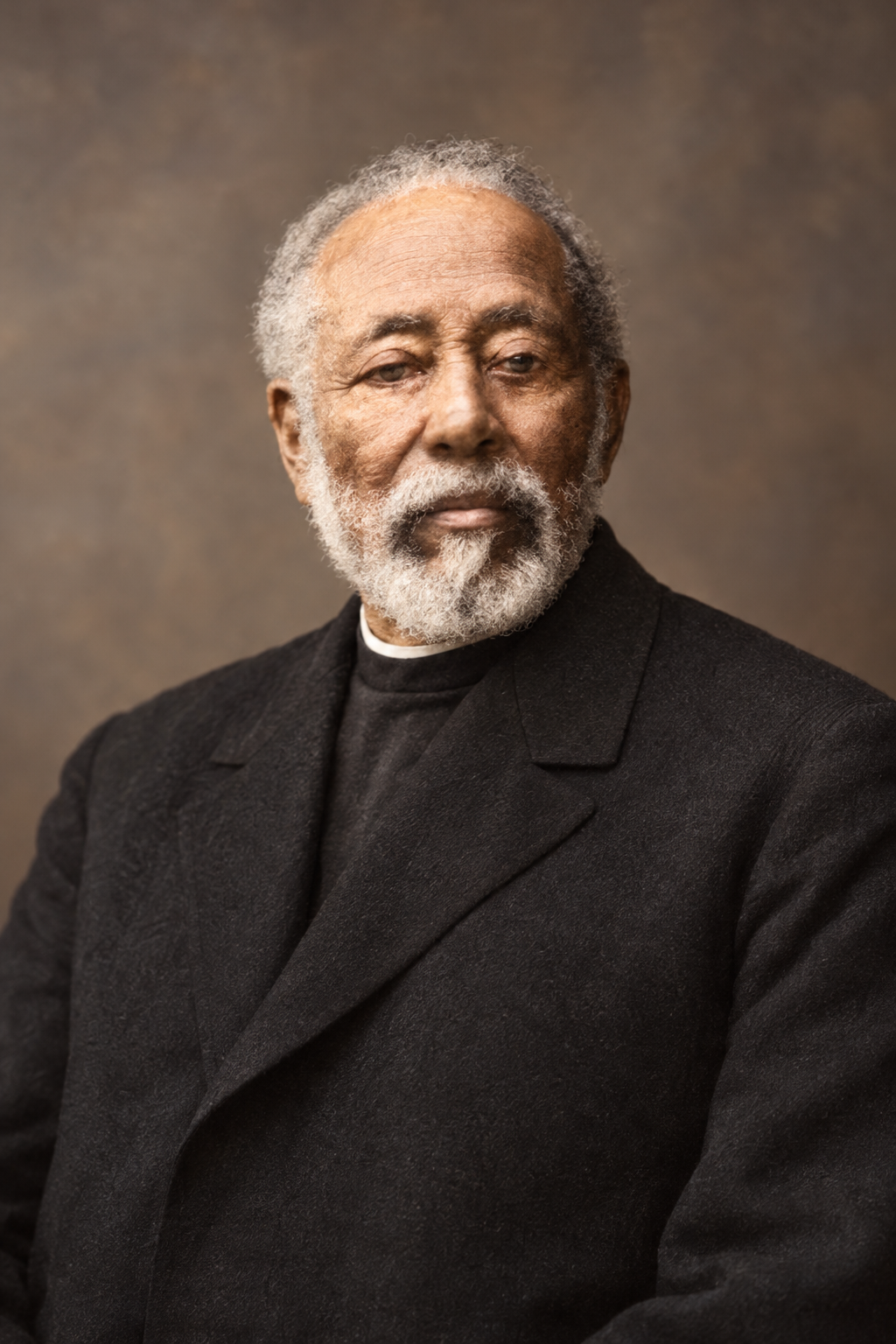
About Peter Williams Cassey
Peter Williams Cassey worked as a barber before becoming an educator and Episcopal deacon. Born in Philadelphia in 1831, he moved to San Francisco, where a city directory recorded his barbering partnership with Charles H. Mercier in 1859. His later work in San Jose placed him within a community seeking better educational opportunities for Black children.
Contemporary convention records show the practical needs behind that effort. In 1865, delegates meeting in Sacramento discussed the San Jose institute under Cassey’s supervision. They described an able teacher working with inadequate financial support. One proposal asked each Black Californian to contribute a dollar toward purchasing the school property. A founder, R. F. Shorter, recalled that subscriptions had first supported the institute and that Cassey had succeeded two earlier teachers.
The same proceedings record public assistance obtained through William A. Smith: fifty dollars monthly, with local children to receive instruction without charge. Their Santa Clara County report identifies Cassey as a teacher supported by the common-school fund and says he also kept a boarding school. It dates the Phoenixonian Institute’s organization to 1862. These records preserve the contributions of community organizers as well as the teacher whose name became associated with the school.
Writing in 1919, historian Delilah Beasley described another means of support: a musical concert organized with the help of a local music teacher. Her account says the event raised money for school furnishings. She also reproduced an advertisement explaining the school’s purpose and charges. Board and tuition cost sixteen to twenty dollars for four weeks. English subjects and vocal music were included, while instrumental instruction cost extra. These particulars show families being offered a defined course of education, with expenses that had to be met.
Beasley connected the school with the wider movement for educational and political rights. She recorded a San Jose convention in July 1867 whose concerns included schooling, employment, and voting. Its resolutions urged sustained support for educational opportunities adequate to the needs of Black children. The school belonged to that collective undertaking, supported by people who sought both learning and fuller participation in public life.
Cassey entered the Episcopal diaconate in 1866 through ordination by Bishop William Ingraham Kip. George Freeman Bragg’s history explicitly records his ordination as a deacon.
A letter published in 1889 gives a closer view of his work at St. Cyprian’s Mission in New Bern. Cassey described morning worship at six so that working people could attend before their daily duties. He also held evening services and illustrated Bible lectures in the schoolhouse. He taught advanced classes in a parish school with more than a hundred pupils, while Mrs. Thompson supervised the younger children with help from an advanced student. When the public schools ended their four-month session, more pupils arrived. He hired additional teaching help and appealed for money to pay for it.
In the same letter, Cassey identified poverty as a major obstacle to the community’s progress. Children lacked the clothing and books needed to attend school, and sick people went without adequate care. He hoped to establish a kindergarten for children whose mothers worked outside the home. These were appeals for help, not claims that every need had been met. His account joined religious instruction to the everyday conditions that made schooling possible.
His ministry eventually extended well beyond California. The Episcopal clerical directory for 1903 lists earlier service in San Jose, San Francisco, and Oakland, followed by New Bern in 1881 and Jacksonville. At the time of publication it placed him at St. Cyprian’s in St. Augustine, Florida. The directory traces a career linking western and southeastern congregations, though its brief entry does not provide a full account of his work in each place.
In St. Augustine, he served a congregation shaped by the exclusion Black Episcopalians experienced in a segregated city. The parish history traces its beginnings to Julia Jackson, a woman from the Bahamas who wrote to Bishop Edwin Gardner Weed and gathered fellow worshippers. Their community initially met in rented quarters. Emma White later donated land and helped obtain funds for a permanent building, with the congregation contributing and a Black builder directing construction. The church was consecrated in 1900. Cassey therefore entered a community whose members had already worked to secure their own place of worship.
The parish remembers him as its deacon in charge and preserves a memorial plaque in its sanctuary. Its history also reproduces a local newspaper’s account of his funeral in 1917. According to that report, mourners came in such numbers that the church could not accommodate them all; Bishop Weed presided, and a large procession accompanied the burial. This local remembrance emphasizes kindness and practical service among the people of St. Augustine, alongside the educational work documented earlier in his career.
Cassey died in 1917. The Episcopal Church authorized his shared April 16 commemoration with Anna Besant Cassey in 2022.
Wondering how to weigh the stories and sources? Learn how to read a saint biography.