Biography
Philip Phan Văn Minh
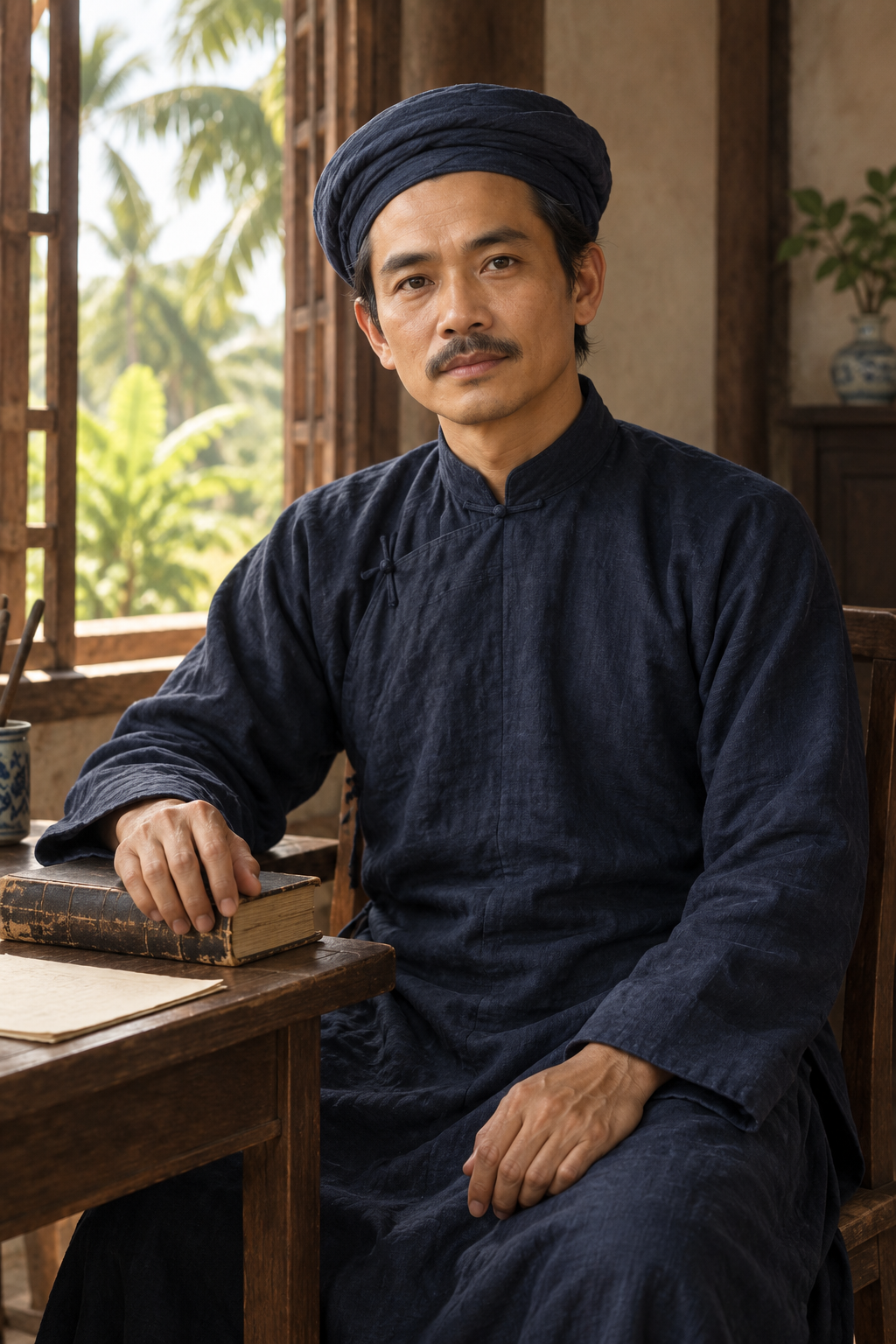
About Philip Phan Văn Minh
Philip Phan Văn Minh was a Vietnamese priest whose life joined pastoral ministry with work in language and literature. Born at Cái Mơn in 1815, he studied at Penang and was ordained in 1846. A later account preserved by his namesake parish in Orlando remembers his concern for Christian communities and for young men considering the priesthood.
His work with Bishop Jean-Louis Taberd has attracted particular attention from historians of Vietnamese. Huỳnh Công Tín emphasizes the contribution of Vietnamese seminarians, especially Minh, to the dictionary published in 1838. The project built on an earlier manuscript by Pigneau de Béhaine. Minh’s contribution belongs within that collaboration, rather than a claim that he created the work alone.
The dictionary brought different written forms into conversation. Its entries connected Vietnamese vocabulary in the romanized script with Chinese characters and Latin explanations. Huỳnh’s study draws attention to the southern Vietnamese language represented in the work. For Minh, this was intellectual labor undertaken during his formation, before his years as an ordained priest. It gives a more particular view of him than the circumstances of his death alone can provide.
Minh also left a poetic legacy. Khổng Thành Ngọc discusses the collection prepared by Võ Long Tê and Phạm Đình Khiêm in 1989, which brought together poems attributed to Minh and responses by other writers. Its title, Phi Năng thi tập, recalls Penang. The account rests on later manuscript copies and recollected transmission; it should not be mistaken for direct access to every original autograph.
The poems include exchanges with Đồ Ốc, a teacher outside the Catholic faith. In Ngọc’s reading, their replies address the difficult question of suffering: persecution, human ambition, and disasters that people cannot control. Minh answered through the shared language of poetry and familiar moral ideas. The exchange preserves disagreement as well as conviction, offering a glimpse of religious conversation across a real difference in belief.
His ministry ended during persecution under Tự Đức. The Orlando parish account describes his arrest at Mặc Bắc and his refusal to renounce his faith. It also preserves accounts of his encouragement to fellow prisoners. He was executed at Đình Khao on July 3, 1853. The detailed speeches in such later narratives belong to their transmitted testimony, rather than a verified verbatim transcript of every encounter.
His final days later became the subject of Tuong Cha Minh, a play by the French missionary Marie-Antoine Louis Caspar. Võ Văn Nhơn and Lê Thụy Tường Vi identify its first printing at the Tân Định press in Saigon in 1881. Their study treats the work as an important early example of modern drama written in romanized Vietnamese. This is part of Minh’s later literary remembrance, separate from his own poetry and dictionary work.
John Paul II canonized Minh with the other Vietnamese martyrs in 1988. The decree lists him among the priests, preserving his individual name within a much larger company.
His patronage remains connected to particular communities. Minh Hòa Seminary in Đà Lạt honors him together with Simon Phan Đắc Hòa. Its 2017 celebration gathered seminarians, teachers, former students and supporters around the two patrons. This joint dedication should not be confused with the separate institutions that bear Minh’s name.
A more recent example comes from Chí Hòa parish. In July 2026 its youth group celebrated its first thanksgiving Mass under Minh’s patronage. The report describes their choice of him as an example of faith and service. This local devotion supports a specific association with that group; it does not establish him as patron of every young Catholic in Vietnam.
Wondering how to weigh the stories and sources? Learn how to read a saint biography.