Biography
Pope Martin I
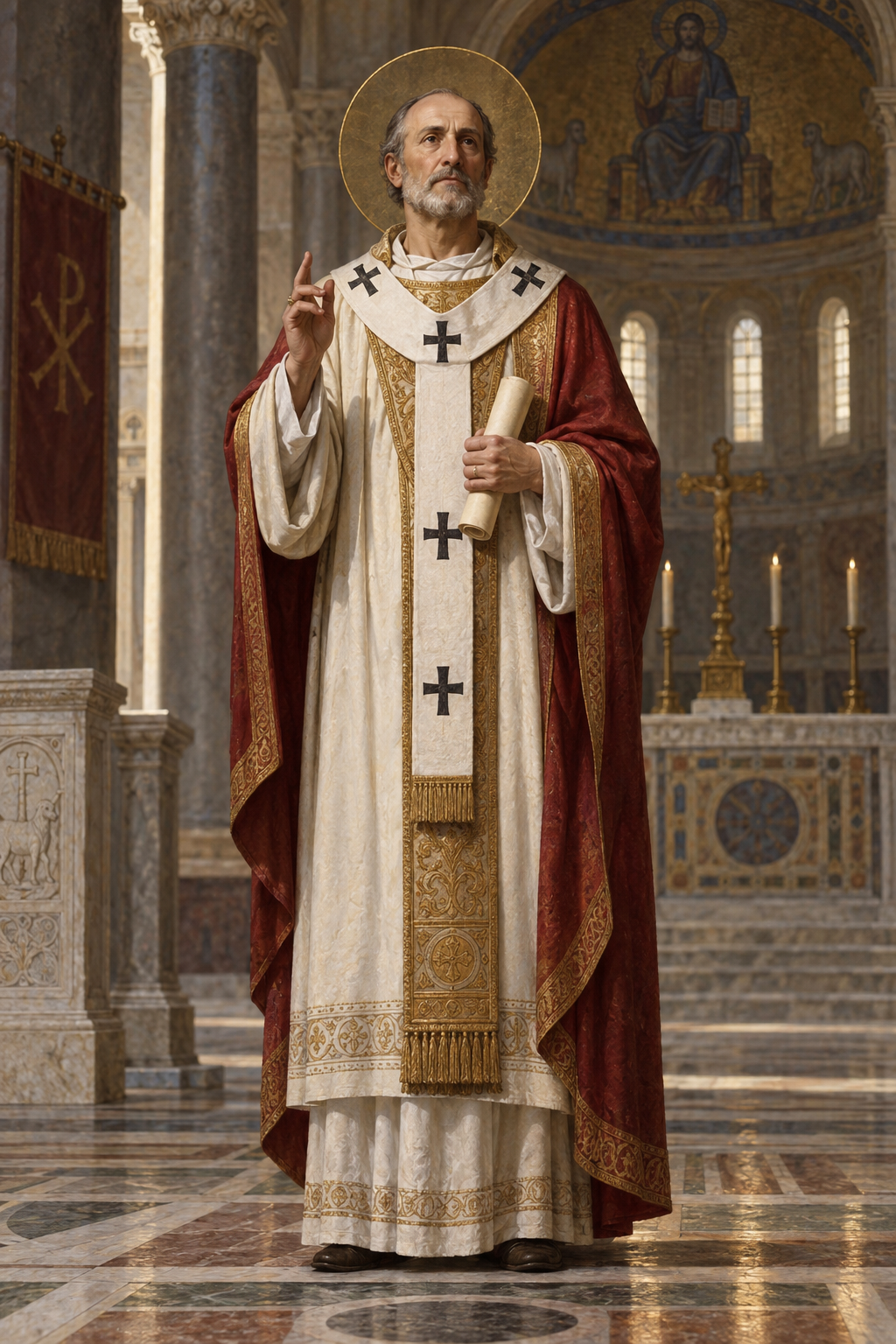
About Pope Martin I
Martin came from Todi in Umbria and was elected bishop of Rome in 649, succeeding Theodore I. The Vatican chronology records the beginning of his pontificate as 5 July 649 and its end at his death in September 655. The older Catholic Encyclopedia gives more detail about his earlier service as papal representative in Constantinople, but the sources used here do not establish a birth year. A mid-590s estimate is therefore marked approximate rather than presented as a precise date.
Martin’s papacy began during an imperial effort to quiet disputes over how to describe Christ’s will and activity. In 649 he convened a council at the Lateran in Rome, which condemned positions that treated Christ as having only one will. Benedict XVI’s catechesis on Maximus the Confessor notes that Maximus took an active part in the council and frames it as a defense of the two wills of Christ against an imperial prohibition on the controversy. The council’s theological language belongs to its seventh-century setting and is summarized here rather than reproduced as a modern doctrinal shorthand.
The council’s decisions brought Martin into direct conflict with Emperor Constans II and his representatives in Italy. The Catholic Encyclopedia recounts that Martin was arrested and transported to Constantinople, where he was tried and condemned. The sources present the accusations as political and religious entangled with the theological dispute. The pope’s refusal to withdraw the council’s position made him a conspicuous opponent of imperial policy. The biography avoids claims about the exact circumstances of his arrest beyond the broad outline shared by the sources.
Martin endured imprisonment and severe treatment in Constantinople. Benedict XVI describes his death after two years of humiliation and torment in exile in Crimea. The Catholic Encyclopedia preserves additional details about the trial and exile, though its nineteenth-century narrative should be read critically. Martin was eventually sent to Cherson, where he died on 16 September 655. The chronology is supported by both the Vatican papal record and later reference accounts.
Martin is often called a confessor because his public witness and suffering were central to his cult. The Catholic Encyclopedia reports that he was buried at a church near Cherson and that his veneration spread after his death. Modern Catholic observance assigns his feast to 13 April, distinct from his death date in September. The sources used for this packet do not establish his precise birth date or a more detailed early biography, and no birth village beyond Todi is added.
Martin’s story links the authority of the Roman bishop with disputes over imperial control and theological speech. The Lateran Council of 649 brought bishops together to answer an imperial religious policy, while Martin’s subsequent trial and exile made the conflict personal. This broad interpretation follows the sequence attested by the official Vatican chronology, Benedict XVI’s account of the council, and the reference biography. It does not claim that Martin’s actions alone resolved the controversy, which continued after his death.
Wondering how to weigh the stories and sources? Learn how to read a saint biography.