Biography
Pope Sergius I
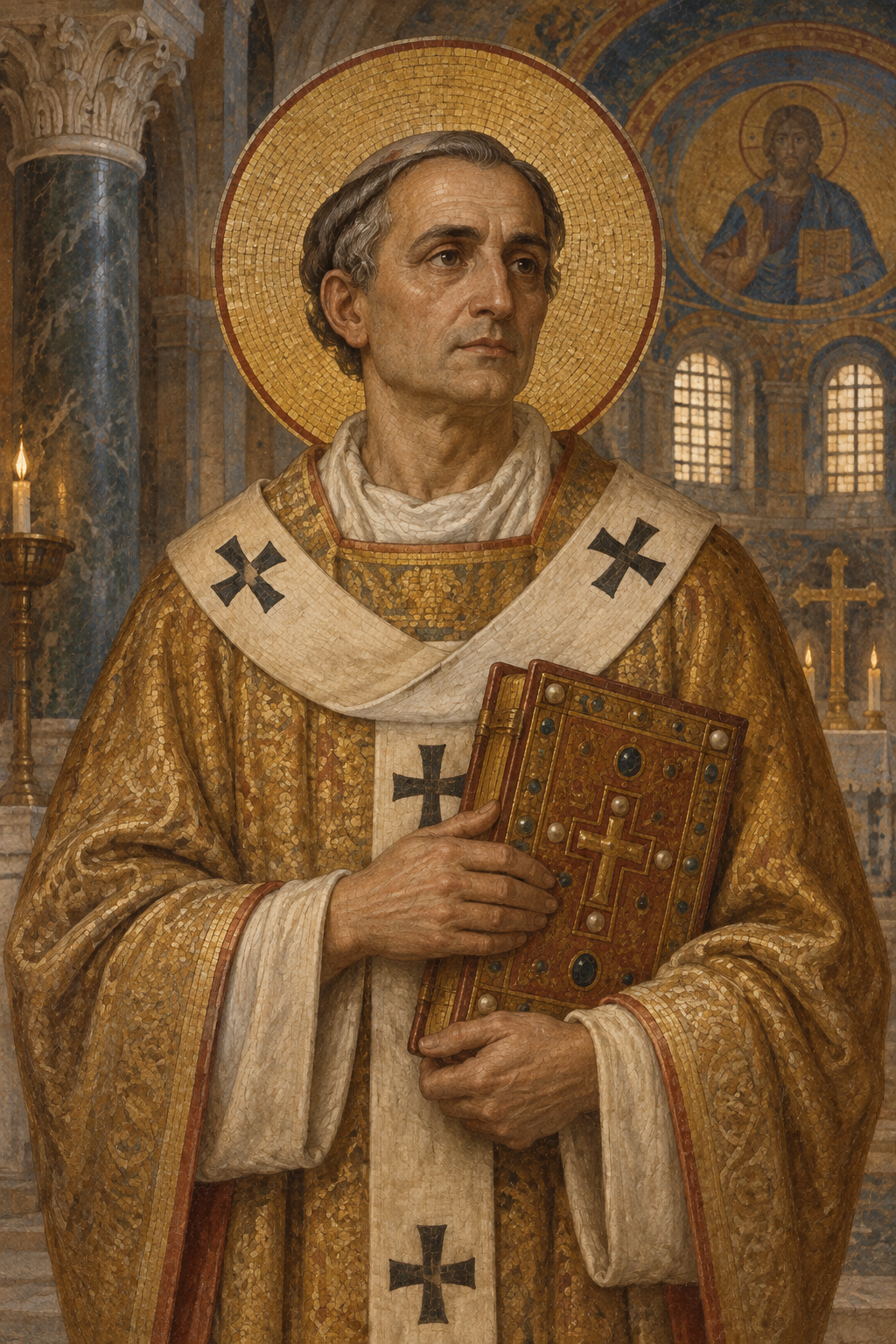
About Pope Sergius I
Sergius I was bishop of Rome from 687 to 701. The Holy See records the beginning and end of his pontificate and lists Syria in its birth field. The Prosopography of the Byzantine Empire, citing the Liber Pontificalis, distinguishes Syrian family origin in the district of Antioch from birth at Panormus in Sicily. Because the official summary compresses this distinction, this draft leaves birthplace unset rather than silently reconciling the two descriptions.
After Pope Conon’s death, rival candidates emerged in a disputed election. The Liber Pontificalis account, summarized by the Prosopography of the Byzantine Empire, describes Sergius as the eventual compromise choice and records his consecration in December 687. The surviving narrative is institutional history, not an eyewitness account to every detail; the profile does not repeat colorful episodes beyond what the scholarly prosopography attributes to its sources.
In 692 Sergius refused to sign the acts of the Quinisext council. The prosopography reports that Emperor Justinian II sent officials to bring the pope to Constantinople, while forces from Ravenna and the Pentapolis intervened in Rome. These events show the political pressure around papal authority in this period; the detailed scene is preserved through the Liber Pontificalis and is presented as its account, not as independently corroborated dialogue.
The Holy See dates Sergius’s pontificate through September 7, 701; Catholic reference sources give his death in Rome on September 8, 701. Vatican News lists his commemoration on September 8. The differing one-day end/death notations are left visible by storing only the well-supported death year and the calendar observance. No birth year is known from the sources reviewed.The prosopography’s account of Sergius before his election is brief but suggests a career formed inside the Roman church. It says he came to Rome during the pontificate of Pope Adeodatus II, entered the clergy and advanced through ecclesiastical offices. Under Leo II he became a priest attached to the title church of St Susanna. The same account describes him as studious and musically gifted, trained in chant by the head of the singers. These details come through the papal biographical tradition summarized by the prosopography, rather than from an independently preserved personal archive. They should be read as evidence for how church historians remembered his formation and liturgical competence, not as a full account of his education or private life.
The election narrative places Sergius in a contested Roman succession after Conon’s death. Two other candidates, the archdeacon Paschal and the archpriest Theodore, had their own supporters; the sources summarized by the prosopography present Sergius as a negotiated choice acceptable to the factions. The Liber Pontificalis then describes his acclamation at the Lateran and the exarch John’s demand for a large payment before consecration. Such details expose the entanglement of papal elections with imperial administration in late seventh-century Italy, but the exact scenes and motives come from a narrative written within the church’s institutional memory. A modern reader can retain the contested succession and Sergius’s eventual election while treating the vivid financial episode as source testimony rather than independently verified dialogue.
The sharpest political conflict of Sergius’s pontificate concerned the council held at Constantinople in 691–692, often called the Quinisext or Trullan council because it supplied disciplinary canons intended to supplement earlier ecumenical councils. The prosopography reports that Sergius declined to accept its acts, objecting to canons that conflicted with Roman custom and ecclesiastical discipline. The disagreement was not simply a personal quarrel: it involved differing traditions of church order and the authority claimed by an emperor-sponsored council. The Liber Pontificalis account says Justinian II sent officials to take the pope to Constantinople, prompting intervention by forces from Ravenna and the Pentapolis. Sergius calmed the crowd and secured the official’s release. These dramatic details are preserved in a papal biography and are best described as its account of the crisis, while the refusal itself anchors the historical dispute.
Sergius’s relationship with imperial power remained unsettled. The prosopography reports that Justinian II later ordered the pope’s deposition, but the move did not establish an enduring removal from office. The episode belongs to the broader instability of the emperor’s relations with the western provinces and with Rome’s ecclesiastical leadership. Because the evidence comes through a compact biographical narrative, it does not allow a detailed reconstruction of negotiations or the pope’s private strategy. The useful historical point is narrower: resistance to the Quinisext settlement placed Sergius in a consequential conflict with the emperor, and local Italian support limited the effectiveness of direct coercion. A Cambridge study of the Liber Pontificalis emphasizes why such narratives must be read critically: they preserve institutional memory while shaping events through the concerns and perspective of their authors.
The same tradition remembers Sergius as a builder and patron of worship. It attributes repairs or decoration to several Roman churches, including St Peter’s, St Paul Outside the Walls, the church of Saints Cosmas and Damian, St Susanna and St Euphemia, as well as St Aurea at Ostia. It also describes costly altar furnishings. These notices do not provide a modern construction record for each intervention, so they support a cautious account of remembered patronage rather than a claim that he founded every building named. The papal biography also associates him with liturgical practice: it says he introduced the singing of the Agnus Dei at the breaking of the Eucharistic bread and organized processions or litanies for Marian feasts and the feast of the Presentation. The details connect his reputation to Roman worship, while their attribution remains that of the Liber Pontificalis tradition.
Sergius’s influence also reached beyond Rome. The prosopography recounts his efforts to bring clergy associated with Aquileia into agreement with the Fifth Ecumenical Council, a long-running dispute involving the Three Chapters controversy. This suggests diplomacy with regional church leaders, though the short account does not preserve the terms of settlement. It also records the baptism at Rome of Caedwalla, the West Saxon ruler who travelled to the city near the end of his life. Sergius is said to have baptized him and given him the name Peter; Caedwalla died soon afterward and was buried at St Peter’s. English ecclesiastical contacts are also noted in later reference summaries, but the evidence does not justify turning these encounters into a comprehensive program of papal relations with all western kingdoms.
The sources give Sergius a firm place in the succession of bishops of Rome but reveal little about his family beyond the differing geographic descriptions, and they establish no birth year. His death is dated to 701: the Holy See ends his pontificate on September 7, while the Catholic Encyclopedia reports that he died in Rome on September 8. The one-day discrepancy may reflect the distinction between the last day assigned to the office and the death notice, but the sources reviewed do not explain it. The Roman Catholic observance falls on September 8, as Vatican News records. This profile therefore uses the secure year rather than implying precision that the sources do not share. The more expansive claims about his career, liturgy and political crises remain linked to the early papal biography as mediated by modern scholarship.
Wondering how to weigh the stories and sources? Learn how to read a saint biography.