Biography
Pope Sylvester I
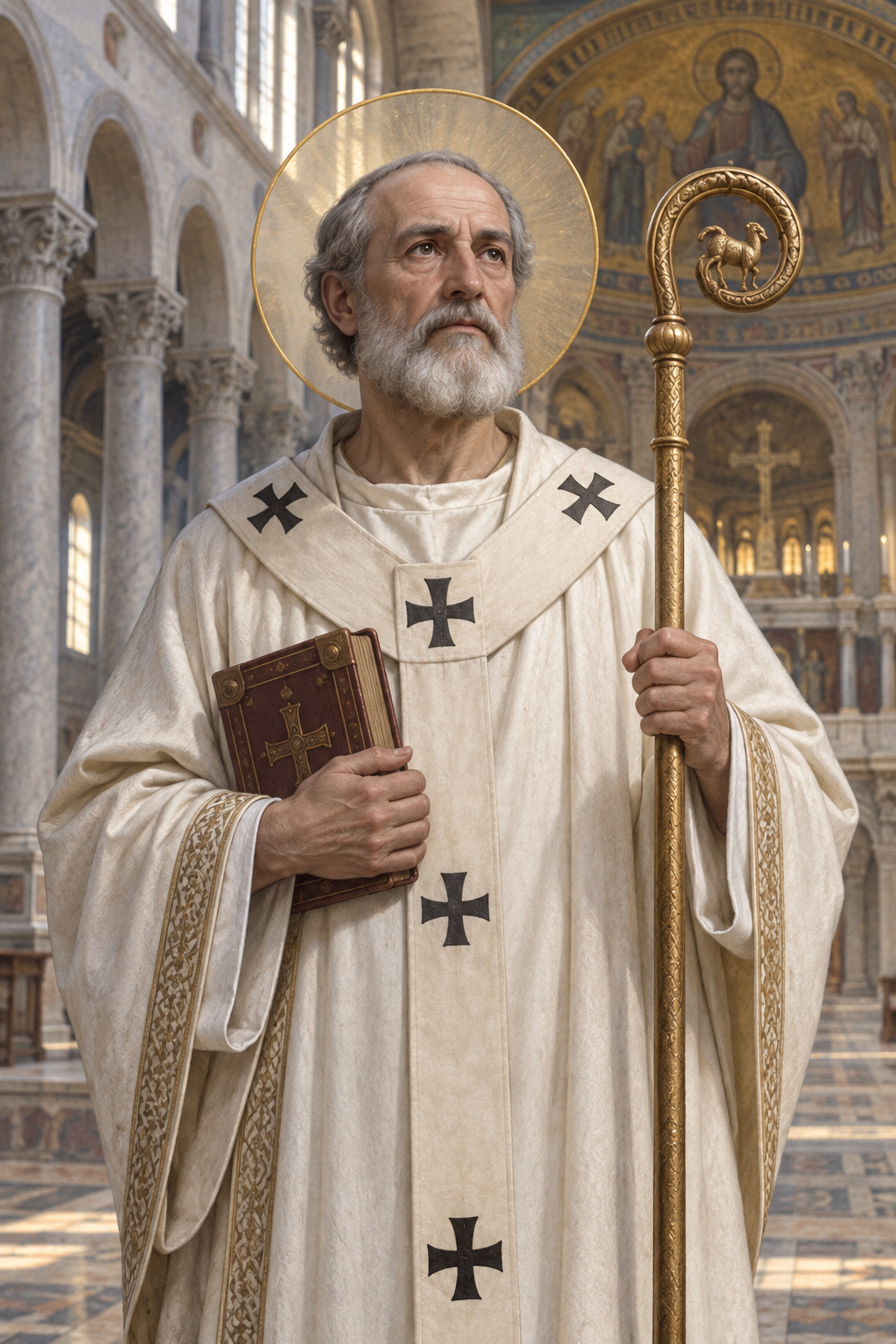
About Pope Sylvester I
Sylvester I was bishop of Rome from 314 to 335, during the reign of Constantine and the first decades in which Christianity gained a new public position in the Roman Empire.
The Vatican identifies Rome as his birthplace, but his birth date is unknown.
The Catholic Encyclopedia notes that unusually little authoritative information survives about his pontificate, a limitation that shapes any careful account of his life.
A short biography of Sylvester must therefore distinguish the fourth-century bishop from stories about him written generations later.
Sylvester succeeded Miltiades as bishop of Rome in 314 and held the office until his death on 31 December 335.
The Vatican’s record gives 31 January 314 as the start of his pontificate and 31 December 335 as its end.
It does not provide a birth year or an account of his childhood, education, or family.
The later Liber Pontificalis calls him Roman-born and names his father as Rufinus, but such personal details in this compilation are not treated as contemporary testimony.
The Liber Pontificalis, a collection of papal biographies compiled in sixth-century Rome, is a major source for the memory of Sylvester’s time.
Its first version was composed in the 530s and revised before 546, almost two centuries after Sylvester’s death.
The Oxford commentary cautions that details about early popes may reflect what sixth-century writers believed rather than verifiable fourth-century events.
Its account links Sylvester with Constantine, the Council of Nicaea, church discipline, and the imperial building program in Rome.
Canella’s historiographical survey treats Sylvester’s amplified role in Constantine’s story as part of the later literary construction preserved in the Actus Silvestri.
Stories that Constantine persecuted Sylvester, that Sylvester fled into exile, and that he later healed and baptized the emperor belong to legendary accounts, not established history.
The Oxford source places the baptism-and-healing narrative within the Acts of Silvester, a text whose historical grounding it describes as poor.
The Donation of Constantine, which later claimed to record imperial grants of authority to Sylvester and his successors, is likewise not evidence of an actual fourth-century transfer.
The historical record does place the Council of Nicaea within Sylvester’s pontificate, although Sylvester himself did not attend in person.
He sent representatives to the council, held in 325 to address the Arian controversy and questions about the relationship of the Son to the Father.
The sources do not establish that Sylvester personally determined the council’s wording or that he presided over its sessions.
The presence of papal legates shows Rome’s participation in a gathering shaped by bishops across the empire, while the limits of the record discourage claims that assign its work to one bishop.
The political and physical landscape of Rome changed during the same period. Constantine supported the construction of major Christian basilicas, including buildings at the Lateran, the Vatican, and the Sessorian palace.
The Liber Pontificalis attributes an extensive list of church foundations, furnishings, and endowments to Constantine during Sylvester’s years as pope.
Scholars treat this account as an important witness to early medieval memory and imperial patronage, while continuing to assess which buildings and donations can be securely assigned to Constantine.
Sylvester’s own connection to the church known as the titulus Equitii is also reported through later evidence. The Oxford commentary says that the Liber’s association appears in its second edition, while the church’s association with his name was established before that compilation.
The present church of San Martino ai Monti stands on that site, but the later naming does not prove that Sylvester founded the original building.
The Catholic Encyclopedia also connects his pontificate with the development of Roman worship and the organization of a school of singing, while presenting some of these attributions with caution.
This evidence points to a church in Rome developing its public worship and institutions as Christian communities moved into a more visible civic setting.
The earliest Roman calendars provide a firmer point in Sylvester’s commemoration. The Depositio episcoporum and the Calendar of Philocalus record 31 December as his burial day.
The Liber Pontificalis places his burial in the cemetery of Priscilla, on the Via Salaria outside Rome.
The Roman Catholic feast on 31 December thus follows an early burial commemoration; it is not evidence for an otherwise unknown event in his final hours.
Sylvester’s historical importance lies in occupying the Roman see at a hinge in church and imperial history, when bishops, emperors, councils, and new basilicas became closely connected.
His later legendary reputation became much larger than the securely recoverable details of his personal life.
Keeping those layers separate allows his real office, the church’s transformation in Rome, and the later stories told in his name to remain visible without confusing one for another.
The Liber’s long catalogue is valuable not simply as a list of papal actions, but as evidence for how sixth-century Romans remembered the conversion of their city and the relationship between Christian institutions and imperial resources.
Wondering how to weigh the stories and sources? Learn how to read a saint biography.