Biography
Possidius of Calama
About Possidius of Calama
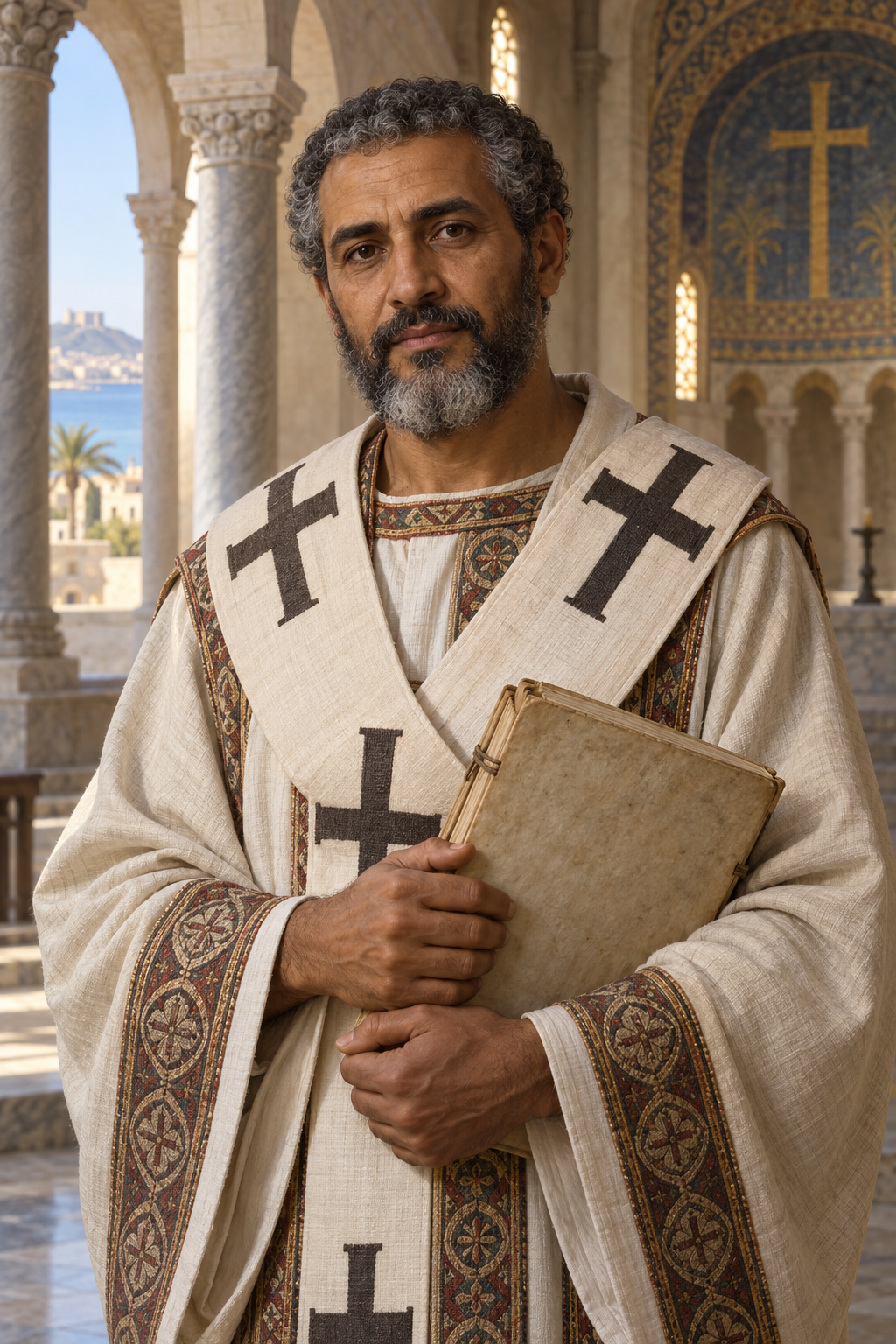
Possidius is known chiefly through his work as bishop of Calama and through his friendship with Augustine of Hippo. The surviving evidence does not establish a secure date or place for his birth, and no detailed account of his childhood survives. Treccani places him among the clergy who gathered around Augustine at Hippo in the late fourth century; the tradition and records identify him as an African bishop, but his early life remains largely outside the historical record. A responsible account therefore begins with the community and office that are actually documented, rather than assigning him an invented family background or conversion story.Possidius’s surviving connection to Augustine is more than a later devotional association. His own account says that he had known Augustine for about forty years and describes himself among the clergy who lived with him at Hippo. Treccani places him within the circle of clerics around Augustine’s monastic community soon after its formation. That setting helps explain why Possidius later recorded Augustine’s daily habits, public work, relationships with other bishops, and last illness. It also means that his biography is a witness with close personal access, though it remains a work written to preserve and commend a revered teacher rather than a neutral modern life.By about 397 Possidius had become bishop of Calama, a city in the Roman province of Numidia. His episcopal work is visible in the councils and disputes of the African church. He attended meetings at Carthage in the early fifth century and appears in records of the struggle between Catholic and Donatist communities. Donatism was a long-running North African division over church authority and the status of clergy who had compromised during persecution. The surviving accounts show Possidius acting as a bishop within that contested environment; they do not support the later tendency to turn every disagreement into a simple personal contest between two saints.One episode preserved in the church histories describes Possidius challenging Crispinus, the Donatist bishop of Calama, to a public discussion. Crispinus declined. The episode illustrates that bishops sometimes argued in public about the legitimacy of rival communities, but the report comes through a tradition shaped by the Catholic side of the dispute. It is best used as evidence that Possidius was active in the controversy, not as proof that he personally resolved it. Later, at the Conference of Carthage in June 411, Catholic and Donatist bishops met before imperial officials. Possidius was selected as one of the Catholic representatives who spoke in the proceedings.The conference was a major event in North African church history. Several hundred bishops belonged to the two rival communions, and imperial officials structured the meeting as a public hearing intended to end their schism. Possidius’s participation places him among the senior Catholic delegates, but the proceedings were not simply a theological dialogue: questions of legal recognition, property, and imperial policy were also at stake. Modern scholarship therefore treats the conference as both a church dispute and an exercise of imperial authority. The surviving summary does not warrant crediting Possidius alone with its outcome or describing the debate as a peaceful resolution accepted by all participants.Possidius also took part in the African church’s response to Pelagian teaching about sin, human freedom, and grace. He attended the Council of Milevis in 416 and joined fellow bishops in writing to Pope Innocent I. The record connects him to collective episcopal action; it does not make him the principal author of Augustine’s theological arguments. He was present again at Carthage in 419. These events show a bishop engaged in the wider affairs of his region, though the evidence survives largely through conciliar lists, letters, and later church histories rather than a personal archive written by Possidius.The Vandal invasion brought direct upheaval to the North African sees. When Calama fell in 428, Possidius took refuge at Hippo, where Augustine was already elderly and ill. Possidius’s narrative says that he remained with Augustine during the final illness and death in 430. After the siege of Hippo ended, he returned to Calama, but his episcopate did not continue undisturbed. Treccani and the church-history reference report that in 437 the Vandal king Geiseric expelled Possidius and other bishops who refused to adopt the ruler’s Arian confession. The sources do not identify where Possidius went afterward or when he died.Possidius’s most enduring work is the Vita Augustini, written within a few years of Augustine’s death. It is not a modern chronological biography: it selects incidents that reveal Augustine’s pastoral life and models of conduct. It preserves information about the bishop’s teaching, church administration, hospitality, books, and relationships with other North African leaders. The work is valuable because the author had direct access to Augustine and the community at Hippo, but its devotional purpose matters. Where the text praises Augustine or recounts a providential episode, the biography should identify that as Possidius’s testimony rather than present it as an independently verified description of motive or miracle.He appended an Indiculus, a catalogue of Augustine’s writings that he could identify in the library at Hippo. The list is not complete, and later scholarship has corrected or supplemented it, but it preserves an early guide to the breadth of Augustine’s work. Possidius thus left two complementary kinds of evidence: a personal narrative about the bishop and an inventory of his writings. Both became important for later readers who had no direct access to the African Christian community in which Augustine worked.No secure account of Possidius’s own final years survives after his expulsion. The Catholic calendar commemorates him on May 16, while some religious communities have kept a neighboring date; the catalog uses the May 16 Roman Catholic observance. His historical significance rests most firmly on his episcopal activity and on the testimony he preserved about Augustine. The portrait accompanying this draft is a modern devotional reconstruction, not a likeness or evidence for how a fifth-century African bishop dressed.
Wondering how to weigh the stories and sources? Learn how to read a saint biography.