Biography
Quirinus of Neuss
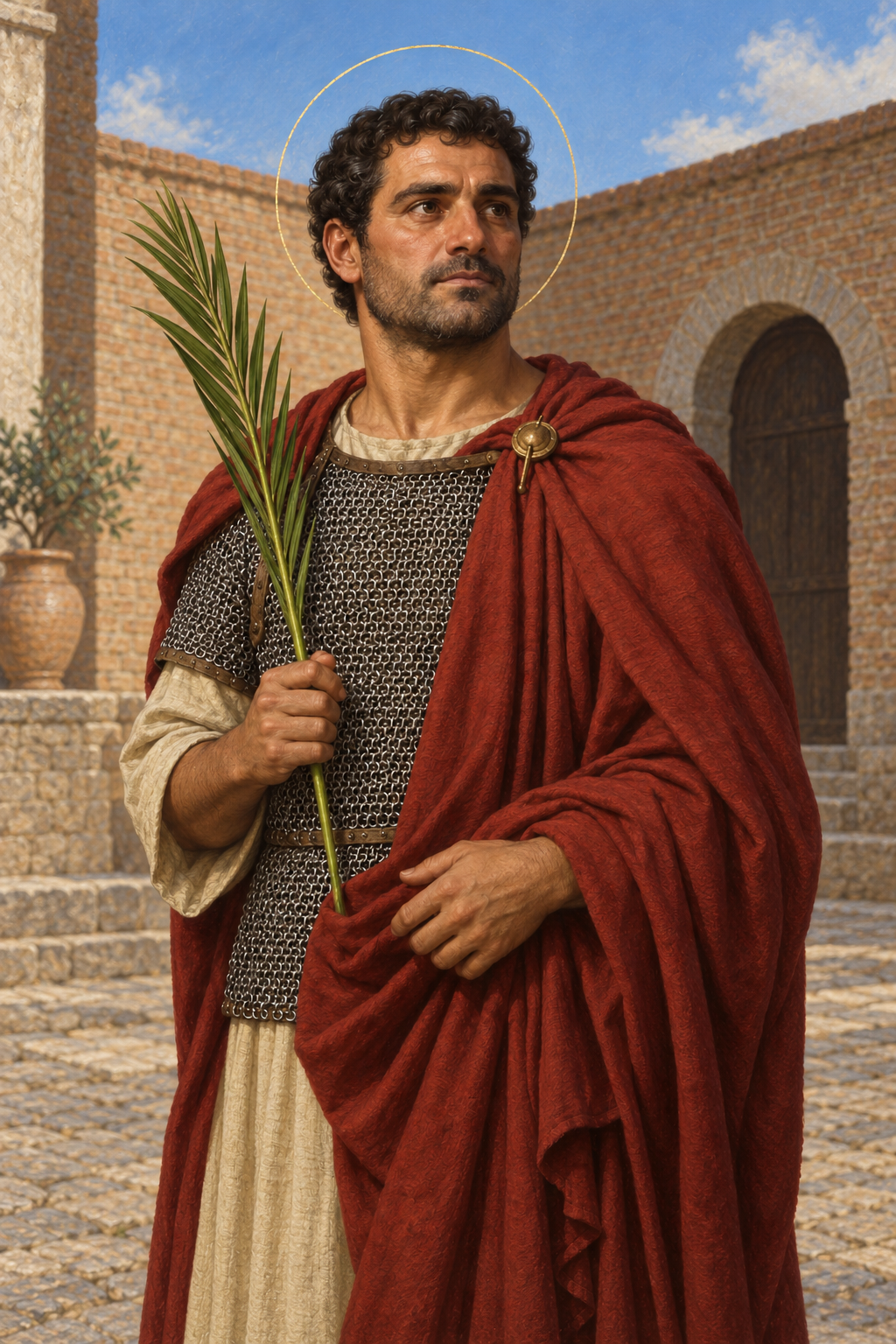
About Quirinus of Neuss
Quirinus of Neuss is a Roman martyr whose memory became closely associated with the Rhineland city of Neuss. An early tradition places his burial in the cemetery of Praetextatus on the Appian Way. Kirsch distinguishes this martyr from other saints named Quirinus, including the bishop of Siscia. His military career and the fuller story of his conversion belong to later legend rather than a surviving contemporary life.
In the Passion of Alexander, Quirinus is a tribune responsible for prisoners. He questions the Christian Hermes about his willingness to lose earthly rank, then demands a sign before accepting the faith. The narrative brings Alexander and Hermes together despite their confinement. Quirinus next asks for help for his daughter Balbina, who is ill. After her healing, he and his household receive baptism. The text also depicts him opening the prison to other people who have been baptized.
The story ends with Quirinus confessing that he has become Christian. He refuses to return to his former allegiance, suffers torture and is killed. Christians bury his body beside the Appian Way. These episodes preserve the devotional account of his conversion and martyrdom; they do not establish the exact year of his death.
His later connection with Neuss is clearer in the history of worship than in the details of his journey there. A local legend, recorded many centuries after the supposed event, says that Pope Leo IX gave his relics to Abbess Gepa around 1050. The Archdiocese of Cologne notes that veneration already existed there before this reported transfer.
The shrine made Neuss an important medieval pilgrimage centre. The municipal archives date the foundation stone of the present minster to 1209. The church grew from an earlier religious community and preserves remains of predecessor buildings. Its present reliquary was made at Aachen in 1900; an older shrine is preserved in the Clemens Sels Museum. These objects and buildings belong to the long history of his remembrance, rather than to his lifetime.
In the Rhineland he was also honoured among the four Holy Marshals, together with Antony, Cornelius and Hubert. The traditional image of a marshal close to a ruler’s throne expressed confidence in their intercession before God. Freiburg’s saint reference records prayers to Quirinus for people facing illness and for the welfare of horses and cattle.
His feast is kept at Neuss around 30 April. The city’s annual observance includes a week of worship and a procession with the shrine. A diocesan report from 2026 connects the offering of large candles with a vow arising from the siege of 1474–1475, when the city attributed its preservation to his intercession. His cult continues to join the memory of an early Christian martyr with the shared history and worship of a particular community.
Wondering how to weigh the stories and sources? Learn how to read a saint biography.