Biography
Raphael Kalinowski
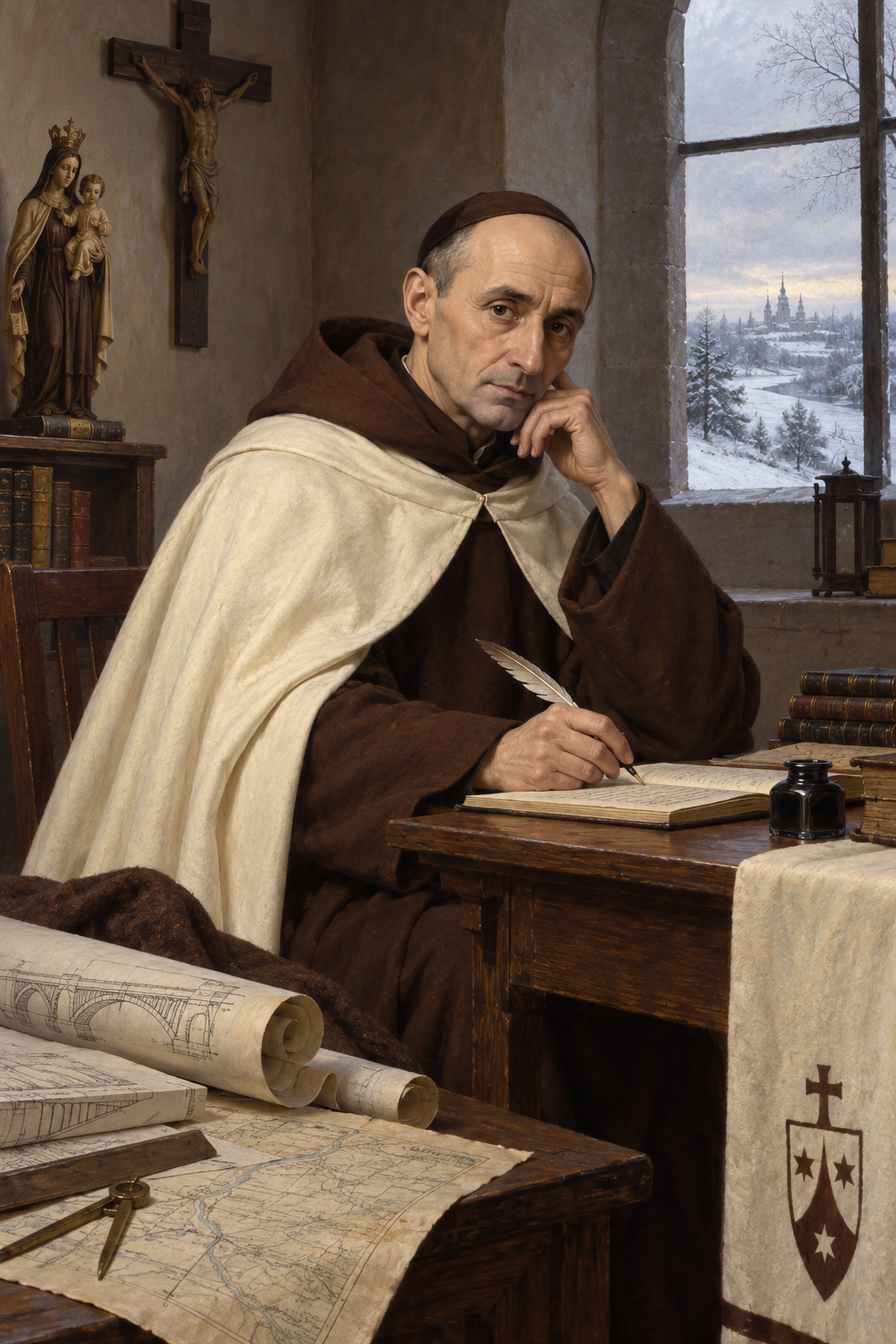
About Raphael Kalinowski
Raphael Kalinowski was born Joseph Kalinowski on September 1, 1835, at Vilna, now Vilnius. The Holy See biography places his early life within a multilingual and politically complex region, so the final page should preserve place names carefully.
He studied agriculture at Hory-Horky and military engineering in Saint Petersburg. He earned an engineering degree and lieutenant rank, then lectured in mathematics. These facts matter because his later Carmelite discipline did not erase a trained, analytical mind.
The final page should avoid presenting that training as merely secular contrast to holiness. Engineering, mathematics, and disciplined study formed habits of attention that later served teaching, spiritual direction, and religious leadership.
In 1859 he worked on the Kursk-Kiev-Odessa railway. The page can use engineering papers or maps as restrained attributes, but it should not let the technical or military setting become the center of the saint.
Likewise, his lieutenant rank should not become a visual military identity. A map or plan is enough to acknowledge the earlier life while keeping the Carmelite vocation central.
During the 1863 Polish uprising, Kalinowski resigned from Russian service. He was arrested on March 24, 1864. His death sentence was commuted to ten years of hard labor in Siberia.
The exile should be written soberly. It was a grave suffering and a decisive period, but the profile should avoid prison spectacle or nationalist shorthand. The sources support a man whose conscience, endurance, and faith matured under hard constraint.
Siberia also explains his later sympathy for people who carried heavy burdens. The page can say that exile deepened him, but it should not make psychological claims beyond the sources or use suffering as decorative drama.
Kalinowski was released in 1874, but he was forbidden to return to Lithuania. That barred return explains why his later life unfolded away from his first home. The final packet should preserve that displacement without adding unsourced political commentary.
After exile, he tutored Prince Augustus Czartoryski, who later entered the Salesians. This episode shows Kalinowski's continuing role as teacher and spiritual influence before his own definitive Carmelite vocation.
That tutoring period also links him with another future saintly vocation without making Kalinowski merely a supporting character. He remained a man discerning his own path even while guiding another.
In 1877 he entered the Discalced Carmelites at Graz and took the name Raphael of Saint Joseph. The Carmelite name should be used to show continuity of vocation: Joseph Kalinowski did not disappear, but his life was re-ordered by prayer, penance, and priestly service.
Raphael was ordained priest at Czerna on January 15, 1882. The public page should not present ordination as the end of the story. His priesthood served a larger Carmelite restoration in lands where religious life had been damaged by political upheaval.
As a priest, he became known for confession and spiritual direction. These quiet ministries fit the Carmelite setting better than a heroic public narrative. They also explain why his restoration work was personal as well as institutional.
The official profiles credit him with helping restore Carmelite life in Poland. That work included leadership, formation, confession, spiritual direction, and the patient rebuilding of community. This is why the art should make the Carmelite habit central and the engineering/exile cues secondary.
Restoration should be described as slow fidelity. It meant houses, vocations, formation, and a renewed contemplative presence. The page should not reduce it to organizational success; it was a work of prayer and governance together.
His life joined several identities that could pull apart: engineer, exile, tutor, monk, priest, and restorer. The final biography should let those identities form a sequence of conversion and fidelity rather than a list of dramatic episodes.
Raphael Kalinowski died at Wadowice on November 15, 1907. The existing catalog place fields are sparse, so this draft preserves them while noting that final field normalization should add careful historical and modern hierarchy only when fully verified.
He was canonized by John Paul II on November 17, 1991. His witness is best framed as conscience under pressure, endurance in exile, and contemplative rebuilding through Carmel. The final page should not present him primarily as a soldier, but as a priest and Carmelite restorer.
This framing also keeps the title Raphael of Saint Joseph meaningful. The name belongs to the religious vocation that gathered the earlier fragments of his life into a mature form of service.
For readers, the practical invitation is patience: earlier skills, losses, and exiles can be gathered into prayerful service rather than wasted.
That makes his biography a story of integration, not escape.
It remains deeply, steadily Carmelite.
Artwork should show a Discalced Carmelite in brown habit and white mantle, with engineering papers, map, and winter landscape as restrained background cues. Avoid weapons, militarized pose, prison spectacle, rendered text, logos, halos, modern props, and exact-likeness claims.
Wondering how to weigh the stories and sources? Learn how to read a saint biography.