Biography
Richard Meux Benson
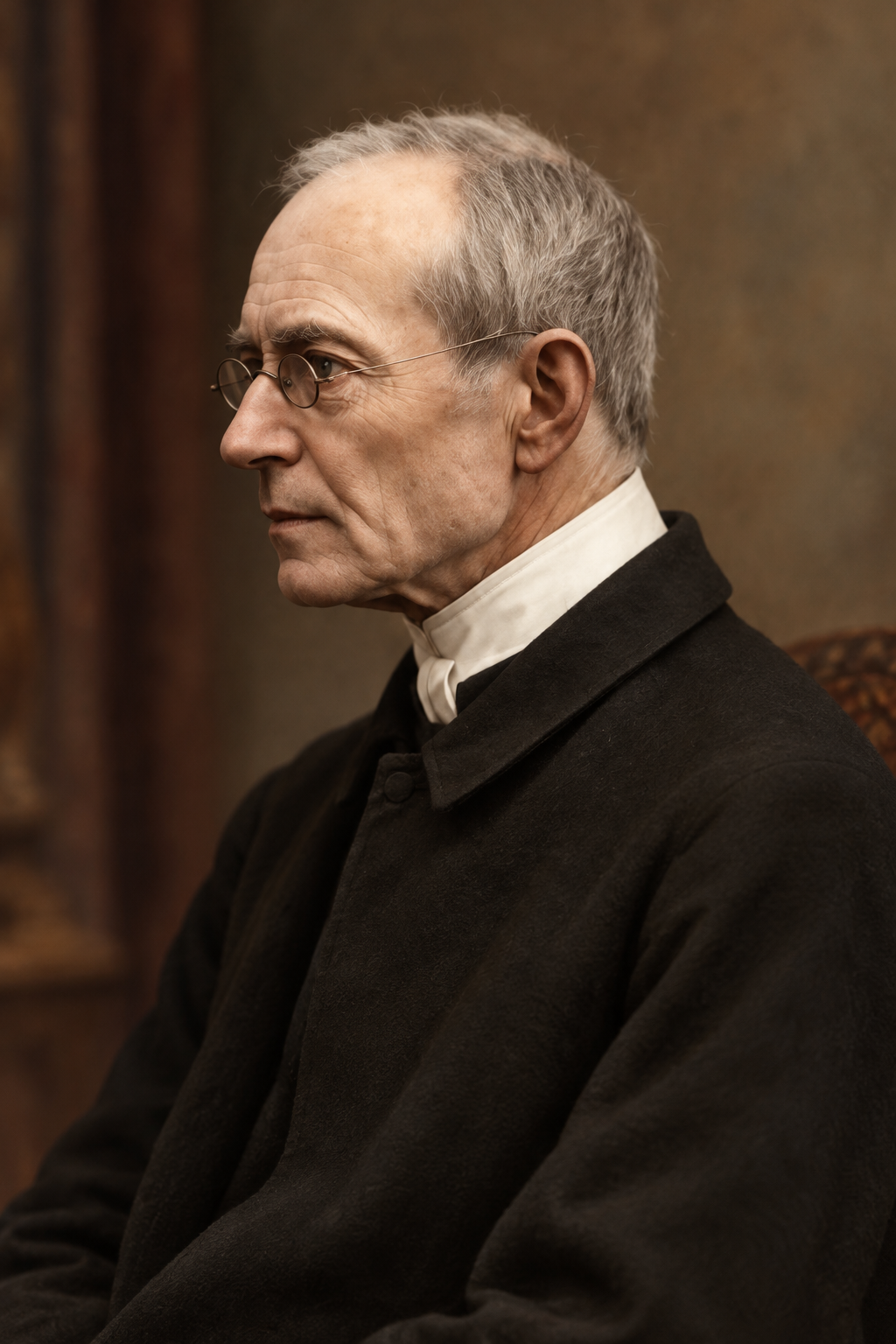
About Richard Meux Benson
Richard Meux Benson helped renew communal religious life for Anglican men and carried that work across the Atlantic. Born in London in 1824, he was educated at home before entering Christ Church, Oxford. He became a deacon in 1848 and a priest the following year, serving first at Surbiton and then as vicar of Cowley. His work combined parish ministry with theological study and spiritual retreats. When he considered missionary service in India, the growth of a new district at Cowley led his bishop to ask him to remain. The community he later founded grew within that setting of parish responsibilities.
Benson began sharing a religious life with Charles Chapman Grafton, an American priest, and Simeon Wilberforce O’Neill. On December 27, 1866, the three made lifelong vows of poverty, celibacy, and obedience as Mission Priests of the Society of Saint John the Evangelist. Benson became its first superior. He continued carrying parish responsibilities while leading the society, remaining at Cowley St. John until 1886. In 1890 he gave up the office of superior and traveled abroad. After visiting India, Japan, and Canada, he reached Boston in 1892 and lived there until his return to Oxford seven years later. His American years were a substantial period of residence within the community he had helped establish.
His first American visit had come much earlier. In November 1870 he traveled to establish a Boston house, preach missions, and conduct retreats, returning to England the following September. This joined the new society’s English foundation to an enduring American ministry.
The society combined active ministry with a demanding pattern of common prayer. A 1933 account describes the brothers reciting the offices together, setting aside time for meditation, and observing periods of silence. Benson’s retreats also brought clergy and laypeople into this rhythm. The same account records his later teaching of a small Bible class of older Black women in Boston, including women who had formerly been enslaved. It preserves a memory of personal pastoral work alongside the larger story of a religious foundation. Its admiring language and retrospective character also limit what it can establish about the women’s own experiences. The brothers’ simple clothing and the plain name Mission House reflected the form of life he sought. Ministry outside the house remained important, but membership did not require every brother to preach missions or travel overseas. The community also provided a place for those whose vocation was expressed through its worship, study, and daily responsibilities at home.
Letters written from Boston show that distance did not end his involvement in the society’s spiritual life. In July 1894 he thanked Father Page for a list of retreat participants and asked that his greetings reach both familiar and unfamiliar members. Each person’s gifts, he argued, enriched the shared life of the whole community. Other letters addressed friendship, aging, repentance, and perseverance. In December 1896, writing to an old acquaintance, he recalled childhood places and people who had died, while connecting those memories with his hope of continued fellowship in Christ. These letters preserve spiritual direction offered through correspondence as well as in person.
Benson’s teaching could be severe in its language of surrender. In a study of his influence on Grafton, John Bernard Pahls explains his emphasis on relinquishing self-will and learning obedience through prayer, worship, and community. Pahls also notes his counsel during periods when prayer felt dry or unrewarding: spiritual life was not to depend on moments of excitement. Within this understanding, discipline served a relationship with God rather than becoming an achievement measured by feeling. The study traces both the austerity of Benson’s instructions and the conviction that divine love made transformation possible.
In October 1899, still writing from Boston, Benson told Father Gardner that he expected to sail for England later that month. He reflected on the friends who had died during his absence and on the difficulty of recognizing his own advancing age. His thoughts returned to prayer and the need to seek God beyond outward religious observance.
His final years brought blindness, deafness, and greatly reduced mobility. The society’s obituary records his continuing participation in Communion until shortly before his death at the Mission House in Oxford on January 14, 1915. He was buried with other members of the community at St. Mary and St. John.
Later members of the society continue to interpret his teaching through the demands of community. Keith Nelson’s account emphasizes Benson’s understanding of divine love as something encountered through learning to love other people, rather than only as a distant promise. That reading connects the founder’s theological writing with the daily relationships through which his religious ideal took shape.
The Diocese of Oxford commemorates Benson on January 14 as a priest and religious founder, remembering his work as a pastor, retreat conductor, teacher, and spiritual director.
Wondering how to weigh the stories and sources? Learn how to read a saint biography.