Biography
Robert McDonald
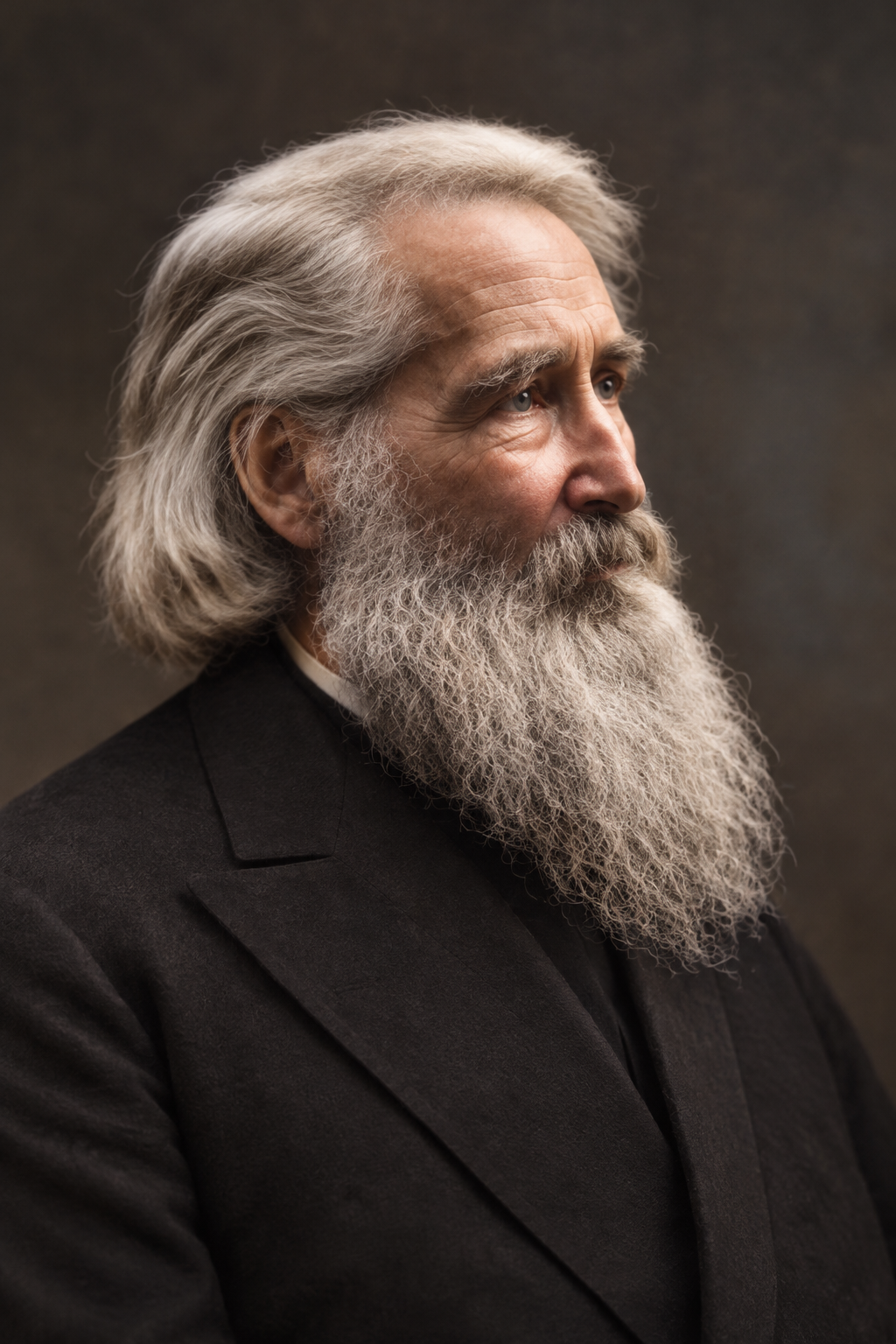
About Robert McDonald
Robert McDonald grew up at Point Douglas in the Red River region, where schooling and work on his father’s farm preceded his long career as a missionary. He taught at the Methodist mission at Norway House before Bishop David Anderson encouraged him to prepare for Anglican ministry. Ordained a priest in 1853, he took charge of the Islington mission on the Winnipeg River. There he learned Ojibway and translated the minor prophets. In 1862 the Church Missionary Society sent him to Fort Yukon, beginning decades of work in the North.
His ministry depended on learning from the people among whom he lived. Mélanie Fafard and Ingrid Kritsch’s history of Fort McPherson credits his Gwich’in wife, Julia Kutug, with helping translate Scripture, hymns, prayers, and other religious texts. Their account places this work within a community that made choices between competing Anglican and Roman Catholic missions. Christian holidays and Sunday observance became part of the Teetl’it Gwich’in cycle of activities, and Fort McPherson became a place for religious gatherings as well as trade. McDonald trained lay readers who could lead Sunday prayers while families were away on the land. Religious life therefore continued through Gwich’in teachers and readers, rather than depending entirely on a visiting missionary.
McDonald’s own grammar describes one way that reading spread. In its preface, he recalled a Christian leader who already taught orally and had some knowledge of reading English. According to McDonald, the man learned his syllabary in three days in 1874. Given a copy of John’s Gospel in April, he was reading from it to a gathering at a trading post by June. The account comes from McDonald himself and cannot establish how quickly every learner progressed. It does, however, explain the connection he saw between oral teaching, instruction in reading, and the use of books within a community. He presented his grammar modestly as an outline and described the pronunciation guide as the result of years of work.
The later church history edited by Bertal Heeney preserves accounts of travel, illness, translation, and teaching. It describes McDonald reaching people in scattered camps and receiving help from interpreters. It also identifies William Loola as a travelling companion, translator, and teacher who continued religious instruction among his own people. These named collaborators matter in a record often organized around the missionary alone. The chapter praises McDonald extravagantly and describes Indigenous religions through the prejudices of its period; those judgments should not be mistaken for an impartial account of Gwich’in life. Its concrete descriptions nevertheless show how travel and local leadership sustained the mission across long distances. The same account recalls that news of his serious illness prompted William Bompas to offer to take his place, but McDonald had recovered by the time Bompas arrived. Later illness and declining strength limited his journeys. The work did not simply stop during his absences: the chapter cites missionary reports describing unpaid local helpers who led instruction. It names John Tehietla as a teacher whose school had forty pupils learning to read in 1877. Such passages preserve traces of a wider network behind the published story of one missionary.
Cheryl Gaver’s historical study examines the tensions within this ministry. McDonald worked closely with Gwich’in communities, but he also sought religious change and opposed practices such as polygamy. Gaver describes his attempts to accommodate existing families rather than apply that opposition without qualification. She also discusses the agency of elders who wanted their language written in Roman letters, a preference McDonald eventually accepted. The resulting books could give readers greater independence from missionaries. These choices were negotiated within relationships; they were not simply gifts delivered by one outsider to passive recipients.
McDonald also encountered racial prejudice within the missionary organization itself. Gaver, drawing on earlier scholarship, describes the Church Missionary Society’s treatment of his mixed ancestry as a reason to distinguish him from European colleagues. Her account contrasts that institutional hierarchy with his efforts to train Indigenous Christian leaders. It does not make the wider history of missionary activity free of colonial assumptions or conflict.
He retired in 1904 and returned to Winnipeg, where he continued to be associated with his translations and language work. His grammar and dictionary appeared in 1911. He died in Winnipeg in August 1913 and was buried in St John’s Cathedral Cemetery.
His name later became attached to a church at Old Crow, built in 1926. The Yukon heritage register emphasizes that community members gathered materials, constructed, and maintained the churches that served them. It also recognizes Gwich’in catechists, deacons, ministers, and women’s organizations as central to their religious and social life. McDonald’s memory belongs within that continuing community history, alongside the translators, readers, families, and church leaders whose work made worship in their own language possible.
The Canadian Book of Common Prayer commemorates him on August 28.
Wondering how to weigh the stories and sources? Learn how to read a saint biography.