Biography
Roderick of Córdoba
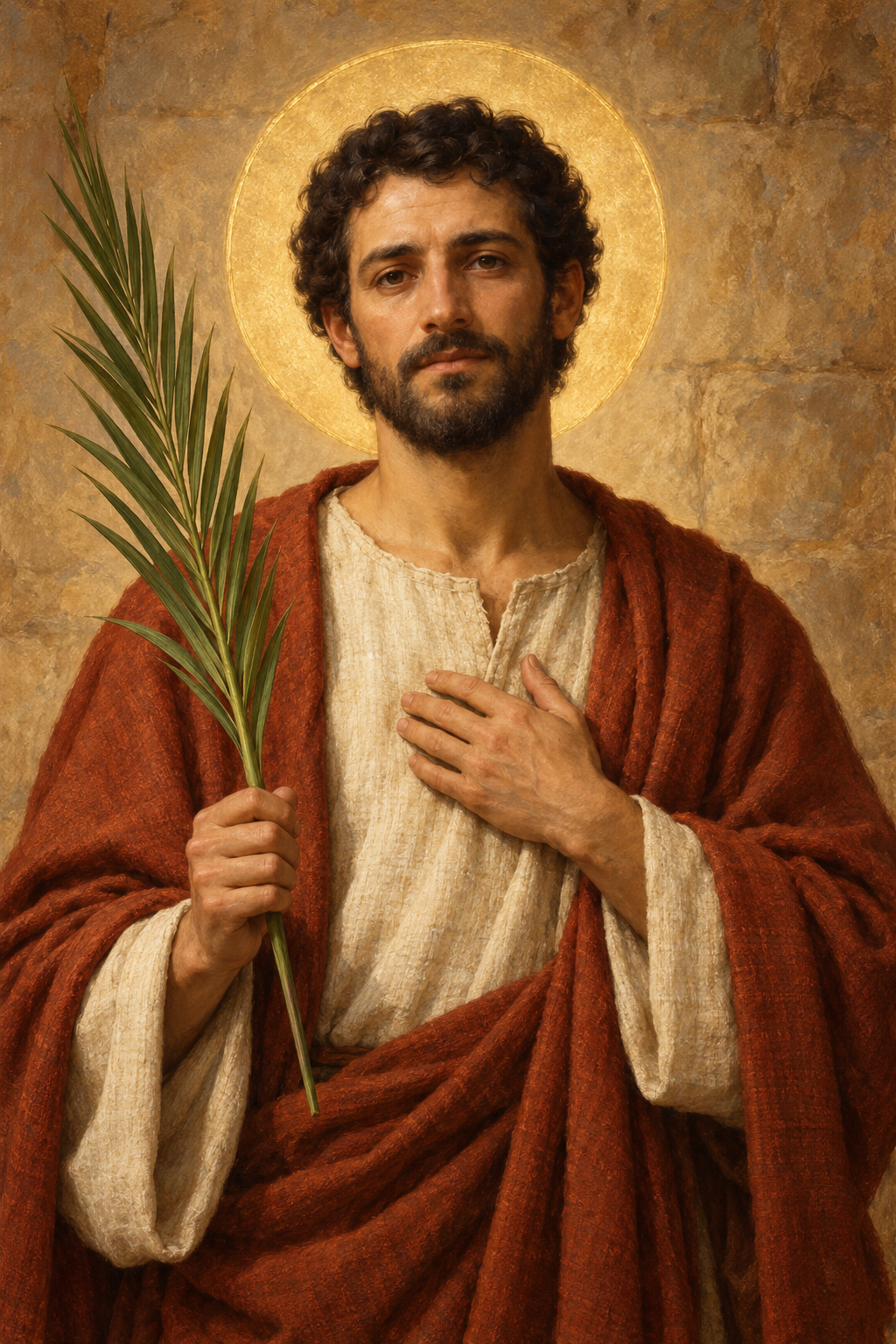
About Roderick of Córdoba
Roderick, known in Spanish as Rodrigo, was a priest associated with Cabra who died at Córdoba on March 13, 857. Catholic remembrance joins him with Salomon, another prisoner executed with him. Their shared feast is March 13.
His story comes from Eulogius of Córdoba’s defense of the martyrs. Eulogius says Roderick came from a village in Cabra’s territory and trained for the priesthood in the city. He intervened in a fight between two brothers, one Christian and one Muslim, and was badly beaten. Eulogius does not know what caused the quarrel. The Muslim brother falsely announced that the injured priest had converted.
After recovering, Roderick withdrew into the hills. On a visit to Córdoba for household needs, his brother recognized him and accused him of abandoning Islam. Roderick denied ever accepting it. Imprisoned with Salomon, he found companionship in prayer before the authorities separated them. Eulogius also attributes harsh denunciations of Islam to Roderick; these speeches belong to a polemical narrative, not a surviving court transcript.
The men were beheaded and their bodies thrown into the river. Eulogius describes seeing their remains and the measures taken against collecting relics. His narrative later credits local non-Christian informants with helping Christians recover Roderick’s body for burial.
The BICORE scholarly catalogue dates Eulogius’s work to about 857. It explains that the opening chapters defend the martyrs against criticism from other Christians. Those critics distinguished their circumstances from ancient persecutions, pointing to the absence of miracles and to Islam’s worship of one God. Eulogius answered with biblical arguments and a deeply hostile portrayal of Muhammad. His account therefore preserves an early Christian memory of Roderick while also participating in a religious dispute. Its judgments about another faith require that context.
The transmission of the text also has limits. BICORE records that Ambrosio de Morales used a manuscript from Oviedo Cathedral for his 1574 edition. That manuscript is now lost, and no other manuscript witness survives. Later printed editions and translations make the work accessible, but they do not supply independent contemporary accounts of Roderick’s experiences.
Cabra’s later devotion has a public and local character. The Andalusian cultural agency describes the saint as the city’s patron since the seventeenth century and records a revival of his festival in the early 1980s. The procession includes his image and a small image of the Virgin of the Sierra carried by children. Its account also notes efforts to celebrate using the Hispano-Mozarabic rite with ecclesiastical approval.
In March 2026, the municipality explicitly honored Roderick as patron of both Cabra and its local police. The day included worship at San Juan de Dios, a floral offering and civic recognition for police officers, volunteers and other contributors to public service. The Spanish bishops’ parish directory also lists San Francisco y San Rodrigo Mártir in Cabra. His name thus remains attached to the city’s civic observance and parish life.
Wondering how to weigh the stories and sources? Learn how to read a saint biography.