Biography
Rodrigo Aguilar Alemán
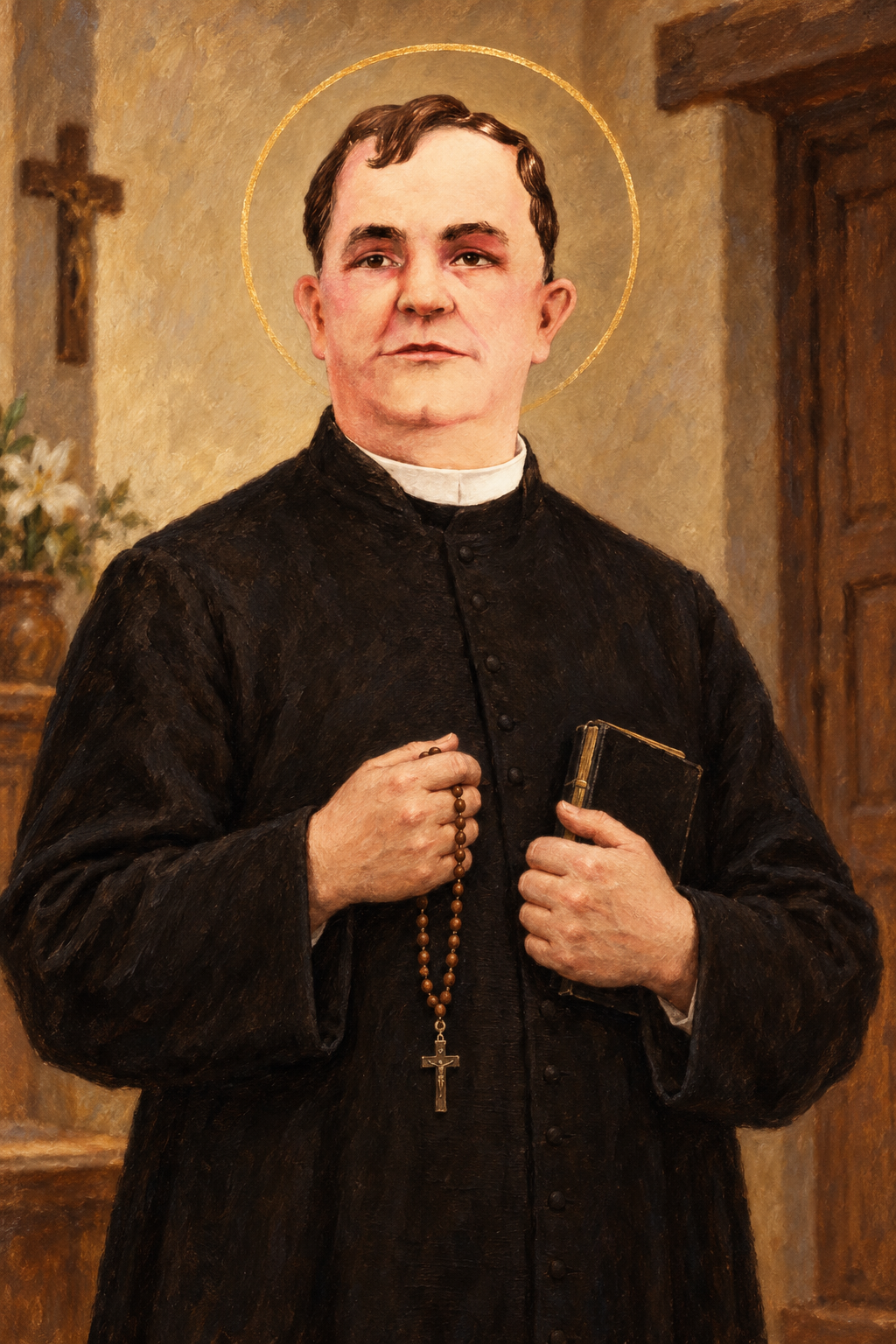
About Rodrigo Aguilar Alemán
Rodrigo Aguilar Alemán was born in Sayula, Jalisco, on 13 March 1875. He became a Catholic priest and served as parish priest of Unión de Tula. The Holy See’s account remembers him as a poet of particular sensitivity, with a deep devotion to Our Lady of Guadalupe. His priesthood ended in martyrdom at Ejutla on 28 October 1927.
His parents were Buenaventura Aguilar and Petra Alemán. He studied at the auxiliary seminary in Ciudad Guzmán, where his abilities as a student and writer became evident. His religious poems and other writings appeared in local newspapers. He was ordained priest on 4 January 1905 by Archbishop José de Jesús Ortiz y Rodríguez. Writing remained part of his ministry, alongside teaching and the celebration of the sacraments.
His pastoral assignments took him to several communities in Jalisco. He worked at La Yesca and later served at Zapotiltic, where he became parish priest after the incumbent’s death in 1923. There he encouraged study circles. A pilgrimage to the Holy Land led to his book Mi viaje a Jerusalén. In March 1925 he received the appointment to Unión de Tula, the parish with which his final years are especially associated.
As pressure on priests intensified, he left Unión de Tula and took refuge in Ejutla. Jesús Padilla Cueva’s account, drawing on witnesses in the canonization cause and local memories, describes his stay with the Adoratrices. In hiding, he continued a discreet ministry and remained available to people who sought spiritual help. His circumstances changed, but his relationship with the parishioners he had served did not simply end when he left their town.
Even while living away from his parish, he directed spiritual exercises for the Adoratrices and attended to parishioners who came to see him. González Fernández’s account describes his concern that the Eucharist remain available to his people, alongside his own regular prayer and worship.
Federal soldiers entered Ejutla in October 1927. The priests and seminarians at the religious house tried to escape, while Aguilar was captured. Padilla Cueva records differing recollections of the attempt: some emphasize his painful feet and difficulty moving quickly, while another remembers his return for something important. These accounts agree on the capture but do not establish a single certain explanation for his delay.
Before dawn on 28 October, he was taken to the town square and hanged from a mango tree. The canonization biography relates that his captors repeatedly demanded a declaration of allegiance, lowering and raising him as he continued to profess his faith in Christ the King and Our Lady of Guadalupe. The Church remembers this confession under violence as the culmination of his fidelity, rather than as the only important act of his priestly life.
Neighbors recovered and buried his body. The local account preserves different memories about who carried it and how the burial was arranged. Padilla Cueva also records the later movement of his remains to Unión de Tula, where his memory became part of the parish’s life. The recollections reveal a community trying to honor its priest after a frightening episode of persecution.
He was beatified with Cristóbal Magallanes and the other Mexican martyrs on 22 November 1992. At the Angelus that day, John Paul II spoke of their public fidelity to the Gospel and their forgiveness of persecutors. He described their witness as an offering of life, placing their courage within a Christian understanding of charity. His greeting to the Mexican pilgrims also recognized the wider community that had carried their memory to Rome. The beatification that morning coincided with the solemnity of Christ the King.
The beatification homily recalls the priests’ love of the Eucharist, catechesis and care for poor and sick parishioners. It emphasizes their decision to remain close to their communities. Their deaths completed lives already given to pastoral service.
John Paul II canonized the group on 21 May 2000. In the canonization homily, he again connected their fidelity to service of their communities and forgiveness of their persecutors. Aguilar’s recognition belonged to a group of priests and laypeople whose witness the Church offered to the wider Mexican community.
His recognition also shaped devotion. A parish report from El Cuarenta in Jalisco describes a celebration on 12 October 2000 at which ten newly canonized Mexican saints, including Rodrigo Aguilar, were chosen as patrons for its neighborhoods. The report does not identify which neighborhood received his patronage. It nevertheless records an explicit choice to place a community under his protection.
The report places the choice within a year of Eucharistic celebrations, parish pilgrimages and devotion to Our Lady of Guadalupe. Aguilar’s place in that setting joins remembrance of a martyr with the shared worship of a living community. In Guadalajara’s liturgical booklet, his individual commemoration falls on 28 October, with a memorial specified where his relics are preserved.
Wondering how to weigh the stories and sources? Learn how to read a saint biography.