Biography
Rutilio Grande García
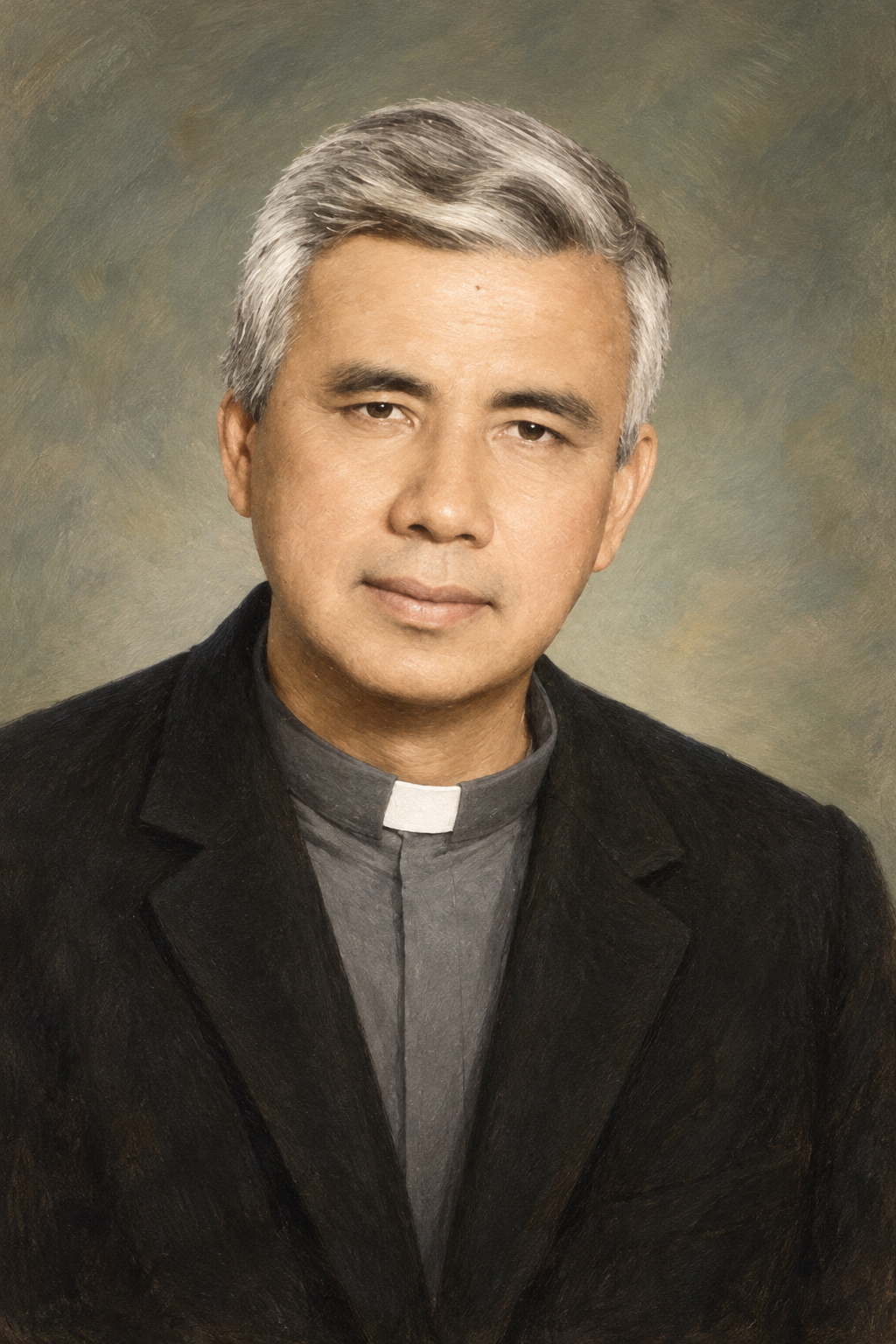
About Rutilio Grande García
Rutilio Grande García was a Salvadoran Jesuit whose work with seminarians and rural communities helped shape a Church more closely involved in the lives of poor families. Born in El Paisnal, he was raised by his grandmother after his parents separated. In the excerpts published from Rodolfo Cardenal’s biography, Grande credits her prayer and religious teaching with forming his vocation. His father was a merchant and a local political figure. In May 1940, Grande wrote to Archbishop Luis Chávez about his wish to become a priest; the archbishop encouraged him to persevere. He entered the minor seminary in 1941 and joined the Jesuit novitiate near Caracas in 1945. His formation subsequently took him to Ecuador, Panama and Spain.
Grande was ordained at Oña in 1959. He celebrated his first Mass on the feast of Saint Ignatius, the day after his ordination. His final vows followed in August 1964. After further study in Brussels, he taught pastoral theology at San José de la Montaña Seminary in San Salvador. He encouraged seminarians to work among parishioners and joined them in pastoral activities. In 1972 he became parish priest of Aguilares, where his ministry emphasized the participation of laypeople and the needs of poor and marginalized residents.
Jesuit superior general Arturo Sosa later described Grande’s vocation through the renewal associated with the Second Vatican Council and the Latin American bishops’ 1968 meeting at Medellín. Grande’s teaching and pastoral practice reflected that renewal, which also brought tensions within the seminary and the local Church. Sosa recalled him as both an understanding companion and a demanding guide to the responsibilities of priesthood. The letter distinguishes Grande’s pastoral team from partisan political militancy. Some community members participated in political struggles, but the priests understood their own commitment to justice through their faith. Powerful opponents nevertheless regarded Grande’s work as a threat.
Michael O’Sullivan’s account places the parish team’s approach within liberation theology. In this understanding, people living in poverty were to participate actively in interpreting Scripture and their own circumstances, rather than simply receiving instructions from clergy. Small Christian communities provided a setting for dialogue, shared reflection and practical cooperation. O’Sullivan relates this approach to a countryside where export agriculture left many workers with insecure employment and inadequate living conditions. The parish’s religious work therefore addressed conditions that affected everyday survival. Encouraging people to become informed and confident participants in community life also brought the team into conflict with those who feared organized rural communities.
A later recollection by José Aníbal Meza Tejada gives concrete examples of the changes parishioners experienced. He remembered Grande and his colleagues meeting people directly in the town and surrounding countryside. Gospel-reflection groups drew in residents who had previously had little involvement in parish life. Rural pastoral workers, known as Delegates of the Word, took an active role. At the Maize Festival, communities donated fresh maize and shared cooked food without charge. Meza also recalled a Holy Week procession that stopped at places important to local public life, including a police headquarters, where the preaching condemned repression. His memories include Saturday music broadcast from the church’s loudspeakers, especially songs by Roberto Carlos. These recollections describe a team’s everyday parish work, rather than attributing every initiative to Grande alone.
Grande’s preaching connected Christian belief with the treatment of other people. Carlos Ayala Ramírez’s analysis follows three homilies delivered between 1970 and 1977. At the Maize Festival in 1976, Grande insisted that parish activity should be guided by the Gospel. In Apopa in February 1977, after the expulsion of the priest Mario Bernal, he spoke of a common divine parenthood that made people brothers and sisters. He presented love as a force that should overcome prejudice and hatred, and used a shared table as an image of belonging. The sermon also acknowledged the danger of putting such beliefs into practice in an unjust society.
On March 12, 1977, Grande was killed with Manuel Solórzano and Nelson Rutilio Lemus. The Church’s martyrdom decree identifies their shared religious commitment while retaining the distinction between the priest and his two lay companions.
Grande’s friendship with Óscar Romero remained important in the remembrance of his life. Miguel Cavada’s essay draws on Romero’s funeral and anniversary homilies, in which the archbishop remembered Grande as a brother and held up his service among rural families. Their friendship had continued despite differences in their responses to changes within the Church.
The three were beatified in San Salvador on January 22, 2022, alongside the Franciscan priest Cosme Spessotto. Jesuit Hernán Paredes attended the ceremony and described priests assembling at the seminary where Grande had taught before going to the outdoor celebration. His account emphasizes the recognition of people from different generations and states of life: a priest, an elderly lay collaborator and a young companion. Their joint commemoration preserves the place of lay participation in the parish story, alongside Grande’s teaching and leadership.
Wondering how to weigh the stories and sources? Learn how to read a saint biography.