Biography
Sabbas the Sanctified
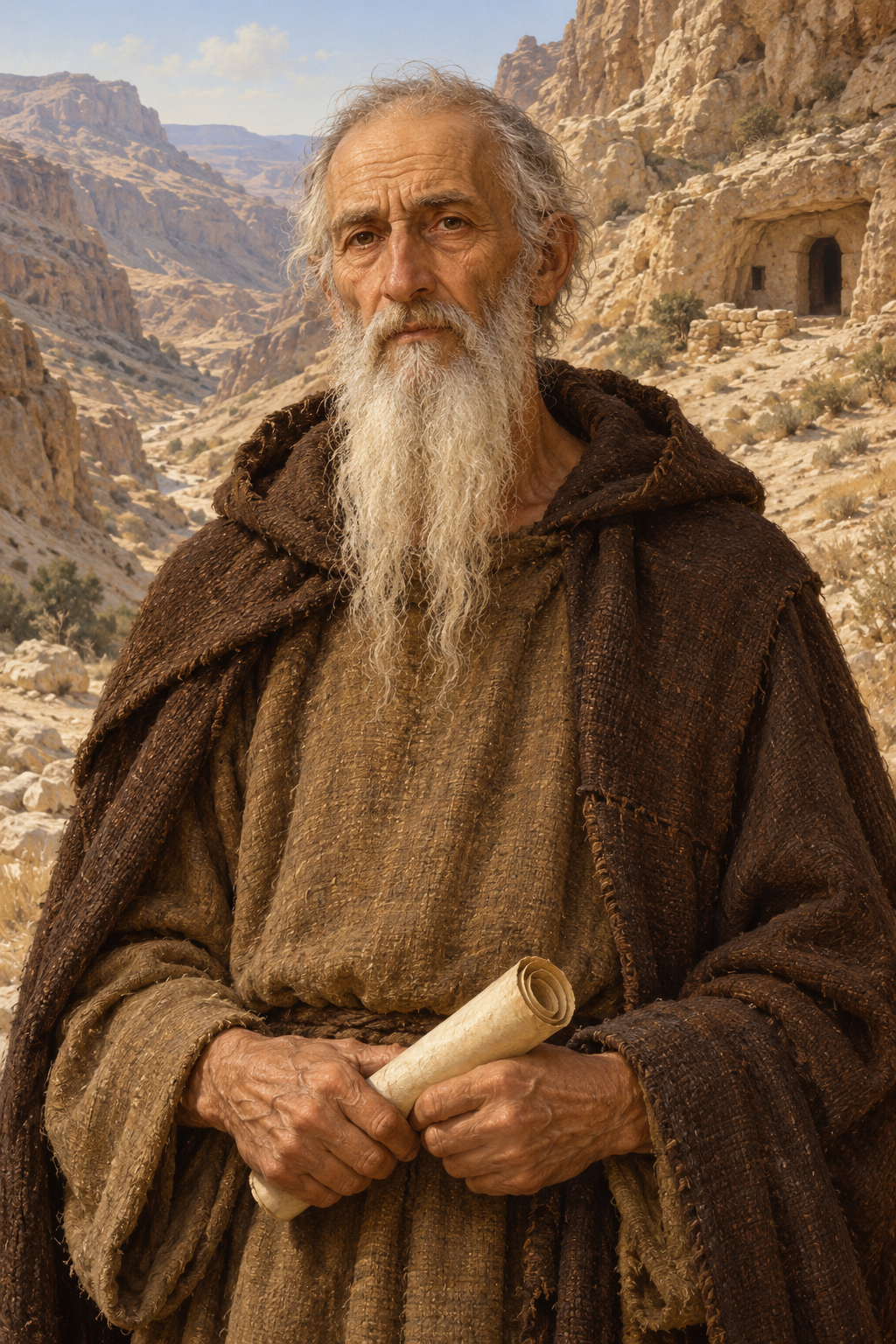
About Sabbas the Sanctified
Sabbas the Sanctified was a Cappadocian monk and priest whose foundations helped shape religious life in the Palestinian desert. Born at Mutalaska in 439, he came to Jerusalem while still young and eventually established the Great Laura in the Kidron ravine. The community became known as Mar Saba. He died there on December 5, 532.
The Orthodox Church in America’s account places his childhood in a family whose father served as a military commander. After his parents left for Alexandria, Sabbas entered a nearby monastery. Later, in Palestine, Euthymius directed him to the community led by Theoctistus. His training began with life under an abbot and among other monks before he received permission for greater solitude.
The same account describes him living in a cave but returning to the monastery on Saturdays for worship and a shared meal. Euthymius also took him into the wilderness during the season before Easter. These alternating periods of solitude and community were part of his formation. Stories of extraordinary signs, including a pillar of fire marking a cave church, belong to the devotional tradition through which his followers remembered that life.
The monastery’s own published history describes a growing body of disciples around him. It also preserves conflict within that community: some monks challenged his leadership and sought his replacement. Sabbas withdrew for a time and founded other communities. When he returned, the dissidents moved to another settlement. The account remembers him helping them organize it and providing an abbot, rather than treating separation as the end of every obligation toward them.
Sabbas’s influence extended beyond the desert. He travelled to Constantinople and sought imperial support in the religious disputes of his time. He defended the Council of Chalcedon and opposed teachings he regarded as incompatible with it. Michael Ott’s Catholic Encyclopedia entry also cautions against assigning him direct authorship of the liturgical and monastic rules later circulated under his name. The importance of his tradition does not make every later text his own composition.
The surviving narrative requires careful reading. In his study of Palestinian church politics, Daniel Neary examines how Cyril of Scythopolis portrayed Sabbas as an exemplary supporter of imperial religious policy. Cyril wrote after the saint’s death, and some passages appear to reflect disputes and legislation from that later period. Neary argues that these features should qualify the apparently straightforward picture of a holy man speaking before an emperor.
The mission to Justinian in 531 also had a financial setting. The Samaritan revolt and its violent repression had devastated lives, agriculture and church revenues. Cyril credits Sabbas with seeking tax relief, rebuilding funds, a hospital for sick visitors and protection for the monasteries. Neary also notes that restoration costs were to come partly from the sale of Samaritan property. This history includes coercion and material interests alongside the charitable purposes described by the Christian narrative.
The Great Laura continued to bear his name long after his death. The monastery history recalls its association with John of Damascus and its role in the training of monks connected with the Holy Sepulchre. These later developments belong to the institution’s continuing history, rather than to Sabbas’s personal activity. His memory offered subsequent generations a founder whose example they interpreted within their own theological and communal struggles.
His relics became another focus of devotion. The Jerusalem Patriarchate records their return from Venice in 1965, their reception at the Church of the Holy Sepulchre and their subsequent placement at Mar Saba. In 2025, worshippers marked the sixtieth anniversary with a vigil and a procession around his tomb. Such observances show how remembrance of the founder continues through particular places, objects and acts of worship.
His December feast likewise brings monks and lay worshippers to the Laura. The Patriarchate’s 2025 report describes Greek and Arabic chanting and participants from neighbouring communities. It also records worship at a chapel dedicated to Sabbas within Jerusalem’s Monastery of the Holy Archangels. These two settings preserve his name within the religious life of both the desert and the city.
Other dedications carried that memory further. Rome’s San Saba parish traces its early community to eastern monks from the Judaean monastery. Its surviving basilica preserves medieval architecture, a Cosmatesque pavement and thirteenth-century paintings, alongside a history of successive religious communities.
The Roman parish’s history names Benedictines, Cluniacs, Cistercians and canons among the communities that followed the eastern founders. Jesuits later directed the site, with periods of Franciscan and Salesian occupation during their absence. This succession matters when reading the building: its later fabric and institutions record many centuries of change, not a monastery personally established in Rome by Sabbas himself.
In Iași, a church dedicated to Sabbas was built with the involvement of Greek monks from Mar Saba. A Romanian Patriarchate report describes later rebuilding and its use in the archdiocese’s charitable work.
Wondering how to weigh the stories and sources? Learn how to read a saint biography.