Biography
Salvian of Marseille
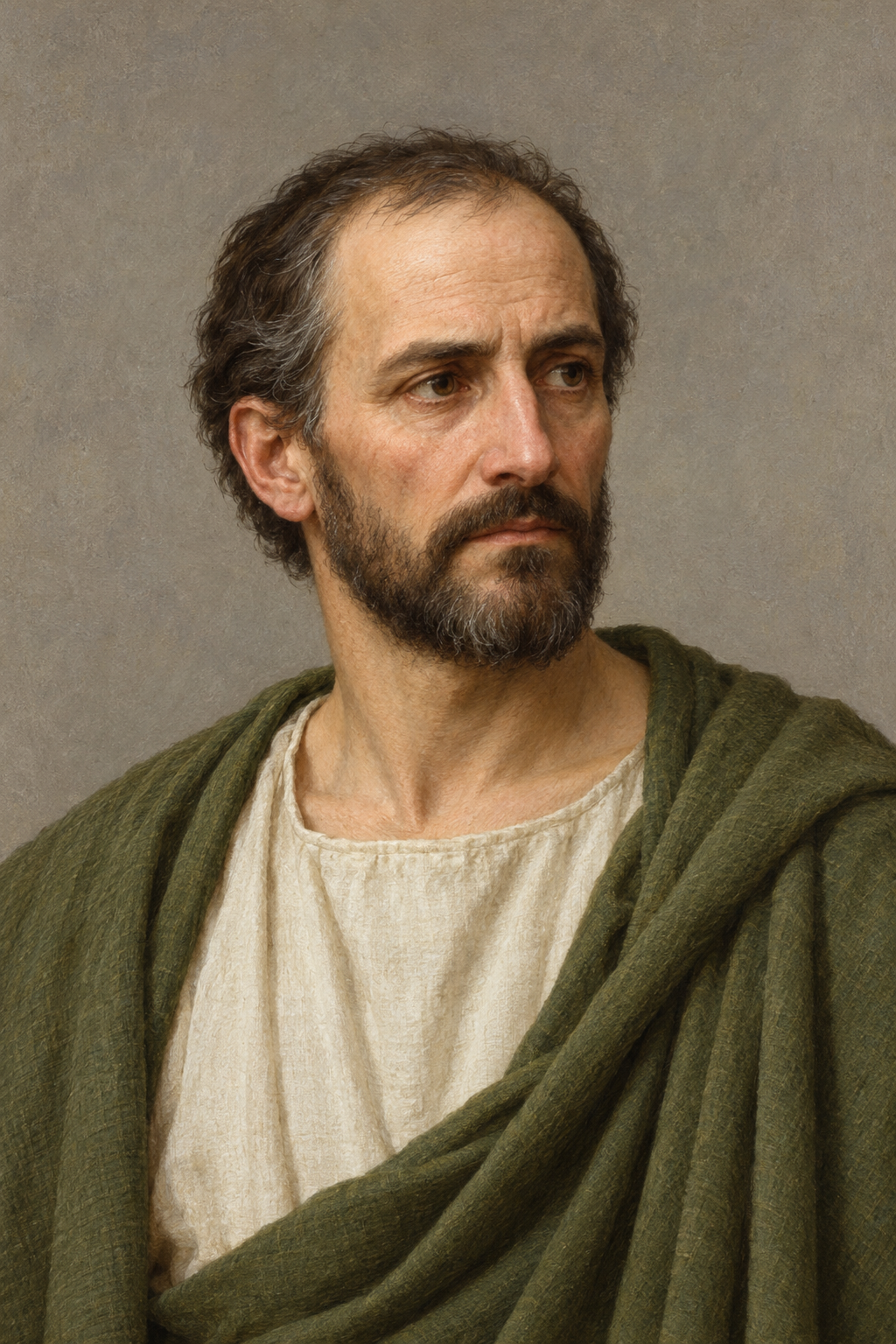
About Salvian of Marseille
Salvian of Marseille was a priest and Christian writer in fifth-century Gaul. Gennadius, who knew his writings, describes a learned author whose work served other church leaders. His list includes biblical interpretation, letters, works on Christian conduct and sermons for bishops. This testimony places Salvian within a network of teaching and pastoral service rather than on a bishop’s throne.
Gennadius names works on virginity and the sacraments, an explanation of part of Ecclesiastes, and a poem concerned with creation. Much of that output is now lost. The list preserves a broader range of interests than the surviving polemics alone suggest, and records that Salvian was still living in old age when Gennadius wrote. It supplies a contemporary witness without establishing an exact year of death.
His earlier life is less precisely known. His origins lie in the Rhine region, although the competing claims of Trier and Cologne do not establish a certain birthplace. He married Palladia, and they had a daughter, Auspiciola. The couple’s decision to embrace an ascetic life strained their relationship with Palladia’s parents. A surviving letter seeks reconciliation while defending their chosen way of living. Its outcome is unknown.
At Lérins he helped teach Salonius and Veranus, the sons of Eucherius, who later became bishops. His relationships with this circle continued after he moved to Marseille. A letter recommending a young relative displaced from Cologne shows him seeking the monks’ practical help. His surviving correspondence also thanks Eucherius for a work of biblical instruction. These exchanges reveal a teacher who remained connected to former pupils and companions across changes in their responsibilities.
Salvian’s path eventually led through the monastic community at Lérins to priestly life in Marseille. His best-known work, On the Government of God, addressed the upheaval of the western Roman world. He argued that political disaster did not show God’s indifference; he interpreted it as judgment calling Christians to change their lives. This was a theological argument shaped by a time of crisis, rather than a detached account of events.
His criticism becomes especially concrete when he describes the treatment of the poor. He accuses powerful people of shifting public burdens onto weaker neighbors and using office for private advantage. He also challenges clergy who remain silent in the face of injustice. In his account, oppression could drive people to seek refuge beyond Roman authority. These passages reveal the urgency of his moral appeal, without making every sweeping accusation a neutral description of Roman society.
Another surviving work, Ad ecclesiam, addressed the use of wealth. Writing under the name Timothy, Salvian urged Christians to give generously to the church and the poor. His argument reached into family inheritance: wealth should serve religious commitments rather than simply remain within a prosperous household. Chris de Wet’s study shows how this concern shaped Salvian’s defense of children who had entered religious life. Parents sometimes allowed such children to use property without owning it, preventing them from giving it away. Salvian objected that this denied them the freedom to choose poverty through generosity. He compared their restricted position with that of freed people whose rights remained limited. His appeal thus joined spiritual discipline to concrete questions about ownership and control. He also allowed provision for relatives in need, including parents who had suffered loss; the argument was more particular than a blanket rejection of family obligations.
The force of his writing also makes it difficult historical evidence. Mattias Philip Gassman’s study of religious life in Carthage finds Salvian’s picture incompatible with evidence from Augustine and later sermons. Gassman argues that it overlooks restrictions imposed on traditional worship and distorts patterns found in other sources. This assessment does not require every passage to be deliberate fiction, but it challenges using Salvian as a reliable guide to the city’s religious practices. His conviction and vivid language therefore need to be read alongside independent testimony.
Paul Lejay likewise describes Salvian as an advocate who strengthens the evidence supporting his case and minimizes what complicates it. His contrasts between Roman failings and the virtues he attributed to other peoples belong to a tradition of moral criticism. They reveal the reforms he wanted Christians to undertake, but cannot stand as balanced judgments on entire populations. His reputation as a writer rests partly on this uncompromising appeal.
The place of his ordination is not securely known. Modern reconstructions sometimes supply details that the surviving evidence cannot confirm, so his ministry in Marseille should not be turned into a complete itinerary. His religious reputation also needs careful wording. Earlier scholars debated whether the honorific language used about him amounted to recognition as a saint. That question should not be confused with evidence for a particular act of canonization.
Nominis now includes him as Saint Salvien and records a local feast on 24 July. This supports his place in local Catholic remembrance, while leaving the uncertain dates and details of his life open.
Wondering how to weigh the stories and sources? Learn how to read a saint biography.