Biography
Samuel Shoemaker
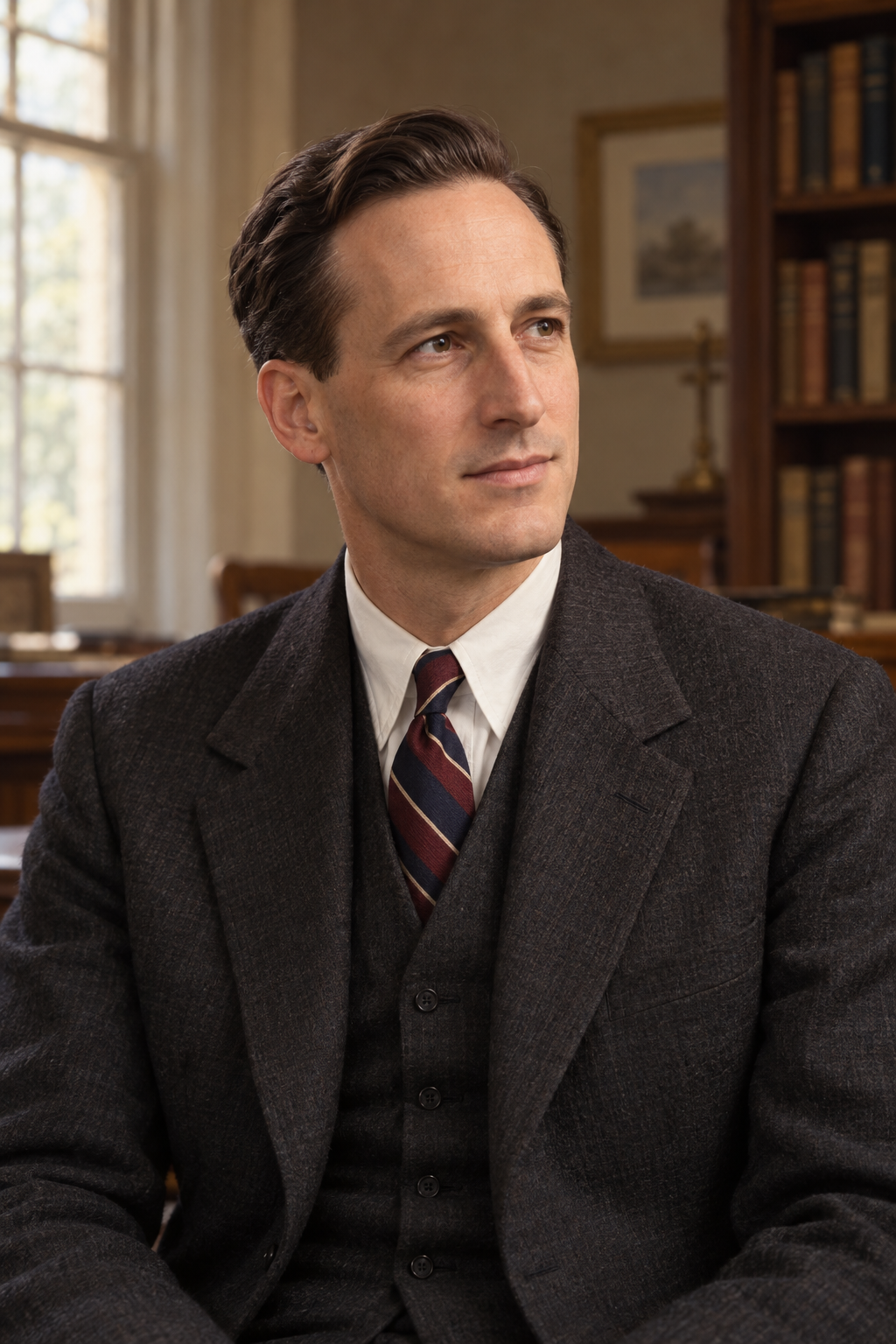
About Samuel Shoemaker
Samuel Shoemaker was an Episcopal priest whose ministry connected parish life, personal conversion, and the world of work. Born into a Maryland Episcopal family, he became involved in Christian student activity at Princeton. Teaching in Beijing brought him into contact with Frank Buchman, a Lutheran religious leader whose emphasis on personal spiritual change deeply influenced him. Shoemaker was ordained deacon in 1920 and priest in 1921. In 1925 he became rector of Calvary Church in New York. His ministry there included weekly evening gatherings that encouraged people to bring their faith into their working lives.
He had been born in Baltimore on December 27, 1893. He entered Princeton in 1912. He went to China in 1917, worked with the YMCA, and taught business courses. His encounter with Buchman followed in 1918. Back in the United States, he married Helen Smith in 1925. Calvary House, developed in 1928, provided meeting space and accommodation connected with the parish. These settings became important to the network around the Oxford Group, the movement associated with Buchman.
The Oxford Group stressed confession, surrender to God, and sharing religious experience with others. Historian John Woolverton places Shoemaker within an evangelical tradition that sought social renewal chiefly through changed individuals. This approach could leave larger economic structures comparatively unexamined. Calvary became an important American center for the movement. Shoemaker eventually grew troubled by the authority exercised within it, and his break in 1941 marked a significant change in his ministry. Woolverton describes the conflict as involving both religious leadership and the movement’s direction, rather than a simple abandonment of evangelism.
His own writing also challenged the social habits of comfortable churchgoers. In a 1930 article, Youth’s Impatience with Religion, he acknowledged the force of young people’s objections to religious hypocrisy. He criticized Christians who expressed devotion while ignoring unemployment, famine, or the low wages of their employees. He argued that faith concerned industry, politics, war, and race relations as well as private conduct. At the same time, he defended inherited moral standards as accumulated experience deserving thoughtful consideration. His criticism was directed at the separation of profession from practice. He described young people as looking for purpose, coherence, and ways to help their friends, and believed Christian life could answer that search. The article shows his concern with religious credibility in daily life, while retaining his conviction that the answer lay in a renewed commitment to Christ.
Calvary’s mission also brought Shoemaker’s work into the early history of Alcoholics Anonymous. Bill Wilson visited in 1934, and Shoemaker’s teaching influenced ideas later expressed in the Twelve Steps. Shoemaker initially objected when A.A. members developed independent meetings. After leaving the Oxford Group, he apologized to Wilson for his earlier attitude. A.A.’s own account credits his spiritual influence while identifying Wilson as a cofounder of the fellowship.
Their relationship continued after that separation. Woolverton describes renewed contact in the postwar years and Shoemaker’s participation in the 1955 A.A. convention in St. Louis. His later writing showed a willingness to learn from the fellowship he had helped influence. The historian contrasts A.A.’s developing practices of anonymity and shared responsibility with features of the earlier Oxford Group. This history places Shoemaker within an exchange of ideas and experience whose participants did not always agree.
In a sermon reflecting on the convention, Shoemaker argued that churches could learn from people in recovery. He identified acknowledgment of need, mutual help, personal honesty, and a changed life as lessons for congregations. Respectable church membership, he warned, could conceal a reluctance to admit fault. His understanding of conversion did not require a claim to perfection: it meant beginning to live differently. He also urged churches to make room for informal groups where lay people could speak about their experience. His sermon interpreted A.A. through his own Christian commitments and challenged the complacency he saw within church life.
In Pittsburgh, his concern for faith beyond Sunday worship took another form. The Pittsburgh Experiment, begun in 1955, brought religious conversation into the business district. David Miller describes its location in an office building and its use of lunches, groups, and workshops. Participants were invited to consider their work as part of Christian life. The arrangement made everyday employment a subject for shared reflection, rather than treating religious experience as something confined to a church building. Miller connects this work with the wider Faith at Work movement and its magazine.
Shoemaker served as Calvary Church’s twelfth rector in Pittsburgh from 1952 through 1961. In 2009, the Diocese of Pittsburgh reported that the Episcopal Church’s General Convention had ratified a January 31 commemoration. This recognition belongs to the Episcopal calendar and remembers his ministry as a priest and evangelist.
He retired at the beginning of 1962 and died in Maryland in October 1963.
Wondering how to weigh the stories and sources? Learn how to read a saint biography.