Biography
Samuele Marzorati
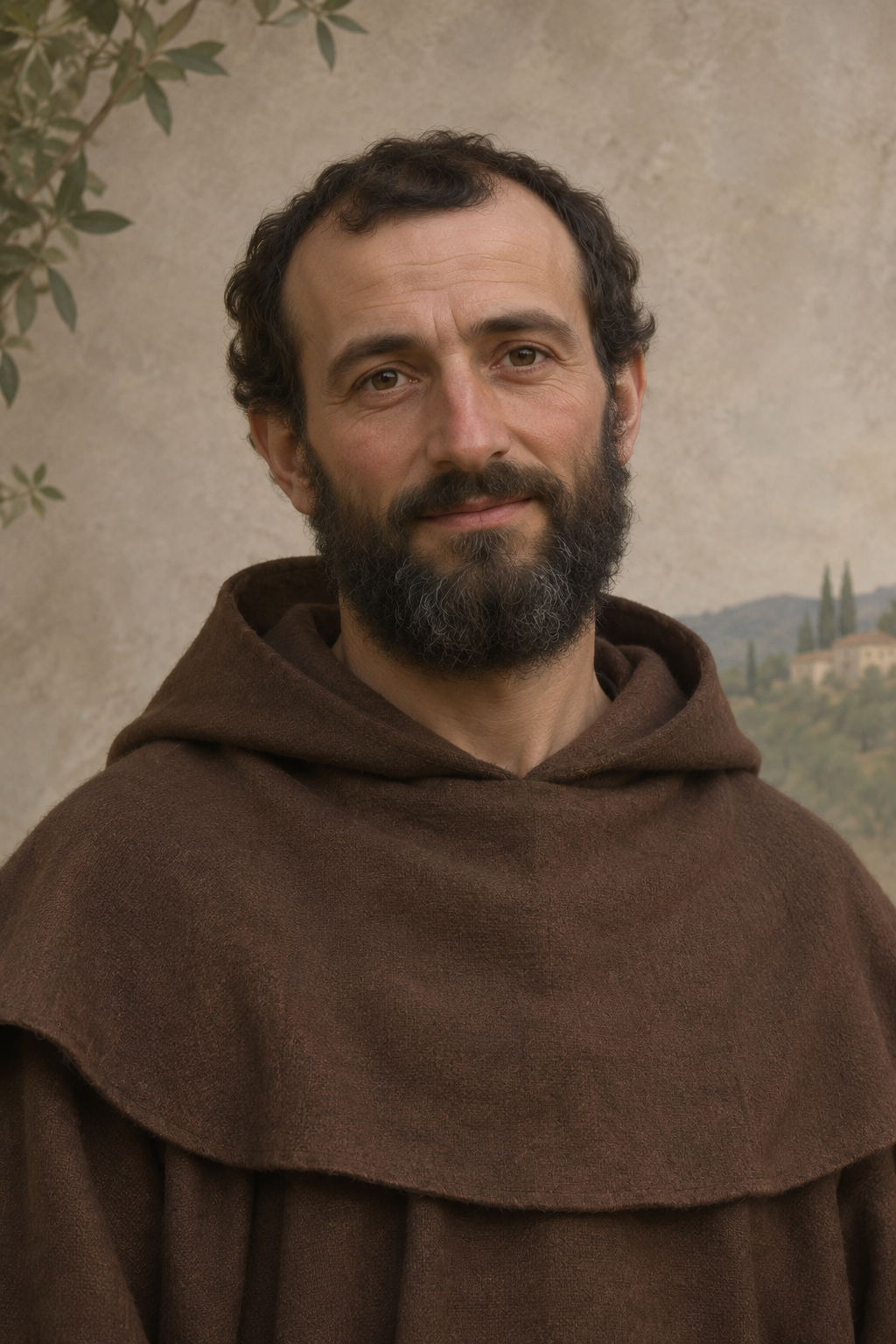
About Samuele Marzorati
Samuele Marzorati was born Antonio Francesco at Biumo Inferiore, near Varese, on 10 September 1670. He grew up close to the Franciscan convent of the Annunciation and entered the Reformed Friars Minor. After ordination, he asked to prepare for missionary work. His superiors sent him to the Franciscan missionary college at San Pietro in Montorio in Rome, where he continued the formation required for service overseas.
He had entered the novitiate at Lugano in 1692. His preparation included medicine and surgery as well as the studies needed for priesthood. These practical skills formed part of the Franciscan approach to mission. Caring for illness could provide a form of service where public preaching was difficult or forbidden. The work he undertook therefore required more than the ability to explain Catholic doctrine.
Marzorati’s first route differed from those of the companions with whom he would later die. He was sent toward Socotra while Liberat Weiss and Michele Pio Fasoli travelled south through the Nile region. The parties belonged to a wider Franciscan effort, but their early experiences were separate. His later partnership at Gondar should not be projected backwards onto every stage of their missionary careers. They came together after different attempts had failed to establish the desired work.
He reached Cairo in 1701 and spent the following years attempting a mission connected with Socotra. That effort did not produce the lasting foundation he sought. He eventually returned to Cairo. In 1711 he was assigned to accompany Weiss, now apostolic prefect, and Fasoli on a renewed attempt to reach Ethiopia. The decision redirected his work after years of uncertainty. It also placed him in a small community whose members had already experienced the disappointment of an unsuccessful undertaking.
The three left Cairo in November 1711 and travelled by the Red Sea route. They reached Massawa the following spring and Gondar in July 1712. Their journey required months of movement and waiting before they could settle. The Ethiopian court’s initial welcome gave them an opportunity to begin, but did not remove opposition to Catholic missionaries. Their prospects remained tied to circumstances they could not control.
They worked under restrictions on public preaching. Medical assistance and other useful skills helped establish relations, while conversation with learned Christians continued. Their aim was reunion with Rome in a country whose Christian traditions long preceded their arrival. The mission combined service, language learning and disputed religious claims.
Marzorati signed a joint letter from Gondar in May 1714. It reveals the strain of maintaining the foundation with inadequate supplies and uncertain correspondence. The friars feared being left without support and contemplated departure if assistance did not arrive. They asked for a more reliable way to sustain the mission, including a base at Mocha. The letter gives their work a practical texture: food, clothing, transport and money were pressing needs, not incidental details.
The same document described the ruler’s reluctance to receive papal letters and his instruction that the friars avoid public religious controversy. It also reported limited pastoral contacts and hopes for further work. These accounts show expectation and frustration existing together. Their correspondence was written by participants seeking help for their own mission, and its judgments about other Christians reflect that position. The hostile descriptions require caution.
The mission received a visit from Giacomo Negro in 1714, bringing aid and letters. He later went back to Cairo to arrange further support for the friars.
In 1715 the missionaries were sent away from Gondar for their protection. After the ruler’s illness and the rise of a successor, they were brought back and examined. The report of their last days places religious questioning within a struggle at court. It also records disagreement among those deciding their fate. Their condemnation emerged from a particular crisis, rather than a timeless hostility between whole Christian communities.
Marzorati was killed with Weiss and Fasoli at Abbo, near Gondar, on 3 March 1716. Early Catholic accounts remember their refusal to abandon their faith. News travelled to fellow missionaries outside Ethiopia and became part of the documentary record later used to examine their cause.
At the beatification, the pope acknowledged grave misunderstandings between Catholics and the Ethiopian Church. He connected them with differences of language and culture, and urged a renewed commitment to unity and cooperation. His words gave the remembrance of these martyrs a forward-looking purpose: Christians were called to relieve suffering together and deepen their fraternity after a difficult shared history.
John Paul II beatified the three in 1988. At the audience the following day, he greeted Ethiopian representatives as well as pilgrims from the missionaries’ home regions. He presented their service and sacrifice as an invitation to faithful Christian living. Marzorati’s Catholic memory therefore remains shared with his companions, while his own path retains its earlier formation, medical preparation and unsuccessful Socotra mission.
Wondering how to weigh the stories and sources? Learn how to read a saint biography.