Biography
Sava of Serbia
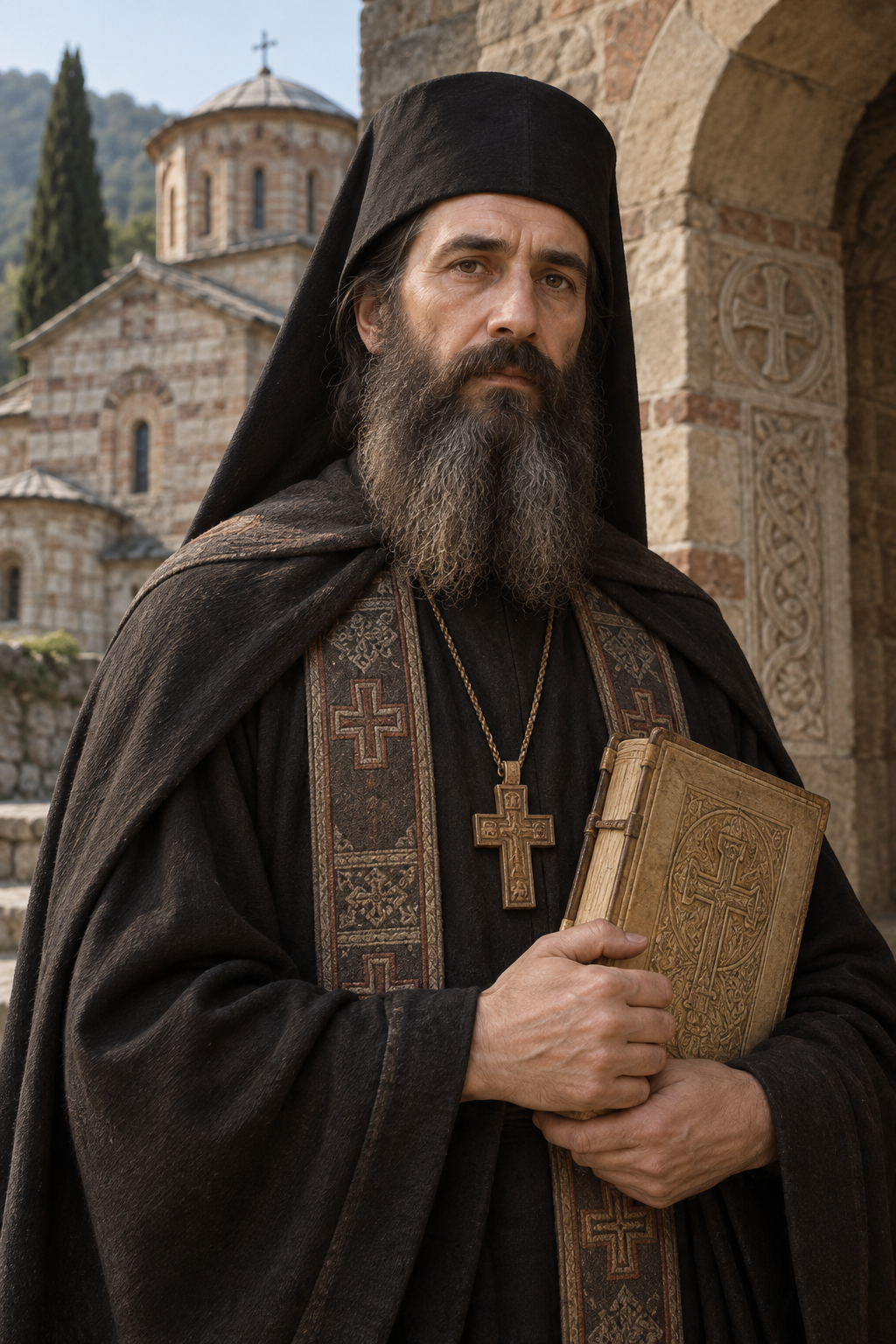
About Sava of Serbia
Sava began life as Rastko, a son of the Serbian ruler Stefan Nemanja. Church histories place him in the late twelfth century, when the Serbian state and its religious institutions were still taking shape. Accounts disagree about his birth year, placing it around 1169 or the mid-1170s. The shared point is his move from a princely household into monastic life on Mount Athos.
The Orthodox Church in America’s historical account says Rastko left court at about seventeen and became the monk Sava. His father later abdicated, took the monastic name Simeon, and joined him on Athos. The two received Hilandar monastery, which became an enduring center of Serbian monastic life. This phase explains why Sava’s later leadership drew on years of shared worship, monastic organization, and study rather than only his family’s political standing.
After his father’s death, Sava returned to Serbia with Simeon’s remains in 1207. Studenica Monastery says he lived there for about a decade and served as its abbot. Under his leadership the monastery grew as a center of worship, writing, and care for the sick. This Serbian period connected the discipline of Athos with the needs of a local community and the relationship among his brothers. The monastery also connects his return to an effort to reconcile his brothers Stefan and Vukan after their father’s death.
The Serbian Orthodox Church dates Sava’s consecration at Nicaea to August 1219. Its account names Patriarch Manuel and Emperor Theodore I Laskaris in that setting. A Serbian monastery history places the seat of the archbishopric at Žiča, linked to Sava’s brother Stefan. The move from a monastic leader’s work to a network of dioceses gave his reform an enduring public form.
Sava returned to Serbia and helped shape religious institutions for communities ruled by his family. In 1219 he was consecrated the first archbishop of an autocephalous Serbian church. The OCA account describes new dioceses, church organization, and the formation of clergy as part of the work that followed. A self-governing church could choose its own archbishop and organize pastoral life without relying on a distant see for every decision.
Sava also worked in law and the ordering of monastic communities. Orthodox tradition associates him with a collection of church canons later known as the Rudder and with rules shaped by Athonite and Palestinian models. The point of such texts was practical: churches needed common standards for worship and governance across a growing Serbian ecclesiastical network. His writing and administration therefore belong beside the better-known journeys in the account of his vocation.
At Studenica Sava worked on a typikon, a rule for the daily life and governance of a monastery. The monastery identifies his Life of Simeon, written about his father, as part of that literary work. Its account says the Studenica rule adapted an earlier Constantinopolitan model to local circumstances. These texts show the monk as a writer and organizer, not only as the holder of an episcopal office.
A recent university study treats Sava’s legislative work as central to the new archbishopric. It describes rules for Hilandar and Studenica and a separate rule for independent monastic cells at Karyes. It also describes the Nomocanon, which gathered church canons and selected imperial civil law for the Serbian church. Such a collection gave a new ecclesiastical structure common written standards for organization and judgment.
The Orthodox Church in America recounts journeys that took Sava to holy places and to other Christian leaders. The record includes Jerusalem, Alexandria, Sinai, and later stops in the eastern Mediterranean. Some detailed episodes survive in hagiographic lives and should be read as those authors’ presentations of a holy traveler. His travel nevertheless reflected the wider connections of the Serbian church that he helped establish.
Sava appointed Arsenius to succeed him before his final pilgrimage. He died at Tarnovo in Bulgaria after that journey. The year remains contested: a recent Institute of History study argues for January 14, 1235, while the Greek Orthodox Archdiocese lists 1236 and an older OCA saint notice gives 1237. This packet follows the recent chronology for its structured date and records the disagreement rather than concealing it.
His remains were taken to the Serbian monastery of Mileševa in the thirteenth century. A scholarly study reads the accounts of that transfer through the two medieval Lives by Domentijan and Teodosije, showing how relics and political relationships were narrated together. The translation became part of Sava’s continuing public memory. It should not be mistaken for evidence that every episode in the Lives happened exactly as written.
Orthodox churches commemorate Sava on January 14 as the first archbishop of Serbia. His historical work links Hilandar, the organization of a local church, and a body of monastic and canonical practice. Those institutions help explain why his name remains central to Serbian Orthodox history. The unresolved birth and death chronologies belong alongside that durable institutional record.
Wondering how to weigh the stories and sources? Learn how to read a saint biography.