Biography
Savvas of Kalymnos
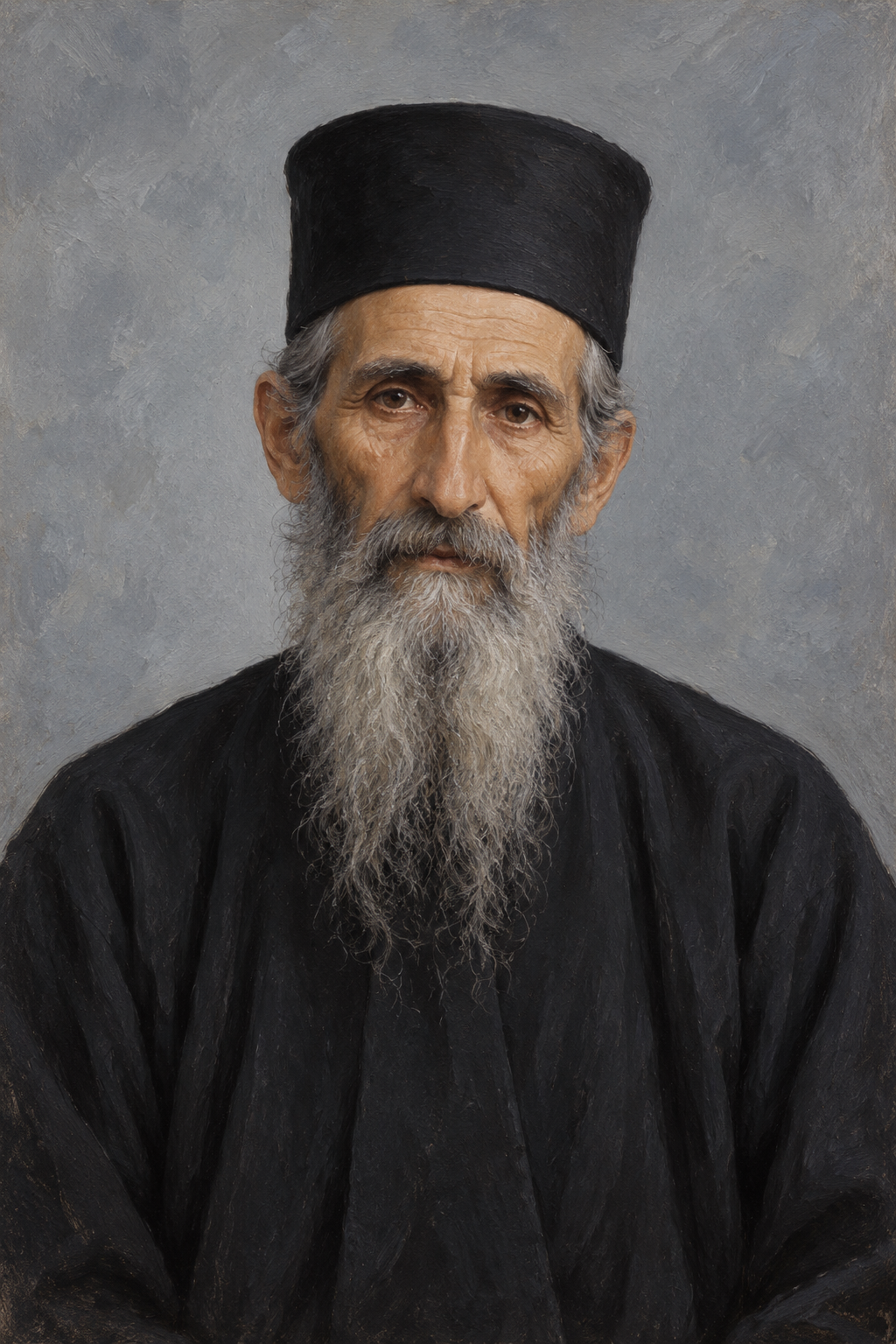
About Savvas of Kalymnos
Savvas of Kalymnos was born in Eastern Thrace in 1862 and baptized Vasilios. He entered monastic life at Saint Anne’s Skete on Mount Athos, where he learned icon painting and Byzantine music. A pilgrimage to the Holy Land led him to the monastery of Saint George at Chozeba.
He was ordained a priest in 1903. After returning to Greece, he served the nuns at Holy Trinity convent on Aegina, where he knew Nektarios and taught painting and music. He later moved to Kalymnos and became the priest and spiritual guide of the All Saints community.
A recollection attributed to Abbess Philothei connects Savvas’s painting with the early veneration of Nektarios. She related that he withdrew to his cell for forty days, then brought out an icon of the deceased bishop and asked that it be placed in the church for veneration. The abbess in the story hesitated because Nektarios had not yet been formally recognized as a saint and church authorities might object. Savvas insisted. This is a monastic recollection of how devotion began, rather than a surviving official record of the conversation.
His later life on Kalymnos combined painting and pastoral duties with physical labor. The account collected by Makarios of Simonopetra describes him breaking stones after a day spent painting or hearing confessions. It remembers his determination to work for his food and his reluctance to retain money. Gifts received for icons or church services were quickly distributed. Workers repairing his dwelling were told to take their wages from the drawer where he kept the money, an arrangement the account presents as an expression of trust.
The Gerontikon of Kalymnos similarly remembers him helping workers build his small monastery. It preserves a recollection told by his disciple, another monk named Savvas, known as Savvas of the Cross. The younger monk had planted vines with his elder’s permission. When they bore fruit, the elder ordered him to remove them; even the suggestion of keeping one for shade did not change his mind. The story conveys the severity of his personal ascetic discipline. The same account remembers his willingness to interrupt his work when someone needed spiritual help.
His ministry also continued during the island’s years under Italian rule. The local monastic history describes services at All Saints when other churches were closed during the dispute over a proposed independent Dodecanese church. Savvas organized all-night vigils in the small church. Young women considering monastic life helped with the chanting, led by the teacher Kalliope Gounari, later Abbess Eustochia of the Annunciation monastery on Patmos. Their participation connects his local ministry with the wider circle of island monastic communities.
The teacher Konstantinos Manolakis also left an account of worship with him. He remembered arriving early at All Saints on a Friday in Lent in 1943 to help Savvas and attend the hymns to the Virgin Mary. A further prayer service followed. Manolakis described Savvas’s intense attention to an icon of Christ and related a vision that the priest afterward recounted. The testimony preserves the devotional interpretation of a participant; the reported vision cannot be independently established from it.
A short teaching attributed to Savvas defines monastic life through repentance rather than scrutiny of other people. He urged monks to grieve over their own sins, refrain from judging their neighbors, and bear injury without anger. Preserved within the later collection, these words complement its accounts of a demanding private discipline and a readiness to receive others with compassion. They do not provide a detailed rule for the community, but show the qualities he wanted monastic life to cultivate.
He died on April 7, 1948, according to his local diocese. He is honored as a patron of Kalymnos. His memory remains closely associated with the convent where he spent his final years.
The Metropolis of Symi dates his formal recognition as a saint to 1992. A chapel within the Saint Athanasios church complex on Symi also bears his name. In 2022, it received a priestly stole associated with him, sent from Kalymnos for veneration by parishioners and pilgrims.
His life continued to be collected through testimony. At the diocesan presentation of Chrysi Zairi’s biography in 2016, the contents were described as including historical accounts, recollections of his life, correspondence concerning his recognition as a saint, and reports of miracles. The event shows the continuing effort of the local Church to preserve his memory; it does not independently verify each reported miracle.
Proceeds were designated for monastery and diocesan needs. His dedication has travelled with Orthodox communities beyond the Mediterranean. At the parish named for him in Banksia, Sydney, a bishop led festal vespers in March 2026. The report describes a transferred patronal celebration attended by local clergy and worshippers. The bishop urged them to remember Savvas through humility and love of God and neighbor.
Wondering how to weigh the stories and sources? Learn how to read a saint biography.