Biography
Seraphim of Sarov
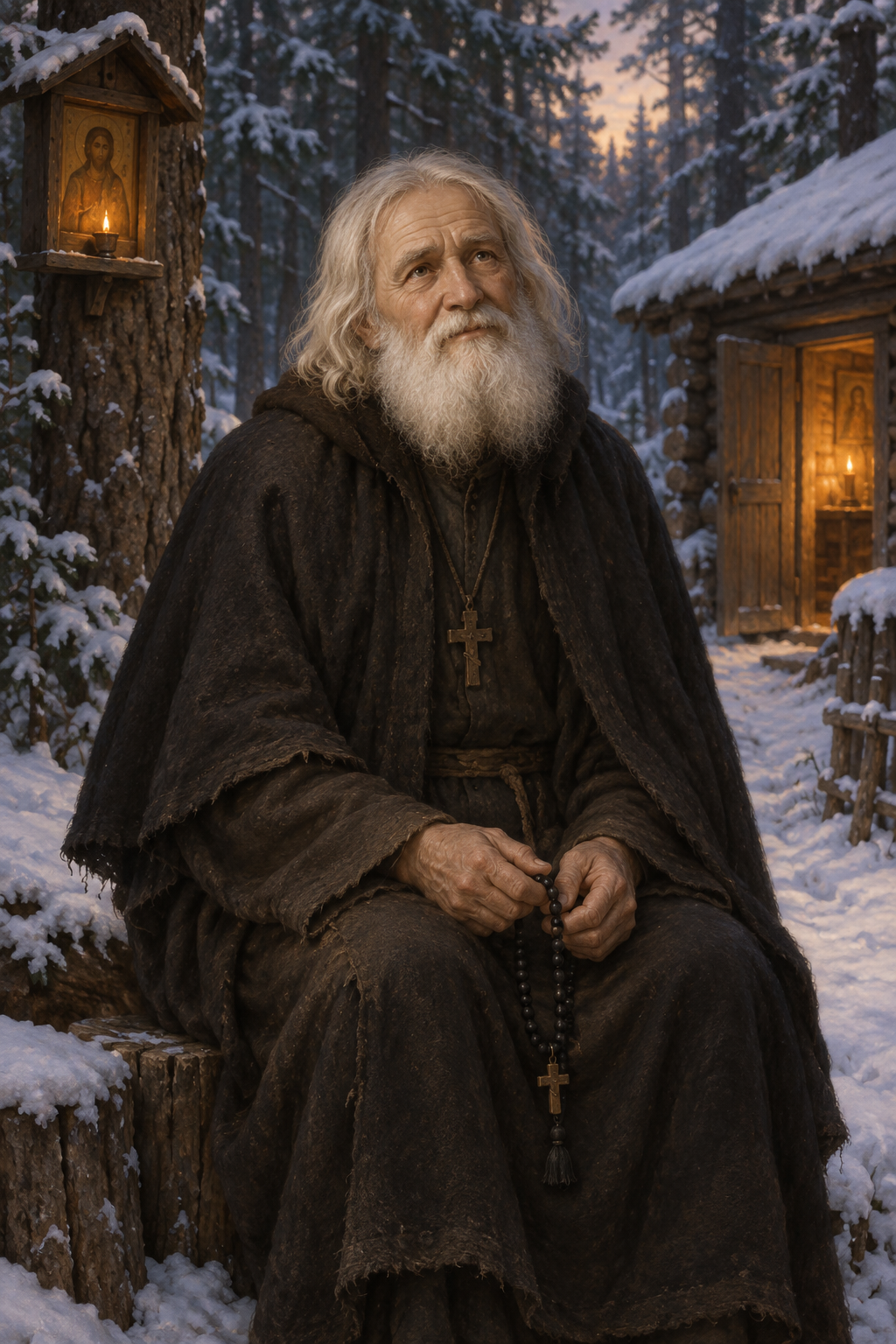
About Seraphim of Sarov
Seraphim of Sarov was born Prochorus Moshnin on July 19, 1754, in Kursk, according to the . The same source says his parents were inhabitants of Kursk and places his early life within a devout family setting. The existing catalog fields for birth date, birthplace, secular name, and sex are therefore supported by the OCA source.
As a young man, Prochorus entered the Sarov monastery. The OCA life presents this as the beginning of a long monastic vocation rather than a temporary retreat. He was tonsured with the name Seraphim and later ordained deacon and priest. Those structured classes, monk and priest, are both supported, and the public profile should keep them together: his remembered holiness was monastic and priestly, not one at the expense of the other.
Sarov should be more than a place label in the profile. It was the monastic community in which Seraphim's obedience, liturgical life, priestly service, and later solitude took shape. The reviewed source does not require a long history of the monastery, but it does support treating Sarov as the main setting of his adult vocation rather than only the place where he died.
OCA sources describe Seraphim through obedience, prayer, illness, seclusion, and ascetical discipline. Some details are ordinary chronology, and some are devotional hagiography. The final profile should not flatten those differences. It can say that OCA tradition remembers him as a monk of intense prayer and ascetic life, while leaving the most dramatic visionary or miracle accounts for separate review. This keeps the page reverent without pretending every episode has the same historical texture.
The forest and hermitage material is central to Seraphim's memory. OCA's life describes periods of solitude outside the monastery and then renewed service to visitors who sought guidance. The public profile can include this pattern because it explains why an apparently hidden monastic life became pastoral for many people. It should not use the forest setting merely as decoration or overstate folklore that has not been separately reviewed.
The same pattern helps organize the featured events. Entry into Sarov, ordination and ascetic practice, spiritual guidance, repose, and later glorification are stronger choices than isolated wonder stories. They give readers the shape of the life while keeping devotional claims available for later, more careful treatment.
Seraphim's later ministry was especially associated with spiritual counsel. OCA sources describe people coming to him for advice, confession, and prayer. His connection with Diveyevo also belongs in the reviewed note, though specific instructions, prophecies, and quotations need separate source-budget review. For the base profile, it is enough to say that he guided monastics and lay visitors and that his counsel became central to his later veneration.
That restraint matters because many readers know Seraphim through beloved sayings and miracle stories. The catalog should not erase that devotional world, but it should not quote or summarize it loosely either. A responsible first profile can name spiritual counsel and Diveyevo, then defer exact sayings, reported visions, and prophetic claims until each passage has its own evidence review.
The title "Wonderworker of Sarov" should be handled carefully. It is the title used by the OCA source family and belongs in the source register and optional title field. It should not become an uncited patronage claim or a license to fill the biography with miracle stories. A slow-vetted profile should first give the reader a reliable path through the life: birth in Kursk, Sarov monastic entry, ordination, ascetic life, spiritual guidance, repose, and later glorification.
Seraphim died at Sarov Monastery on January 2, 1833. The OCA life supports the existing death date, death place, and January 2 commemoration. A complete packet should also record the July 19 commemoration connected with the uncovering of his relics and glorification, using the OCA relics text rather than replacing the main repose feast.
The 1903 glorification and uncovering of the relics explain Seraphim's later place in Orthodox memory. The OCA July 19 text should be used for that layer of the story. It is a later reception event, not part of the eighteenth-century childhood or the 1833 repose. Keeping those layers distinct will make the final profile clearer and easier to cite.
The July 19 commemoration also prevents the single legacy feast field from hiding part of the liturgical record. January 2 should remain the main repose commemoration in the existing Eastern Orthodox feast field, while the uncovering of relics and glorification should be represented as a normalized companion observance when the final approval packet is prepared.
The final record should present Seraphim as a Russian Orthodox monk and priest whose life moved from Kursk to Sarov, from obedience to solitude, and from hidden prayer to spiritual guidance. It should leave patronage, coordinates, long quotations, named miracle narratives, and detailed Diveyevo claims for separate review. That gives readers a rich and responsible life without turning the entry into a collection of unsupported wonders.
This approach still leaves room for reverence. Seraphim's profile can speak of humility, ascetical prayer, priestly service, and guidance for pilgrims without claiming more certainty than the reviewed sources give. It also makes the eventual page useful to readers who want a trustworthy starting point before they explore longer devotional literature.
Wondering how to weigh the stories and sources? Learn how to read a saint biography.