Biography
Solomon
About Solomon
Solomon appears in 2 Samuel and 1 Kings as a son of David and Bathsheba who becomes king amid a contested succession. The narrative says Bathsheba bore him after the death of an earlier child and that Nathan gave him the additional name Jedidiah. Kings supplies no birth date or age at accession. Its regnal span and narrative sequence do not establish exact modern calendar years for Solomon's birth or death.
When David is old, Adonijah declares himself king and gathers prominent supporters. Nathan and Bathsheba intervene, invoking David's promise that Solomon will succeed him. David orders Solomon placed on the royal mule and anointed by Zadok at Gihon, and the city celebrates. Adonijah takes refuge at the altar; Solomon initially sends him home on condition of worthy conduct. The chapter presents an accession secured through court strategy, not an uncontested inheritance.
The consolidation that follows is violent. After David's death, Solomon orders Adonijah killed when Bathsheba conveys his request to marry Abishag. He removes Abiathar from the priesthood, orders Joab killed despite his refuge at the altar, and has Shimei executed after a boundary violation. Benaiah carries out the killings and Zadok replaces Abiathar. First Kings closes the sequence by saying the kingdom was established in Solomon's hand. A responsible biography cannot turn that sentence into approval of every means used to secure the throne.
At Gibeon, Solomon asks in a dream for a listening heart to judge the people and distinguish good from evil. The story says the request pleases God because he has not asked for long life, riches, or his enemies' death. A dispute between two women over a living child then demonstrates his judicial method. Solomon threatens to divide the child, and the woman willing to surrender him rather than see him killed is recognized as the mother. The text presents wisdom as discernment serving vulnerable subjects, while its own note contrasts this bright beginning with the reign's later direction.
Kings next lists officials, administrative districts, provisions, and the extent of Solomon's rule. It praises his wisdom and associates him with proverbs, songs, and knowledge of the natural world. Yet the royal system depended on taxation, supplies, and labor. Solomon negotiates with Hiram of Tyre for timber and skilled work, while the text says he conscripts thirty thousand laborers from Israel and assigns large workforces to transport and quarry stone. The scale of the projects therefore belongs to a story of organization and achievement as well as concentrated royal power.
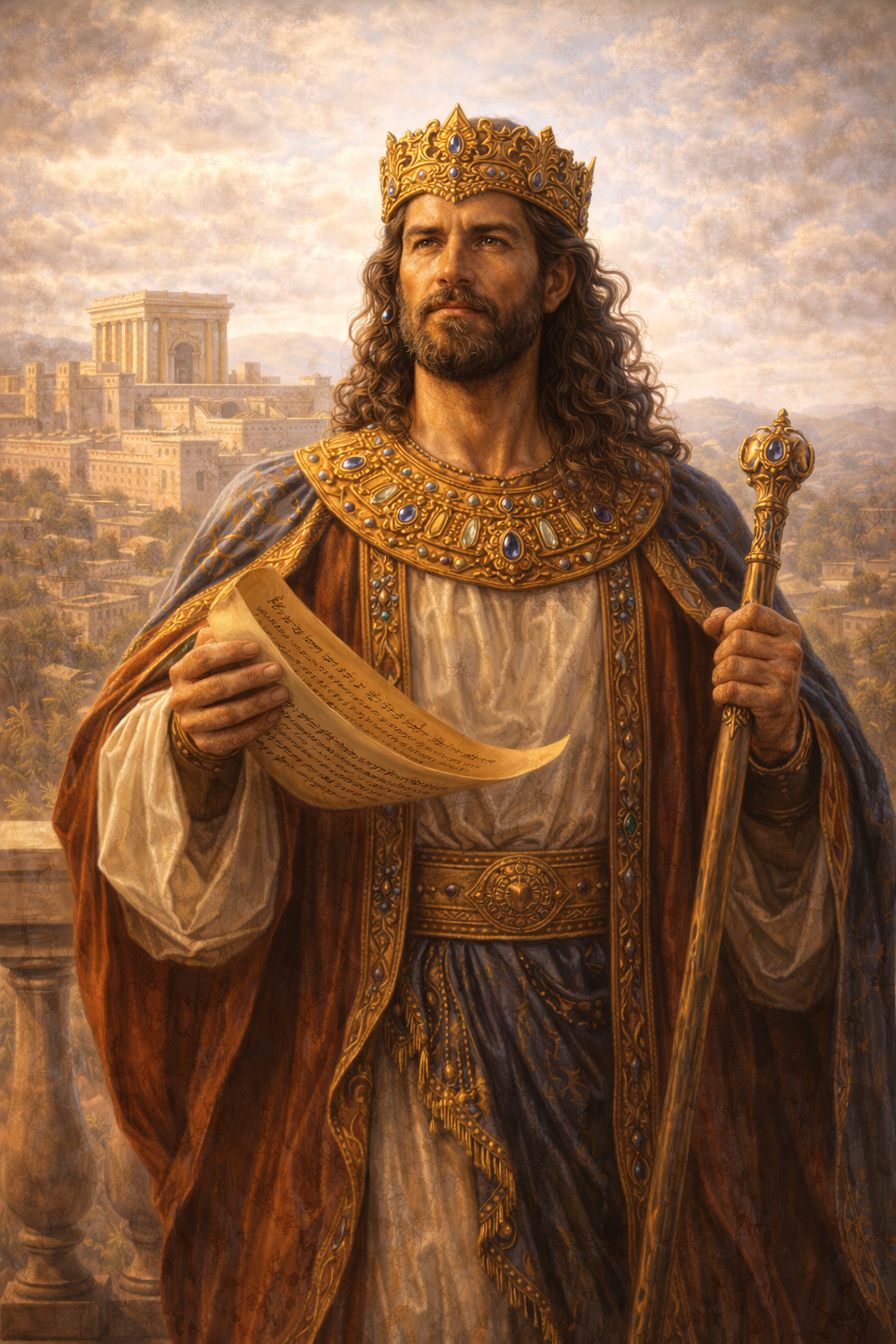
The literary center of Solomon's story is the building and dedication of the temple in Jerusalem. First Kings describes stonework, cedar, interior gold, carved cherubim, and a long construction process. When the ark is brought into the completed sanctuary, Solomon addresses the assembly and offers a lengthy prayer. He acknowledges that heaven cannot contain God, much less the house he has built, and asks that prayers directed toward the place be heard. The dedication includes sacrifices and a public festival. The narrative makes the temple Solomon's defining work without reducing divine presence to royal architecture.
Building continued beyond the temple. Kings describes Solomon's palace, fortified cities, ships, and labor levies. Its note distinguishes forced labor imposed on remaining Canaanite populations from the temporary corvée earlier imposed on Israelites, while also identifying tensions in the account. At Ezion-geber, Solomon and Hiram's crews launch maritime trade. These details complicate the image of universal prosperity: monumental building and commerce required controlled land, labor, materials, and administrative reach.
The visit of the queen of Sheba becomes the narrative's great display of Solomon's international reputation. She tests him with questions, inspects his court and worship, and praises his wisdom and the order of his kingdom. The chapter also catalogs gold, luxury goods, shields, an ivory throne, chariots, and horses. The USCCB note observes that gifts first shown benefiting the people later redound to Solomon himself. Admiration for learning and order thus stands beside an accumulation of wealth and military resources.
First Kings 11 gives the reign a stark theological ending. It says Solomon loved many foreign women and built high places connected with their gods. The chapter's concern is covenant loyalty, though its treatment of foreign wives also reflects the biblical author's polemical setting and should not turn women into convenient blame for a king's decisions. The narrative holds Solomon responsible for not keeping the covenant. It introduces Hadad, Rezon, and Jeroboam as adversaries and has Ahijah announce that most of the kingdom will pass from Solomon's house after his death.
Kings reports Solomon's death and succession by Rehoboam, while Chronicles repeats a forty-year reign and burial in the City of David. Those figures remain traditional chronology rather than a secure civil date. Later biblical books connect Solomon with wisdom literature, but the Proverbs introduction describes a collected tradition rather than authorship of every saying, and Wisdom presents a literary Solomonic voice. The OCA similarly says he may have written parts of attributed books while much material was transmitted before writing. Matthew remembers Solomon's wisdom while placing it within a Christian claim about Jesus. Solomon remains significant as a builder, judge, administrator, and wisdom figure whose received life also exposes coercion, luxury, compromised worship, and a kingdom already moving toward division.
Wondering how to weigh the stories and sources? Learn how to read a saint biography.