Biography
Stanislaus of Szczepanów
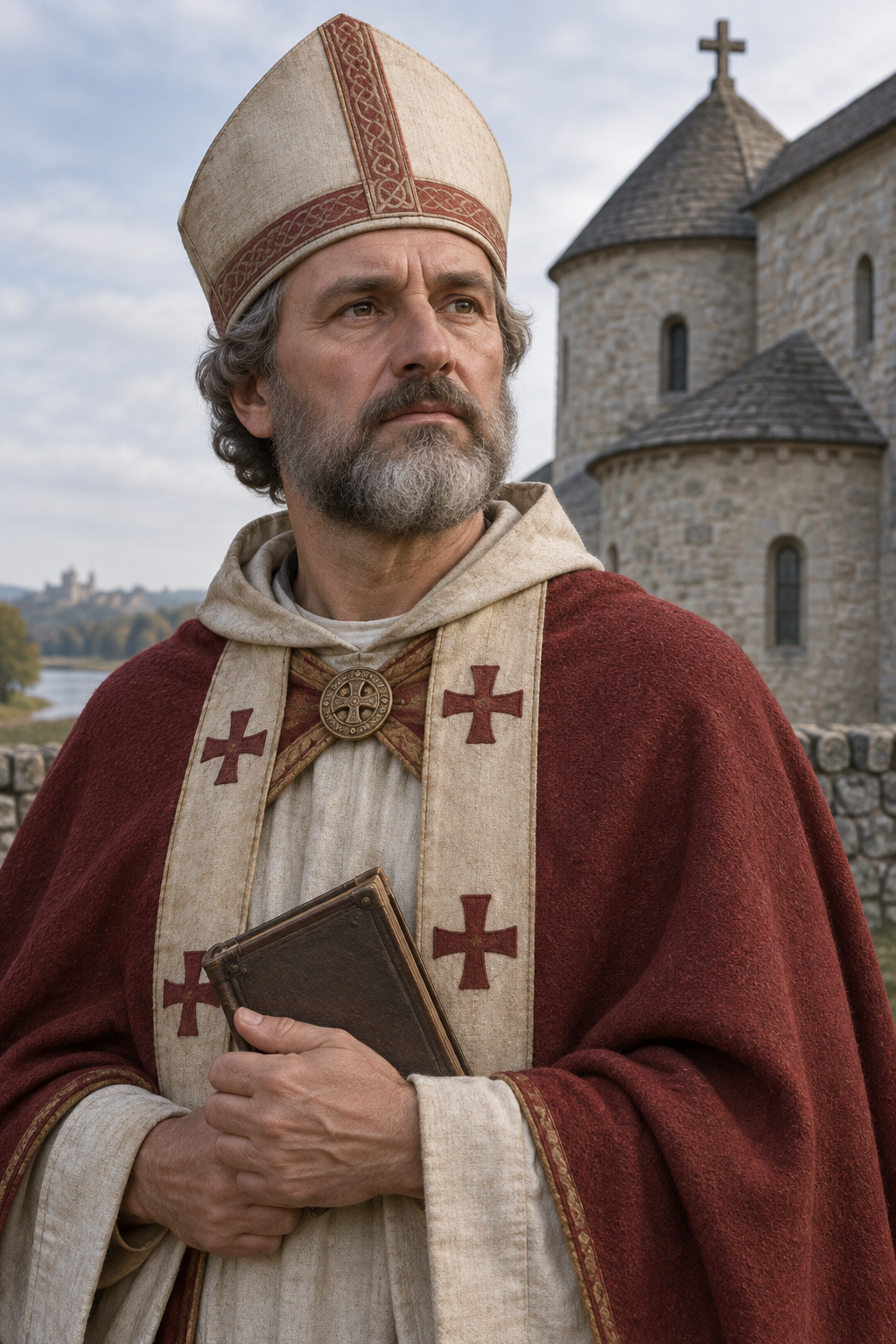
About Stanislaus of Szczepanów
Stanislaus came from Szczepanów and became bishop of Kraków during the eleventh century. A scholarly study places his episcopate around 1072 to 1079. The place-name in his common name preserves a connection to his origin, but specific family and childhood stories come from later hagiography. The surviving evidence is stronger for his office and death than for the details of his early life.
As bishop, Stanislaus held a public office in a kingdom whose religious and political institutions were closely connected. John Paul II’s anniversary letter describes his ministry in Kraków as lasting barely seven years. The same letter presents him as a pastor who taught faith and challenged the conduct of rulers. Those statements reflect the Church’s later remembrance; the surviving eleventh-century record does not provide a diary of his preaching or decisions.
The decisive conflict involved King Bolesław II, called the Bold. A contemporary-looking account would make its causes clear, but the earliest surviving chronicle was written about forty years after Stanislaus died. That chronicle gives only a short account and labels the bishop a traitor while also faulting the king for bodily punishment of an anointed man. It does not settle what accusation lay behind the word or whether later accounts accurately recover the dispute.
Stanislaus was killed in 1079, and the king subsequently lost his position in Poland. The Church’s received story describes the bishop as a martyr who resisted royal abuse. Later versions depict a dramatic killing at or near the altar and add accounts of the body being divided and restored. These scenes belong to the development of his cult; they should not replace the narrower historical evidence for the original conflict.
John Paul II noted that even the medieval chronicler Gallus used the term translated as traitor for the bishop. The pope also observed that similar language was used against other church leaders who later became saints. This does not prove every action of either Stanislaus or Bolesław in 1079. It shows why a careful account reports the accusation and the condemnation of the punishment without claiming to reconstruct a trial that the sources do not preserve.
Stanislaus’s memory grew in Kraków after his death. A scholarly study of thirteenth-century miracle accounts describes their role in the cause for canonization. Those accounts reveal the beliefs and needs of worshippers generations later, even where they cannot independently verify eleventh-century events. In 1253 Pope Innocent IV confirmed his canonization, according to the Holy See’s anniversary letter.
After the canonization, Stanislaus came to be honored as a patron of Poland. His relics at Wawel Cathedral drew veneration across the region. The letter describes how his image became a symbol of unity during the division of Poland among regional rulers. Kraków’s city government still lists him among its patrons.
The calendars preserve two observances: April 11 in the universal Roman calendar, understood as the date of his death, and May 8 in Poland. The older Catholic Encyclopedia gives different life-date details, which is another reason to state the chosen authority clearly. His documented significance lies in the bishop’s death, the king-bishop dispute it left unresolved, and the large cult built around his memory. Keeping the earliest evidence separate from later symbolism gives both the history and the devotion their proper shape.
Wondering how to weigh the stories and sources? Learn how to read a saint biography.