Biography
Theophilos the Myrrh-Bearer
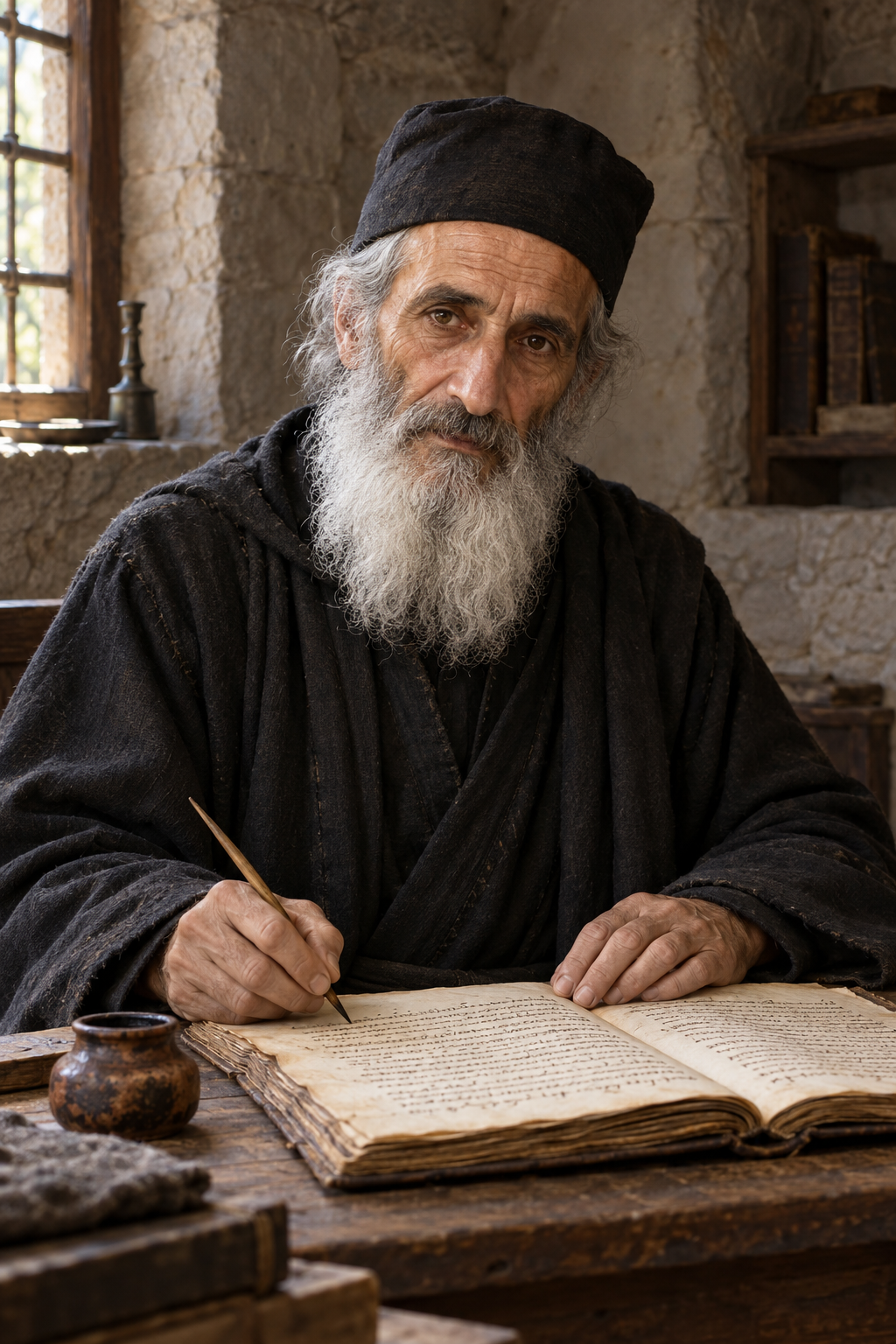
About Theophilos the Myrrh-Bearer
Theophilos was an Athonite monk and manuscript copyist from Zichni in Macedonia. Vatopedi places his birth around 1460; scholarly studies allow a range of about 1460–1470.
His own annotations help recover a career obscured by later retellings. He was tonsured in 1504, became a priest in 1506, and reached Iviron in 1511 after travels east. He initially used the monastic name Theodosios; manuscripts place his change to Theophilos between 1516 and 1518. The names identify one copyist, not two.
A large manuscript completed in 1518 brings his work into focus. Now known as Iviron 809, it gathers the four Gospels, the Psalter and other devotional texts. In a note to its readers, he asked that the volume remain intact, even down to its individual leaves. If its binding wore out, it should be rebound whole. Books were to be used, not left idle: someone unwilling to read this one should pass it to a person who would.
Another passage from that manuscript, presented by the cell where he is commemorated as his spiritual testament, is intensely penitential. He lists failings such as pride, hypocrisy and judging others, then asks for a burial stripped of honor. It is an expression of monastic self-accusation, not independent evidence that every accusation describes a particular deed.
His attachment to Iviron outlasted his residence there. In a 1540 scribal note, he presents his books as a continuing presence in the monastery: when he is elsewhere, they remain among the brothers. He also imagines them remaining after his death. Copying was thus both practical service and a way to entrust something of his life to the community.
That attachment did not mean relations were always easy. Politis reads his annotations as evidence of a reluctant departure in 1522 amid complaints and disputes. Theophilos prayed for peace among the brothers. His writings preserve this strain alongside the later Life’s portrait of a man seeking solitude; they do not supply a complete account of the disagreement.
A later instruction offers a different perspective on his approaching death. In a prayer book dated 1545/46, he arranged for episcopal prayers and made the book a conditional bequest.
His final home was the cell of Saint Basil belonging to Pantokrator monastery. His disciple Isaac remained close to him. Politis argues for July 8, 1548 as his death date, correcting a later printed 1558; the surviving dated manuscripts end in 1548.
The monastery’s Life attributes his title, Myrrh-Bearer, to fragrant myrrh reportedly flowing from his remains.
The Orthodox synaxarion commemorates him on July 8 as an ascetic of Mount Athos who died peacefully.
Wondering how to weigh the stories and sources? Learn how to read a saint biography.