Biography
Theophilus of Corte
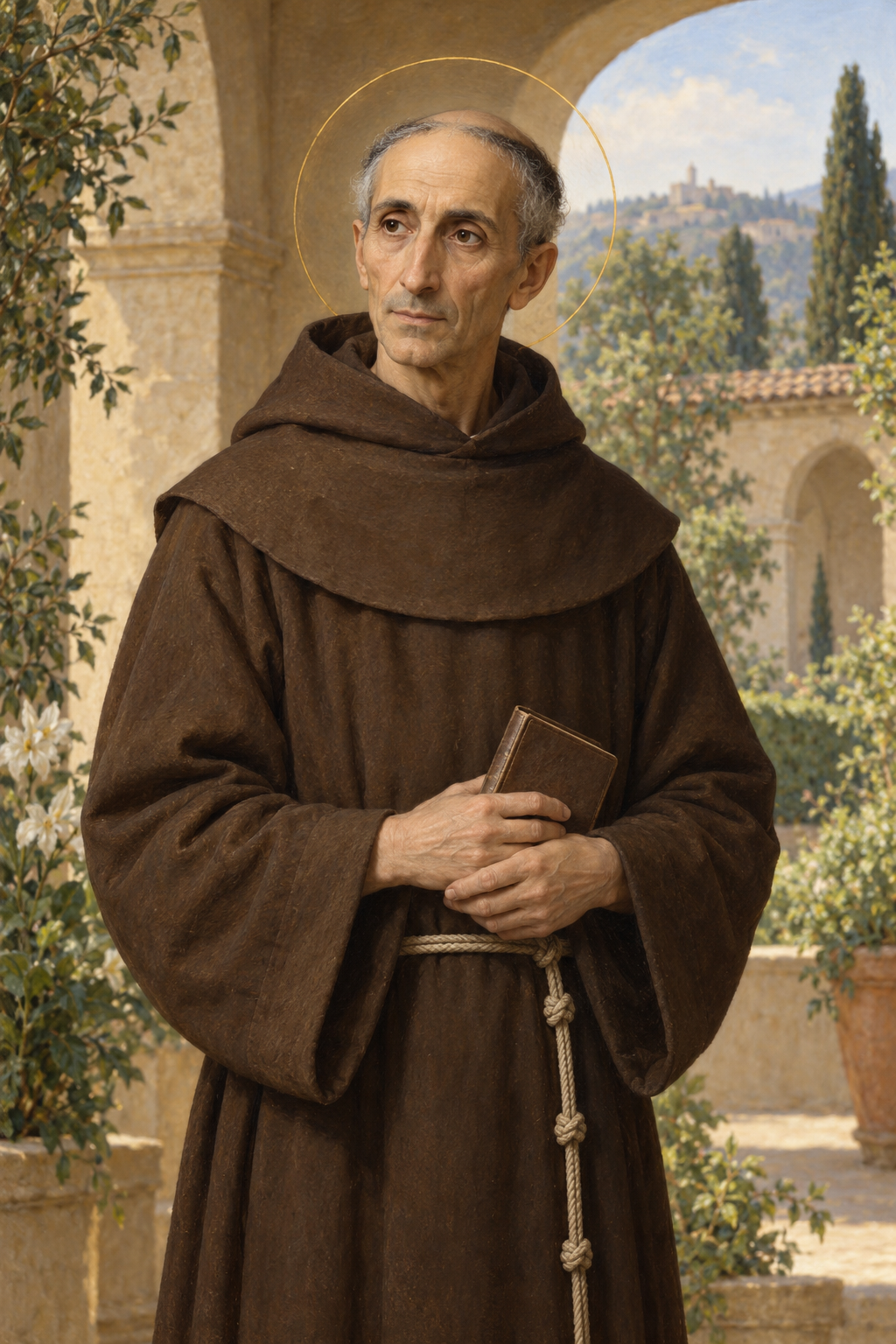
About Theophilus of Corte
Theophilus of Corte was a Franciscan friar whose work joined preaching with the renewal of religious communities. He was born Biagio dei Signori at Corte in Corsica on 30 October 1676. After entering the Franciscans in 1693, he studied at Rome and Naples. His lasting concern was to bring houses of his order into closer observance of Francis’s rule. Bellegra, Palombara, Zuani and Fucecchio became associated with that work. These retreats offered a disciplined common life in which prayer and poverty shaped the friars’ service.
His parents initially resisted his wish to enter religious life. He nevertheless received the Franciscan habit in his native town on 21 September 1693, taking the name Theophilus, and professed his vows a year later. His studies prepared him for teaching as well as priesthood. The papal account records his ordination at Pozzuoli and describes his return toward Rome to compete for a teaching post. Before the examination he visited Thomas of Cori at the retreat of Bellegra. Thomas encouraged him to remain. A fall on the journey back, followed by recovery at Rome, became a turning point in his decision to embrace the retreat’s life.
The withdrawal from an academic career did not end his public ministry. The Franciscan order’s biography describes his journeys through the Aniene valley, Sabina and the Subiaco district. He preached, heard confessions and attended people near death. He lived and served as guardian in the houses of Bellegra and Palombara before undertaking further foundations. His work required movement between the quiet of the community and the needs of people beyond its walls. He eventually helped establish a retreat at Zuani in Corsica and organized another within the existing convent at Fucecchio in Tuscany.
Giuseppe Buffon’s archival biography describes a superior attentive to the limits of the people in his care. Theophilus allowed young friars to rest instead of rising for the night office, wanted those returning from garden work to eat and recover, and sought good medical care for the sick. His guidance asked superiors to distinguish essentials from secondary matters and avoid continually harassing the community. He also favored clear, accessible preaching. He opposed charging the genuinely poor for sermons and encouraged gentleness in hearing confessions. He urged disciples to study moral theology as preparation for hearing confessions.
The retreat foundations met resistance. At Fucecchio, the plan involved changing the life of an existing convent, rather than simply building a new house. Buffon records the municipality’s protest in 1736, the support of Franciscan superiors and the grand duke, and opposition within the convent. A hostile crowd also confronted Theophilus. The disturbance subsided after the opposing vicar’s transfer. His ideal remained a life centered on prayer in the friars’ cells, with conversation and movement restrained.
Some of his teaching survived in writing. The Order of Friars Minor identifies a short exposition of the Franciscan rule, published in its proceedings in 1897–1898, and letters concerning the difficulties of the Fucecchio community. Other spiritual and formative writings were lost. These surviving texts preserve the work of a man who continued to guide others after giving up the path toward a teaching chair.
His strength eventually failed under the demands of his work. The older Catholic encyclopedia describes fever and exhaustion near the end of his life. He died at Fucecchio on 19 May 1740.
The papal record distinguishes the authorization of his beatification brief in September 1895 from the solemn beatification on 19 January 1896. Pius XI canonized him on 29 June 1930. The same decree assigned his annual remembrance to 19 May. His recognition thus followed a long process after his death.
In a later reflection for the Church in Corsica, Francis Ghisoni portrayed him as a person of intelligence and forceful character who freely chose humility. Ghisoni’s account recalls the conflict with his parents and interprets the interrupted academic ambition as part of his religious formation. It rejects the idea that his hidden life resulted from lack of ability. In that reading, obedience and poverty were deliberate disciplines, rather than a retreat from responsibility. His memory in Corsica remains connected with the desire for peace and faithful service.
Local devotion also has explicit patrons and places. A Corsican parish bulletin names him as patron of the island and of the church at Miomo, using the Corsican name San Teòfalu. In Fucecchio, the Contrada Capitana Porta Raimonda calls him its protector and includes his memory among its cultural projects.
His tomb remains associated with the church of the Vergine at Fucecchio. A municipal announcement in 2025 described plans for a Carrara-marble statue at Corte bearing the coats of arms of both towns. The release credited the continuing relationship with the saint’s confraternity and presented the project as a link between Corsica and Tuscany. The two communities remember a life that began in one town and ended in the other.
Wondering how to weigh the stories and sources? Learn how to read a saint biography.