Biography
Thomas Bray
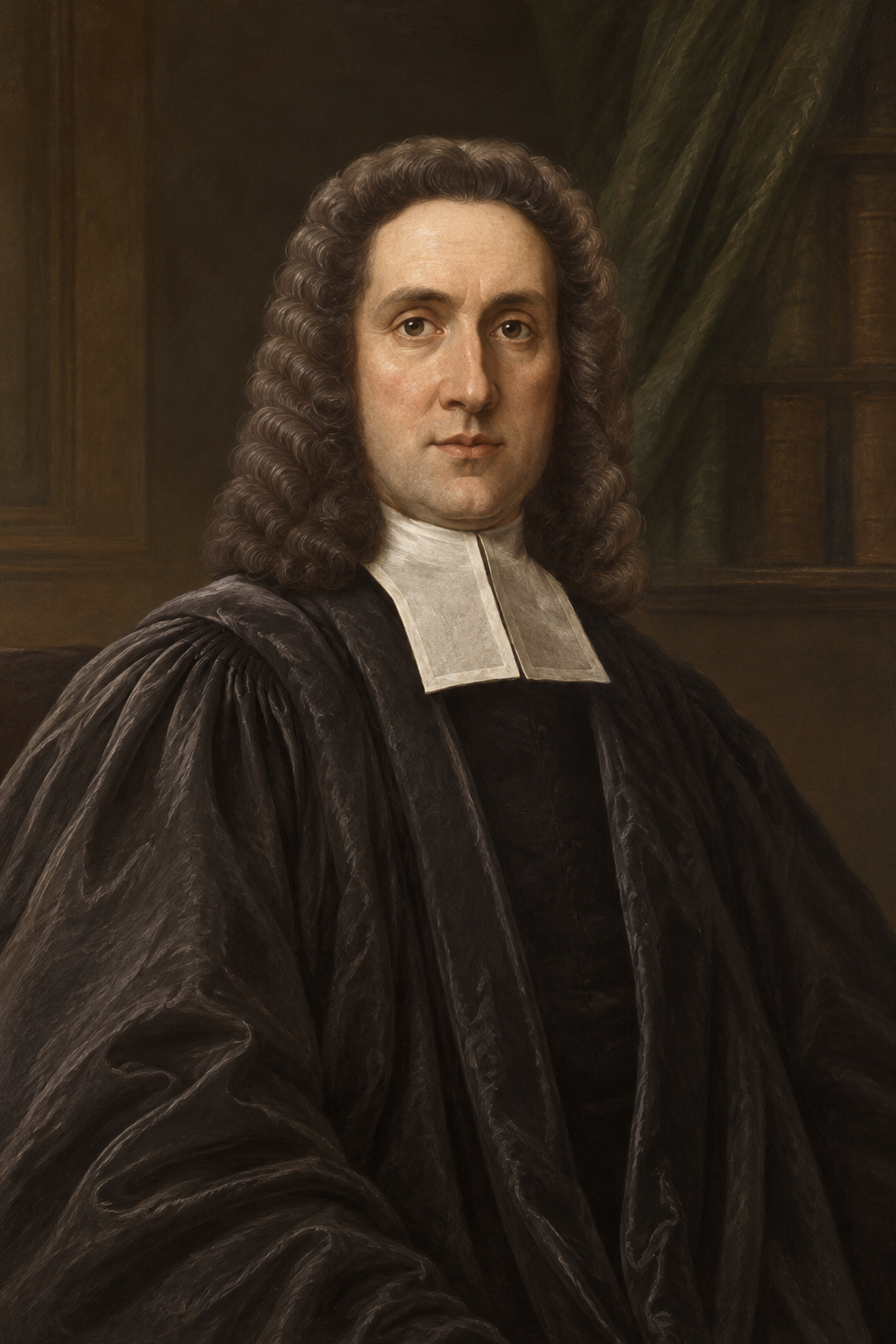
About Thomas Bray
Thomas Bray connected the needs of parish clergy with a wider effort to provide books, education, and religious instruction across the Atlantic. Born at Marton in Shropshire, he studied at Oxford and served in English parishes before becoming rector of Sheldon in 1690. His catechetical lectures brought him to wider attention. When the bishop of London sought a representative for Maryland, Bray was chosen. Preparing clergy for colonial service exposed a practical obstacle: the men willing to go often lacked the money to buy the books they needed. He began seeking support for libraries that would remain available to their successors.
His plans grew into the Society for Promoting Christian Knowledge, formed with four lay collaborators in 1699. The society combined religious publishing and education with support for libraries. Bray reached Maryland in March 1700. His visit was brief, but it brought him into the colony’s struggle over an established Church of England. After returning to England, he helped organize the Society for the Propagation of the Gospel in Foreign Parts, chartered in 1701. This organization focused on overseas ministry. Bray later pressed for more attention to the religious instruction of Indigenous peoples and people of African descent, which he considered insufficiently supported by the existing societies. The later Associates were formed around a specific trust for this work. Their early history included disagreements over how the money should be used, including a proposal for a missionary college in Bermuda. Preserving funds for the intended instruction required administration as well as enthusiasm, and the charity’s purpose continued to be negotiated by those responsible for its direction.
His own published Memorial of 1701 explains the kind of ministry he wanted. He called for experienced clergy who combined learning with sound conduct and practical judgment. Books were essential equipment, not an optional comfort. He insisted that a library should belong to the place where a minister served and remain there for future clergy. The proposal also sought financial support during the first years of a mission, when local resources might be inadequate. These arrangements linked religious teaching to the sustained provision of people, income, and books.
The Memorial also reveals the limits of his outlook. Bray defended compulsory support for Maryland’s established church and attacked Quakers and Catholics in hostile terms. He connected the conversion of Indigenous peoples with securing English alliances against French influence. His account was a plea for Anglican expansion within a colonial world, rather than an impartial description of the beliefs and communities he discussed.
Library work continued alongside his other commitments. Edgar Legare Pennington’s historical study describes Bray’s attention to collecting, circulating, and preserving books, as well as his efforts to secure donations. The program extended beyond Maryland to other colonies and to England and Wales. His preparation for overseas ministry thus contributed to a network of collections that could serve clergy who would otherwise have little access to learning. The same study records his involvement in efforts to relieve prisoners and improve conditions in English prisons. In the late 1720s that concern brought him into discussions with James Oglethorpe about providing a new beginning overseas for impoverished people.
From 1706, Bray served the parish of St. Botolph without Aldgate. He continued writing and organizing charitable work while attending to local religious instruction. He died on February 15, 1730. His work had depended on donations, personal correspondence, and organizations capable of continuing beyond the life of their founder. His publications included catechetical teaching and plans for parish libraries.
One of those organizations became known as the Associates of Dr. Bray. A donation and testamentary provision from Abel Tassin d’Allone supported religious instruction for enslaved people and their children. Bray appointed others to carry the work forward during a period of serious illness. Before and after his death, the Associates’ affairs briefly overlapped with the project that led to the colony of Georgia. Their later work increasingly centered on education for Black children in the American colonies.
The Williamsburg Bray School illustrates the complicated legacy of that work. Founded in 1760, three decades after Bray’s death, it taught enslaved and free African American children under Ann Wager until 1774. William & Mary’s historical account states directly that its religious curriculum justified slavery. It also notes that learning to read may have given students greater agency. Education therefore operated within a system intended to preserve enslavement, even when learners could use literacy for purposes beyond those intended by the school’s sponsors. The school’s later history must be distinguished from Bray’s own lifetime, while remaining part of the legacy carried under his name. Modern research asks what students made of these lessons and seeks to recover lives that institutional records only partly reveal.
The Church of England commemorates him on February 15 as a priest and founder of the SPCK and SPG.
Wondering how to weigh the stories and sources? Learn how to read a saint biography.