Biography
Thomas Gallaudet
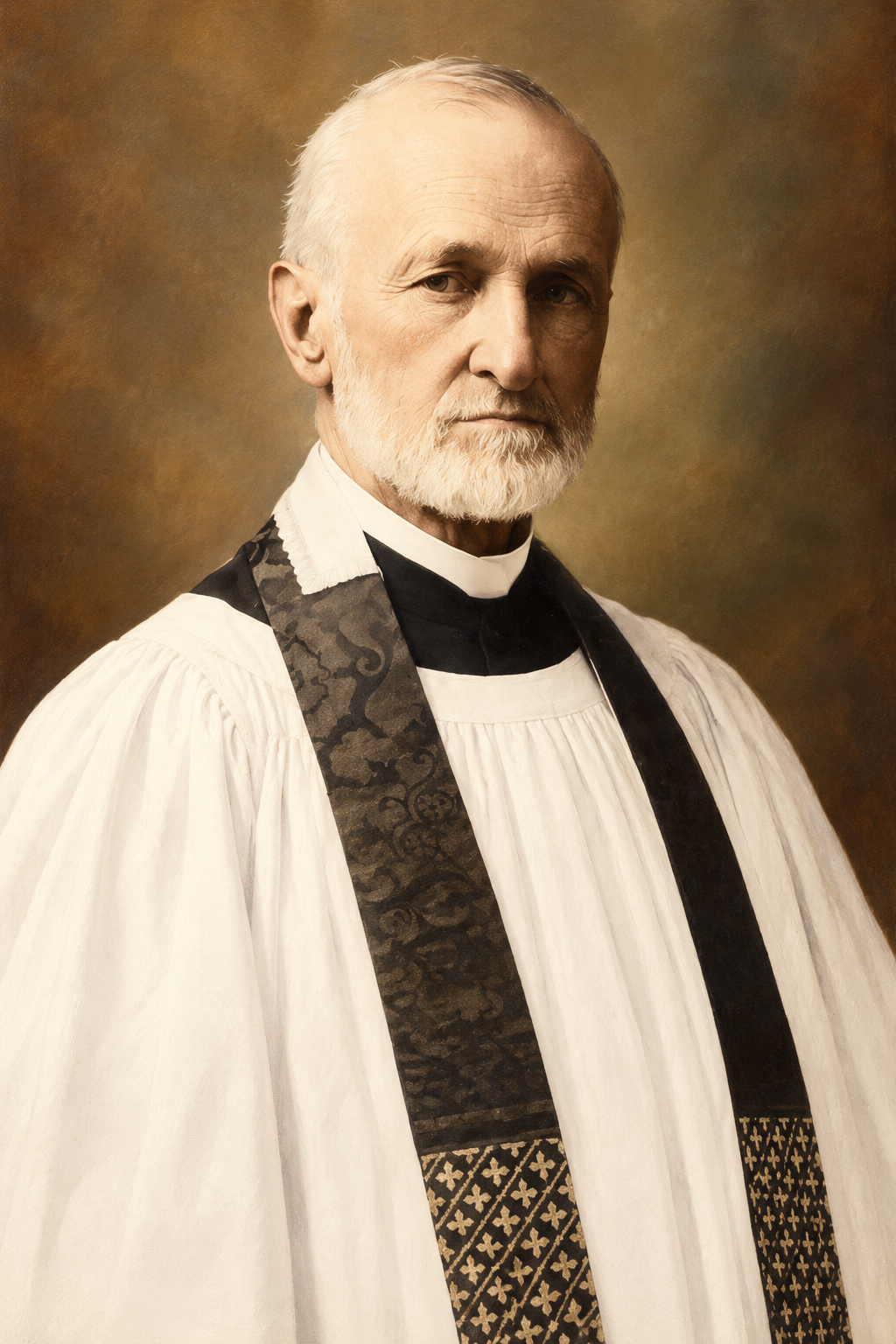
About Thomas Gallaudet
Thomas Gallaudet was an Episcopal priest who helped establish congregations where Deaf people could worship in sign language. Saint Ann’s in New York, begun in 1852, became a center from which this ministry extended to other cities. The Episcopal Church remembers him with Henry Winter Syle, a Deaf clergyman, on August 27. Their shared commemoration recalls both the expansion of accessible worship and the development of ordained leadership within the Deaf community.
Gallaudet was born in Hartford, Connecticut, on June 3, 1822. He graduated from Trinity College in 1842 and became a teacher before entering ordained ministry. His mother was Deaf, as was his wife. Communication through signs was therefore part of his family life, not simply a technique he acquired for professional use. He became a deacon in 1850 and a priest in 1851.
In his own account of Saint Ann’s beginnings, he described a weekly evening class for adults who were Deaf. The gathering soon needed a larger room. By the first anniversary of the church, worship took place every Sunday in two forms: a spoken service in the morning and a signed service in the afternoon. The arrangement welcomed Deaf parishioners together with hearing relatives and friends.
The congregation’s members were participants in building the institution. At a meeting in December 1853, Deaf supporters elected a committee to raise funds and work with those planning the building. They asserted their ability to express their own views about a church intended for their use. John Carlin also urged support for the minister’s salary, explaining that the congregation did not include wealthy Deaf members able to provide it alone.
When Saint Ann’s began using its church on Eighteenth Street in August 1859, Gallaudet preached about gradual growth. He compared the parish’s development to the growth of seed in Jesus’ parable, acknowledging that its progress could not be reduced to his own efforts. Friends, gifts, and practical help had sustained the undertaking through years in temporary rooms. The new building represented opportunity, but it also brought a substantial debt.
That sermon connected worship with everyday needs. The accompanying account described weekly instruction, help finding employment, and pastoral care through illness, marriage, and bereavement. Gallaudet’s work was directed especially toward adults who had left educational institutions and needed a continuing community. A school could provide education for a period of life; a parish offered relationships and religious practice that could continue beyond those years.
His twentieth-anniversary sermon made the financial demands of that community unusually concrete. He asked worshippers to take responsibility for offerings, described the burden of property debt, and reported support for schools, poor parishioners, and mission work. Free seats remained a principle he wanted his successors to preserve. The church’s accessibility depended on sustained contributions and organization as well as a language its members understood.
The same account named clergy and lay workers who helped extend the ministry. John Chamberlain conducted signed services, while Samuel Adams, a Deaf layman, led services in Baltimore. Gallaudet also described the impending incorporation of the Church Mission to Deaf-Mutes and a recently begun home for older people. His account reveals a network of workers and institutions, rather than a ministry carried out by one priest alone.
The home sought to address isolation among older Deaf people by providing staff able to communicate with residents. Its archival history records a move from New York City to a farm in 1886. Residents were admitted without a religious test. A board managed policy and finances, while women serving on another board supervised daily work. These arrangements made communication, shelter, and practical care continuing responsibilities of the institution. Fire destroyed the home in 1900, near the end of his life. Rebuilding continued after his death, a reminder that the institution depended on people and resources that would outlast its founder.
In 1883 Gallaudet preached at the ordination of Henry Winter Syle and Austin W. Mann as priests. He argued that signs formed a living language capable of expressing prayer, praise, and sacramental meaning. He recalled learning from his mother and described thinking directly in signs while preaching. Deaf men qualified for ordination, he maintained, could minister in the language of their congregations. His advocacy nevertheless used the paternalistic language of disability common in his period. The ordination report describes different ways of responding to the bishops: Syle supplied written answers to be read aloud, and Mann answered through the manual alphabet. Gallaudet interpreted during the examination, helping the service accommodate their participation.
His brother Edward Miner Gallaudet later recalled his opposition to teaching methods that excluded signing. Thomas supported opportunities to learn speech and lip-reading where useful, but believed denying signs could restrict communication and development. The position joined practical educational judgment to his lifelong experience of family conversation and worship.
Gallaudet died on August 27, 1902.
Wondering how to weigh the stories and sources? Learn how to read a saint biography.