Biography
Tommaso da Cori
About Tommaso da Cori
Tommaso da Cori was born Francesco Antonio Placidi at Cori, in Lazio, on June 4, 1655. The final page should use the birth name once, then continue with the religious name by which he is remembered.
The Cori setting can be handled simply. It roots Tommaso in the towns and hills of central Italy without turning the page into local color. The vocation, not the landscape, is the center.
Still, the landscape can help readers understand the rhythm of the life. Cori, Bellegra, hills, stone hermitages, and rural churches belong to the same world of Franciscan preaching and prayer.
He entered the Friars Minor and became a priest. The page should present his Franciscan identity through poverty, preaching, prayer, and fraternity rather than through costume alone.
The brown habit and cord are appropriate visual shorthand, but the prose should do more than identify the clothing. It should show a friar shaped by a rule of life, a fraternity, and pastoral responsibility.
Tommaso's life was connected with retreat and hermitage reform. That phrase needs patient explanation for ordinary readers: he helped shape places where friars could live prayer, penitence, silence, and preaching with renewed seriousness.
Retreat reform can sound administrative, so the page should make the human meaning clear. It was about forming friars whose preaching and guidance came from prayerful discipline rather than from performance.
The hermitage theme should not make him look withdrawn from people. In the reviewed sources, retreat life and pastoral service belong together. Prayer formed the preacher, and preaching sent the friar back toward prayer.
That exchange between solitude and service is the heart of the page. Tommaso should not be framed as either a secluded ascetic or a busy preacher, but as a Franciscan in whom both movements strengthened each other.
He was known as a preacher and spiritual director. The biography can say this without adding rankings or claims about broad regional influence unless later sources support them.
Preaching should be described as ministry, not spectacle. The sources support his role, but this draft avoids invented sermons, crowd reactions, or influence claims that would require stronger evidence.
Spiritual direction should be presented as patient guidance, not as control. Tommaso's witness is more credible when the page shows him as a friar helping others seek God through ordinary counsel, preaching, and example.
This also shapes the reader reflection. His life can ask whether advice is rooted in prayer, humility, and listening, rather than in the desire to be admired as wise.
The public page should avoid unsourced mystical details. If later sources name extraordinary experiences, they must be clearly attributed. This draft keeps to the stable facts of Franciscan priesthood, retreat reform, preaching, and spiritual guidance.
That omission is intentional. A saint page does not need dramatic phenomena to show holiness when the sourced life already gives a coherent pattern of discipline, prayer, and pastoral labor.
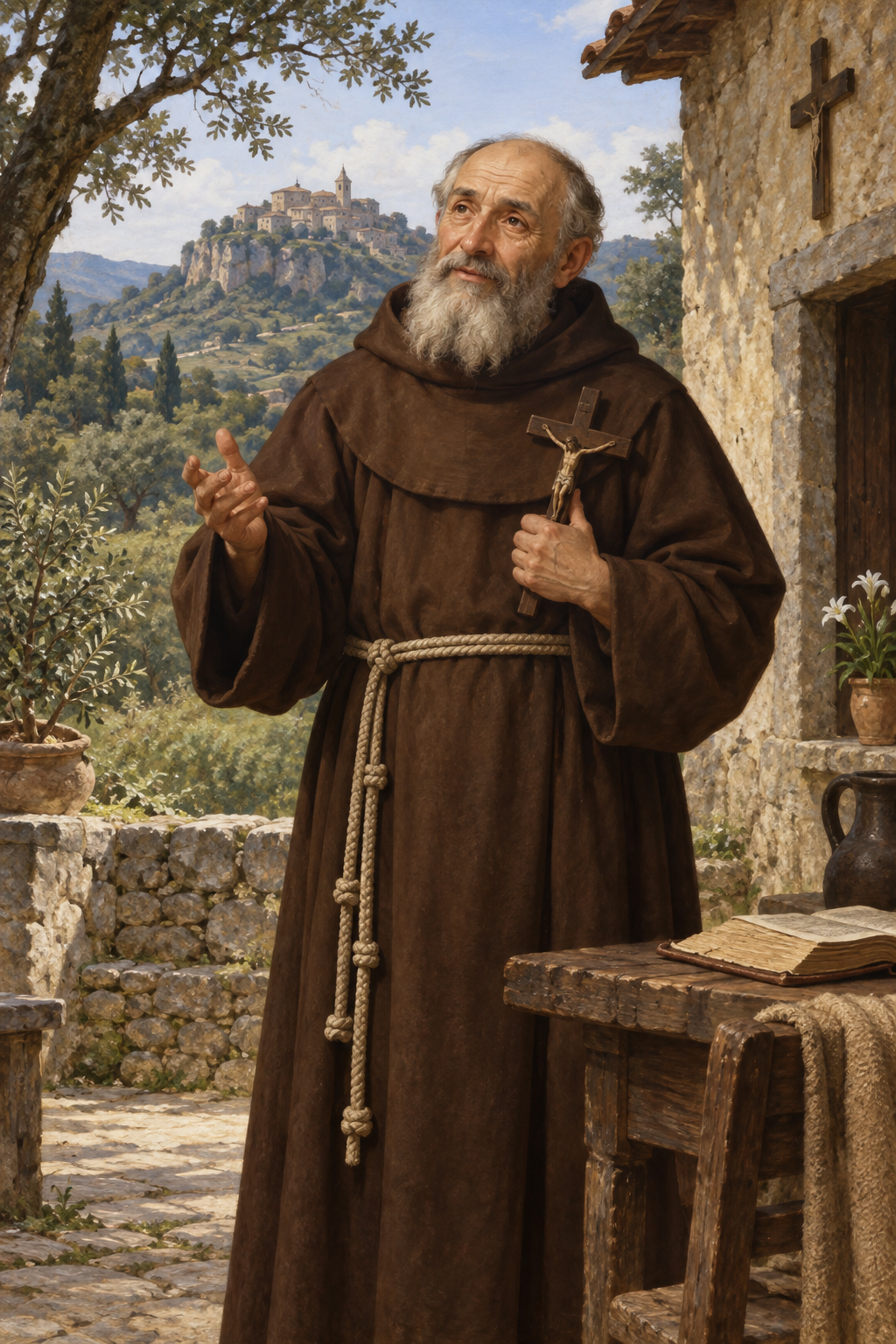
The art can therefore show a brown Franciscan habit, cord, crucifix or breviary, stone hermitage, and Lazio hill town. It should avoid stigmata, visions, or dramatic signs not required by the source base.
The crucifix is enough to express devotion. The hermitage and hills place him in his ministry without turning the image into a fantasy of medieval seclusion.
Tommaso died at Bellegra on January 11, 1729. The existing catalog death date, death place, and feast day are supported by the reviewed sources and are preserved in this deferred packet.
He was canonized in 1999. The canonization record can be cited as official recognition, while the biography remains centered on the pattern of his life: Franciscan poverty, preaching, retreat, and care for souls.
The page should not make canonization its climax in a bureaucratic sense. It is the church's recognition of a life whose form is already visible in the earlier paragraphs.
His witness is useful for readers who think action and contemplation compete. Tommaso's life suggests that public words become more truthful when they are formed by silence, discipline, and prayer.
That is also why the final action should be modest. A reader can imitate him not by founding a retreat, but by letting silence purify advice, correction, and teaching.
The final page should end without exaggeration. Tommaso da Cori can be honored as a Franciscan preacher whose outward ministry was fed by retreat life, and whose retreat life remained open to the needs of the church.
This conclusion keeps the biography grounded. It honors the official profile without making claims about unique rank, miraculous power, or influence beyond what the reviewed sources support.
The page can trust the ordinary Franciscan pattern to carry the weight: conversion, poverty, preaching, silence, and faithful guidance over time.
Artwork should show an older Italian Franciscan priest in brown habit and cord, holding crucifix or breviary in a rural Lazio hermitage setting. Avoid stigmata, dramatic visions, modern objects, logos, halos, exact-likeness claims, and rendered text.
Wondering how to weigh the stories and sources? Learn how to read a saint biography.