Biography
Toribio Romo
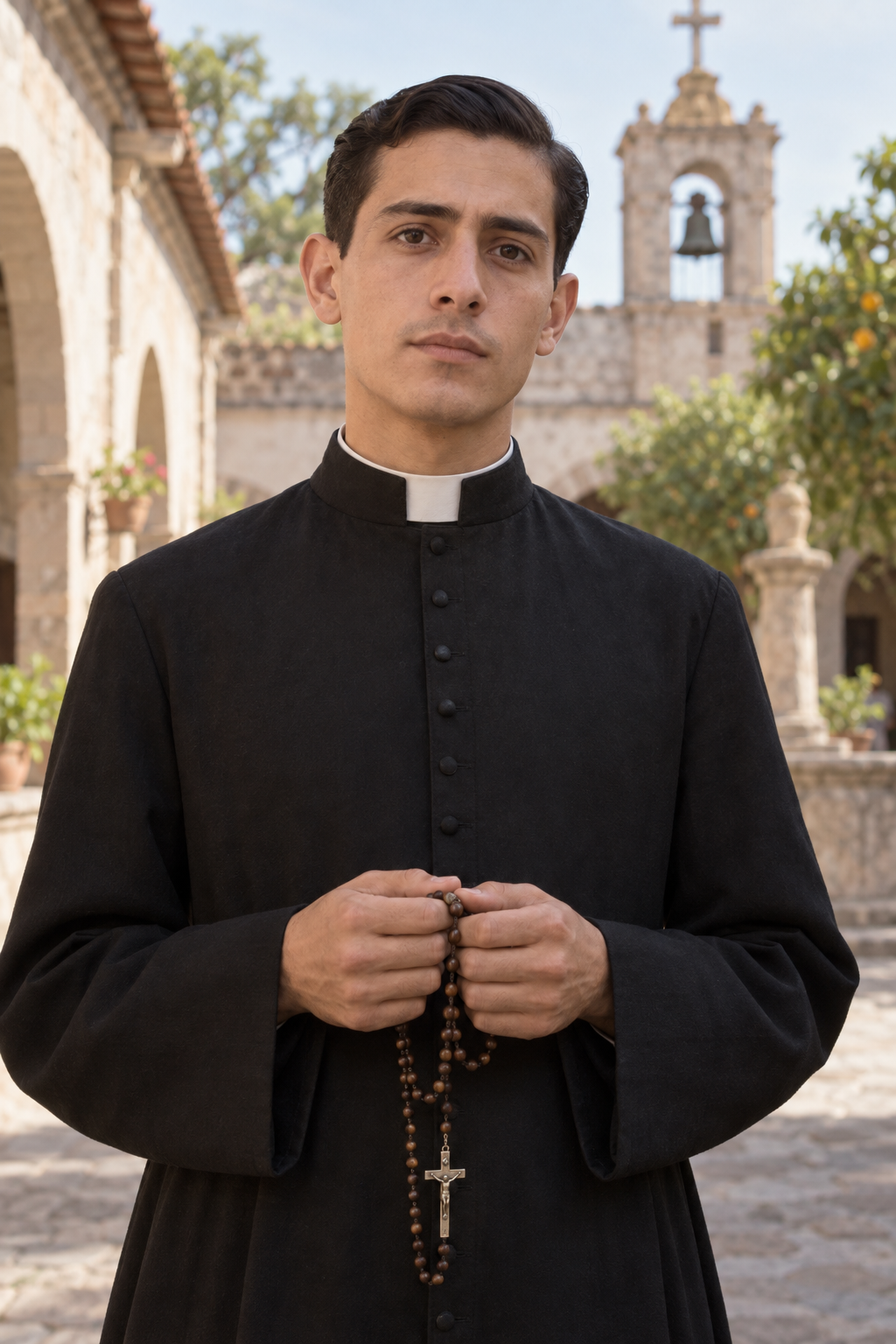
About Toribio Romo
Toribio Romo González was born at Santa Ana de Guadalupe, Jalisco, on April 16, 1900. He entered the seminary at San Juan de los Lagos in 1912 and was ordained a priest in 1922. His short ministry would end during the persecution of the Church in Mexico.
His sister María encouraged his schooling and helped with its expenses. The shrine’s account recalls the boy helping to support himself while studying in Jalostotitlán, carrying tortillas and laundry. His preparation depended on family effort as well as his own desire to become a priest.
His friend and fellow priest Leopoldo Gálvez remembered him as a cheerful young man from a poor farming background. The two shared the experience of coming from the countryside without much money. Toribio brought his younger brother Román to the seminary as well, although the boy’s poverty worried Gálvez. In his memoir, Gálvez recalls challenging Toribio about whether he could provide for him. Toribio answered with hope and prayer rather than any assurance of financial security. Román did eventually become a priest. Gálvez’s affectionate portrait preserves something easily lost in the later public image of a martyr: a friend, an older brother and a young man trying to help someone follow the same vocation.
Toribio also used drama to express his convictions. In a 1920 play about going north, he set a returning emigrant against a villager who had stayed in Mexico. The comedy warned that emigration could weaken attachment to religion, family and country. Its harsh treatment of the returning man is an uncomfortable contrast with Toribio’s later reputation as a protector of migrants. Historian David Romo described the play after consulting Toribio’s unpublished writings in the Guadalajara church archives.
After ordination he served in Sayula, Tuxpan, Yahualica and Cuquío. At Cuquío he worked with the parish priest Justino Orona. The diocesan shrine account remembers his concern for children and workers and the difficulty of continuing parish life when public religious activity was restricted. He eventually had to leave ordinary parish accommodation and carry on his ministry from hiding.
The pressure on clergy was part of a wider conflict over the Church’s place in Mexican society. Writing in November 1926, Pius XI protested against laws limiting religious education and placing church property and the number of clergy under state control. He described penalties that had made an already restricted ministry more dangerous. For a priest whose work joined worship with teaching, these restrictions touched the ordinary tasks of a parish, not simply its public ceremonies. The papal account speaks from the Church’s side of that conflict and conveys the alarm with which its leaders regarded the measures.
Toribio’s own diary gives a more personal glimpse of life under threat. In passages later quoted by the Guadalajara archdiocese, he addressed Jesus about the days when he could neither celebrate Mass nor receive Communion. He returned to the Eucharist in his prayer even when circumstances kept him away from the altar. This was not a distant religious ideal: the interruption of his daily sacramental life troubled him, and he put that distress into words.
Another diary passage, described by David Romo, recalled an alarm during clandestine worship. Toribio fled through the streets and over fences, frightened that he would be killed. His recollection included distress about the sacrament he had been receiving. The surviving words show fear alongside devotion, rather than a man untouched by danger.
He directed parish work at Tequila from a nearby refuge. The Vatican’s account recalls him bringing the parish registers up to date through a long night. Exhausted, he lay down to rest before celebrating Mass. Soldiers and armed agrarians entered the room and shot him on February 25, 1928. The Church remembers him as a priest killed during religious persecution.
John Paul II canonized him with Cristóbal Magallanes and the other companion martyrs on May 21, 2000. In the canonization homily, the pope emphasized that the group had continued serving their communities under persecution. He presented their witness as a call to faithfulness and concern for others, rather than only a memory of violent deaths. Toribio’s recognition belongs within that shared history of priests and lay people, even though his later popular following developed its own distinctive character.
Migrants came to regard Toribio as a protector on journeys toward the United States. The Mexican archdiocesan newspaper Desde la Fe distinguishes this popular devotion from a formal ecclesiastical appointment as patron. Pilgrims visit his shrine to ask for help and give thanks for what they believe to be his intercession. Those practices concern his reception after death; they do not establish that he personally helped people cross the border during his lifetime.
His name has also been attached to practical assistance. In 2018 Catholic Charities in the Diocese of Monterey established the Saint Toribio Romo Fund to support immigration services and help clients who had suffered violent crime. This was a later initiative, not an organization founded by Toribio.
Wondering how to weigh the stories and sources? Learn how to read a saint biography.
Explore similar vocations
Prayers for Toribio Romo
Petition through Saint Toribio
concédenos, por su intercesión, soportar por tu amor todas las adversidades