Biography
Tullio Maruzzo
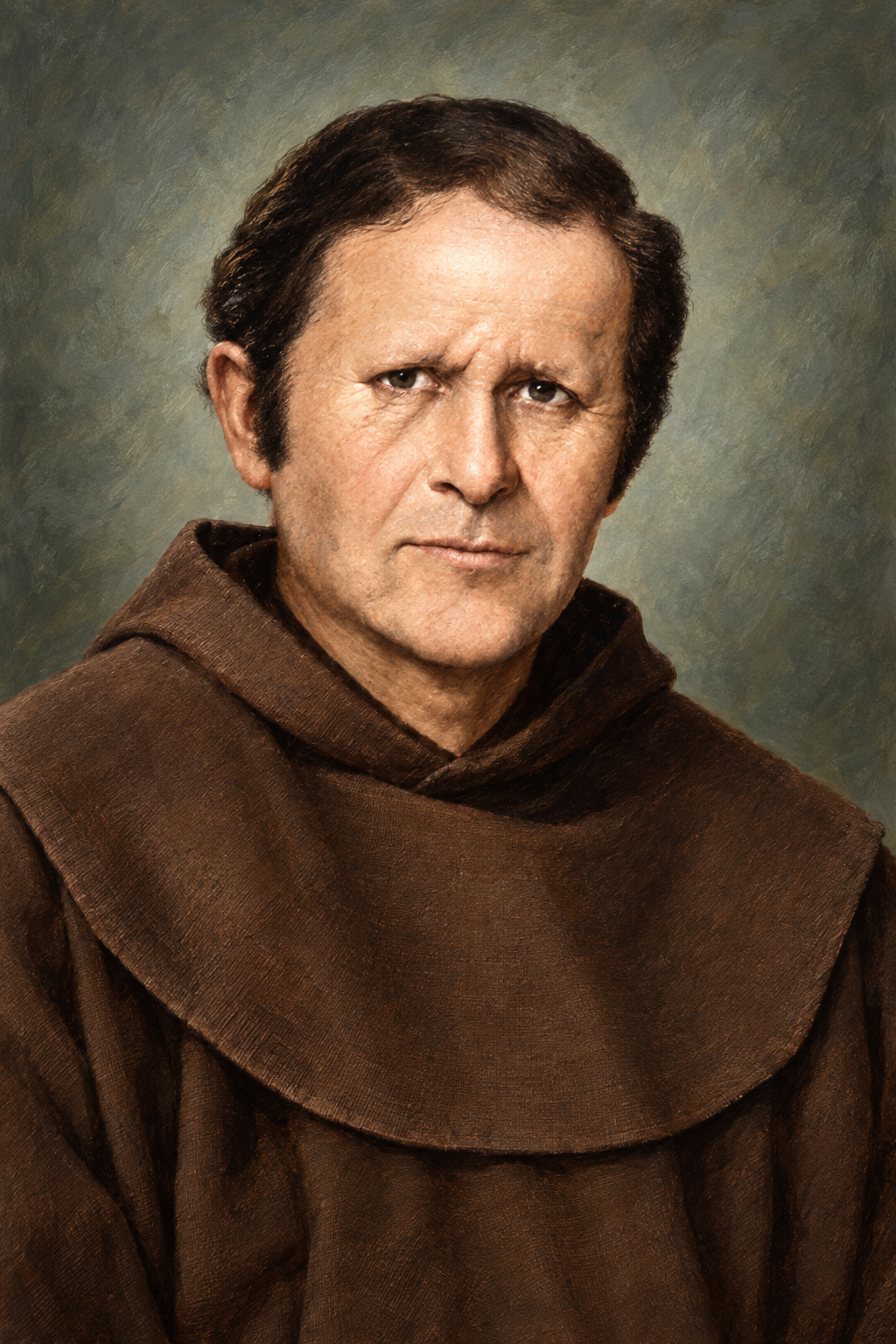
About Tullio Maruzzo
Tullio Maruzzo was an Italian Franciscan priest whose ministry in Guatemala combined religious teaching with practical support for rural families. Born Marcello Maruzzo in Lapio, he shared his vocation with his twin brother Daniele, who became known in religious life as Lucio. The twins belonged to a family of eight children. Tullio served an orphanage before leaving Italy for Guatemala in 1960. His assignments included Puerto Barrios, Entre Ríos and Morales, in Izabal. He trained catechists to help sustain Christian life in scattered communities, visiting villages and distributing assistance supplied by the local Caritas organization.
The Franciscan order records his entry into the seraphic college at Chiampo in 1939, solemn profession in 1951 and ordination on June 21, 1953. Both brothers were ordained by Angelo Roncalli, then patriarch of Venice and later Pope John XXIII. The order’s account places his departure for Guatemala in December 1960. The Guatemalan bishops’ biographical notice instead gives an arrival in January of that year, so the precise month remains uncertain.
The bishops’ account describes his work in schools and hospitals, followed by appointment to San José in Morales in 1968.
A recollection by Sister Patricia, a Canadian religious who worked in Morales, gives a closer view of the parish team. She described a community of sisters working with Maruzzo, a Spanish priest, and a Guatemalan priest; two lay collaborators later joined them. Their courses served delegates of the Word, the delegates’ wives, health workers, and young people. The bishop also participated in the delegates’ formation. Patricia remembered Maruzzo following up that teaching by visiting people in their villages, including communities in the mountains. She also recalled him carrying building materials for churches and supplies for families in urgent need. For the sisters, he was a friend with whom conversation came easily, sometimes over the biscuits they made. Her written testimony, preserved with an account by the priest Secondo Martin who requested it, remembers ordinary shared work and hospitality as well as the demands of his journeys.
Writing in the Chiampo sanctuary’s magazine, the Franciscan Claudio Bratti described the breadth of this teaching. Catechists learned Christian doctrine, but their preparation also included literacy, agriculture, animal husbandry, and awareness of their rights. Bratti recalls advice to consult trustworthy lawyers about land ownership. His account presents the catechists as local farmers whose religious work also required practical knowledge of the problems their neighbors faced. He describes a parish spread over many villages, where trained local people helped sustain communities that a priest could not serve alone. This later Franciscan account connects Maruzzo’s pastoral work with the daily demands of rural life. Its account of land disputes reflects the author’s perspective; it does not provide the original property records or establish the merits of each individual claim.
His superiors transferred him to Quiriguá in May 1980 because of threats. On July 1, 1981, Maruzzo and the lay catechist Luis Obdulio Arroyo Navarro were killed while returning from pastoral work.
Sister Albertina de Paz remembered Maruzzo and Arroyo as friends of the School Sisters of St. Francis. In a memorial tribute to Sister Anna Marie Noth, she recalled their murder on July 1, 1981, alongside the upheaval experienced by her own community. Some sisters went into exile in Honduras and Mexico, while four remained in Guatemala City. De Paz recalled the exiles returning in 1982 with both happiness and fear. Her personal remembrance places the two men within a community of friends whose lives were disrupted by violence.
His memory continued to connect communities in Italy and Guatemala before his beatification. An account published by the Franciscan Fabio Longo describes a September 2001 pilgrimage by twenty-two people, mainly young, from the Valli di Fimon parishes. They visited Quiriguá during a journey that also took them to the tombs of Juan Gerardi and Óscar Romero. In a recollection included in the account, Maruzzo’s brother Lucio described meeting at a red iron cross marking the place of the killing. When rain began, some returned by vehicle, while others walked back to the parish church in procession. Lucio presided at Mass there with the visiting priests and the local community.
At a memorial gathering in Lapio in June 2005, Bishop Álvaro Ramazzini of San Marcos connected the remembrance of Maruzzo and Arroyo with the continuing situation of poor Guatemalans. His address urged solidarity with people facing deprivation and exclusion. He interpreted the two men’s defense of the poor as an expression of their commitment to Christ. This was a bishop’s public tribute, years before their formal beatification.
Maruzzo and Arroyo were beatified together at Morales on October 27, 2018. The beatification homily remembered Maruzzo’s care for the sick, formation of catechists and defense of farmers facing dispossession. Their recognition as Catholic martyrs preserves the memory of a priest and a lay collaborator whose service linked parish life with the needs of vulnerable communities.
Wondering how to weigh the stories and sources? Learn how to read a saint biography.