Biography
Vincenzo Pallotti
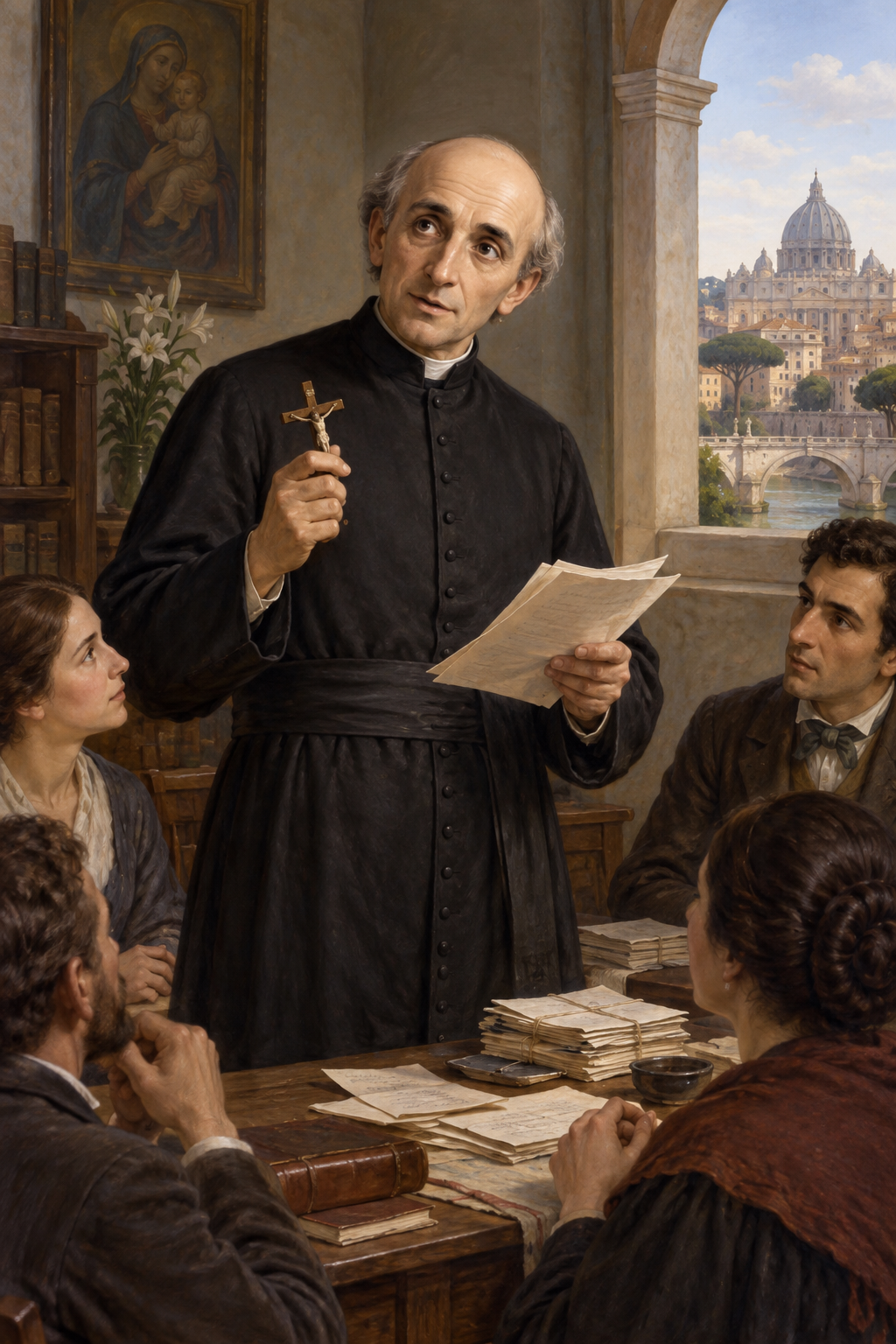
About Vincenzo Pallotti
Vincenzo Pallotti was born in Rome on April 21, 1795. The public page should let Rome remain central because his priesthood, apostolic work, death tradition, and canonization memory all return to the city.
Rome should be more than scenery. It was the urban ecclesial environment where Pallotti encountered clergy, religious, lay people, poverty, charity, and the practical needs of mission.
He became a priest and served in urban Catholic life through preaching, formation, charity, and encouragement of apostolic zeal. The biography should avoid reducing him to an institutional founder.
The page should make his priesthood active and concrete. Papers, letters, meetings, preaching, and charitable works can all point to a pastor organizing many people for the church's mission.
Pallotti's work involved clergy, religious, and lay people. The page should make that collaboration clear because it is central to his witness and to the Pallottine memory of his charism.
This was not a vague admiration for lay help. The source tradition remembers a shared apostolate, in which the gifts of many Catholics could be awakened and directed toward evangelization and charity.
He founded the Society and Union of Catholic Apostolate. The name should be handled carefully: it points to shared apostolic mission, not to a modern corporate brand or logo.
The public page should use the name sparingly and explain it plainly. Readers need to understand the spiritual idea before they meet institutional language.
The Pallottine source helps explain the founder's charism in language closer to the community that preserves it. This draft uses it without importing current institutional claims or statistics.
That restraint prevents the page from becoming a present-day profile of the Pallottines. The subject is Vincenzo's life and founding intuition, with current institutional scope left out unless later cited.
The artwork can show papers, letters, a meeting table, cross, and Roman view to suggest apostolic collaboration. It should not use a logo or modern movement imagery.
The meeting-table cue should be subtle. The image can show people gathered, but the badge should stay focused on Pallotti's face, cross, papers, and cassock.
The current catalog stores death as year-only `+1850` and leaves death place blank. Source tradition supports a more exact date around January 22 in Rome, but this deferred draft does not normalize those fields before final review.
This protects the same data boundary used elsewhere in the batch. A final approval can decide whether to add exact date and place, but the draft importer should prove the existing row remains unchanged.
The feast day of January 22 can remain because it aligns with the source tradition and current catalog. If the final packet normalizes death date or place, the focused test should change in the same approval step.
Until then, the biography can explain the source-supported tradition while the structured data remains conservative.
This is not a denial of the tradition. It is a way to keep the importer honest: draft text can mention exact-source memory, while the database waits for final approval before gaining new precision.
John XXIII canonized Vincenzo Pallotti in 1963. The homily is useful as an official source for church recognition, but the biography should not become a ceremonial summary.
Canonization belongs near the end of the page. It confirms the life; it should not replace the concrete story of apostolic collaboration and Roman priestly service.
Pallotti's witness is apostolic imagination. He saw mission as a shared Catholic responsibility, not as the work of clergy alone. The page should make that idea plain and concrete for ordinary readers.
Plain language matters here. The page should say that many people can share in the church's mission, and that Pallotti organized his priestly work around that conviction.
This also protects the page from abstraction. Apostolic imagination should be shown through letters, meetings, charity, formation, preaching, and practical coordination.
This theme is especially important for the reflection and action. A reader can imitate Pallotti by inviting others into good work, recognizing gifts, and serving the church without possessiveness.
That reflection should avoid managerial language. The point is not delegation for efficiency, but love of the church that makes room for other people's charisms.
The action can therefore be personal: notice a gift, invite someone into service, and resist the temptation to possess every good work alone.
The final page should show a Roman priest who gathered people for mission. It should balance founder language with pastoral, charitable, and collaborative work.
The conclusion should feel broad but grounded: Rome, priesthood, apostolate, letters, meetings, charity, and shared mission held together in one vocation.
Pallotti's page can end with a generous vision of the church: many members, many gifts, one mission, and a priest who helped others see they were needed.
Artwork should show a nineteenth-century Roman priest in black cassock, with papers, letters, small cross, meeting table, and Rome through an arch or window. Avoid logos, modern objects, halos, exact-likeness claims, and rendered text.
Wondering how to weigh the stories and sources? Learn how to read a saint biography.