Biography
William Augustus Muhlenberg
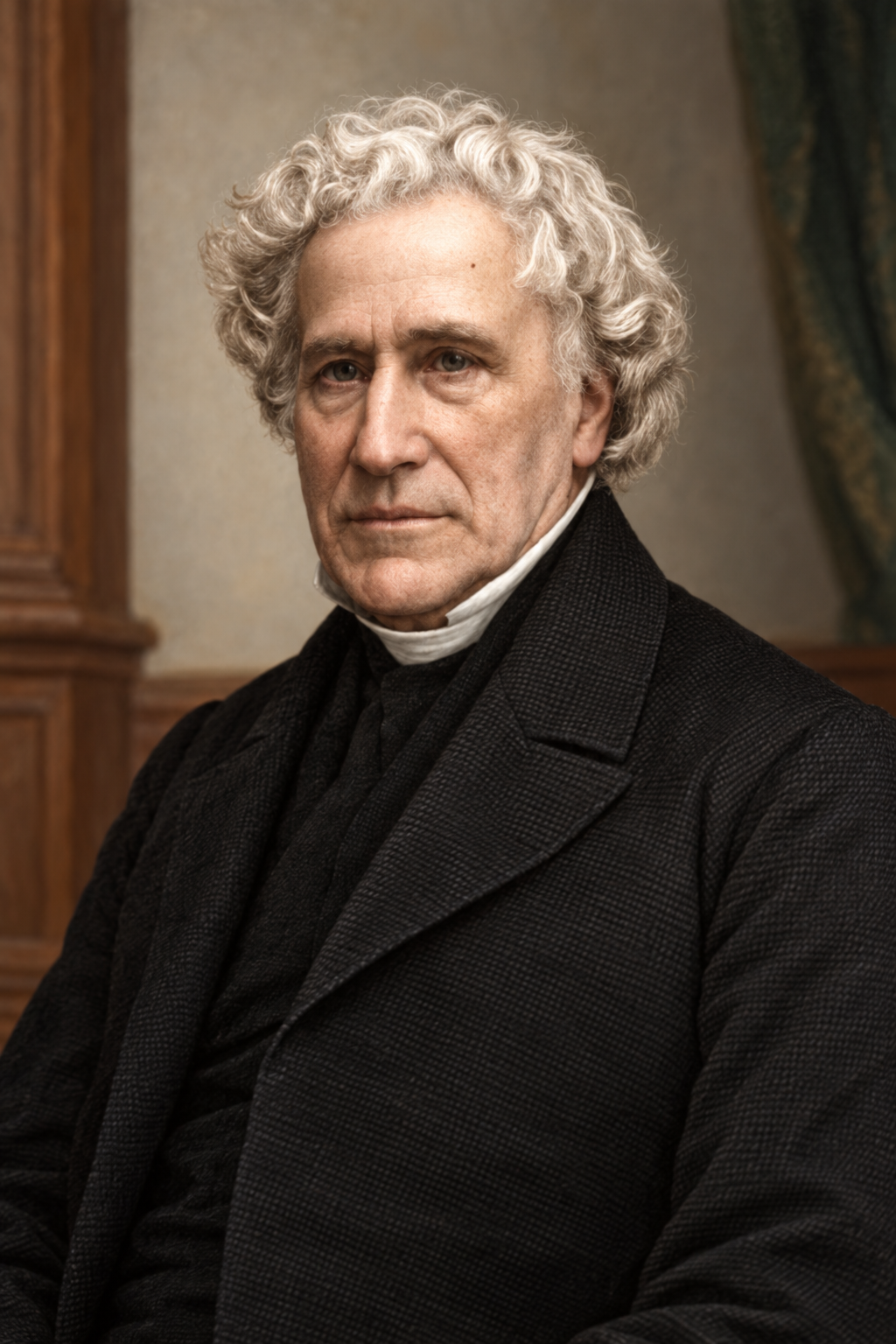
About William Augustus Muhlenberg
William Augustus Muhlenberg was an Episcopal priest whose work brought together education, worship, and care for people with little money. Born in Philadelphia in 1796, he graduated from the University of Pennsylvania in 1815. He became a deacon in 1817 and a priest in 1820. After serving in Lancaster, he went to Flushing, where an intended temporary assignment led to a longer commitment to education. He directed the Flushing Institute and developed plans for a college at College Point. Financial difficulties following the crash of 1837 frustrated the larger project.
In an address to families in 1831, Muhlenberg explained what he wanted his school to accomplish. Intellectual progress mattered, but the motives for learning mattered too. He rejected prizes and competition for rank as the chief incentives to study, favoring conscience, responsibility, and the hope of being useful. He hoped to raise the general standard of learning rather than concentrate attention on a few exceptional pupils. Scripture, prayer, and Episcopal worship belonged within the school’s routine. He described its government as paternal and restrained, while acknowledging that troublesome pupils could be dismissed. This was his own account of the school’s methods, not a measure of every pupil’s experience. He asked parents to support the school’s routines by avoiding unnecessary absences and excessive indulgence during holidays. His address also urged pupils to continue reading and prayer away from school. Education, as he presented it, required cooperation between teachers and families rather than instruction confined to a classroom.
A new phase of his ministry began at the Church of the Holy Communion in New York. At its cornerstone ceremony in 1844, Muhlenberg credited the project to John Rogers’s intention and to his widow, Mary, who was carrying it out. The church was intended to offer its privileges without charge. Muhlenberg asked that its name express a real fellowship: rich and poor should worship together without distinctions of social rank. He linked generosity toward poor neighbors to the Eucharist and proposed supporting the church through offerings. He also envisioned daily prayer and frequent communion, making the building a place of worship throughout the week.
Concern for people who were ill became another major undertaking. In his 1850 appeal for a church hospital, Muhlenberg recalled the offering set aside in 1846 and the renewed support that followed the cholera epidemic of 1849. He argued that caring for bodily suffering belonged to the church’s imitation of Jesus. A hospital, in his view, should offer spiritual consolation alongside treatment and nursing. His language was strongly confessional, and he contrasted the religious care he proposed with what public institutions could provide. The hospital’s constitution also named the training of nurses among its purposes. These were stated aims for an institution still being established.
St. Luke’s Hospital opened in 1858. Muhlenberg made his home there and continued his pastoral work among its patients.
The sisters helped prepare linen and clothing, moved patients into the unfinished building, and took responsibility for its wards. Ayres describes their work expanding from nursing into the organization of the hospital household. Paid nurses also served there. Conflict later divided the sisterhood; Lindsley describes Muhlenberg disbanding it after disputes over leadership and the form of religious life.
His interest in Christian cooperation also led to proposals for church reform. In 1853, he and fellow presbyters submitted a memorial asking the bishops to consider a broader system of ministry. They proposed admitting suitable ministers from other Protestant bodies to episcopal ordination without demanding complete uniformity in worship. The proposal sought greater cooperation while preserving what its authors regarded as essential faith and order. Its openness had limits: the document spoke antagonistically about Roman Catholicism, and its vision was chiefly one of Protestant unity. Some additional signatories supported referring the matter to a commission without endorsing every suggestion.
St. Johnland extended Muhlenberg’s work into a residential and industrial community on Long Island. Its 1870 report describes cottages, farming, and a printing enterprise directed by J. J. Golder. The printing work was intended to train orphaned or destitute young people, including those with physical disabilities, for future employment. The report describes an entrance fee and a term of apprenticeship in return for board, clothing, education, and trade instruction. It also records a home for children, where schooling was adjusted to age and physical condition. The account presents the organizers’ aims and assessment of their work; it does not provide the residents’ own accounts of life there. Its descriptions make clear that the project involved rules, labor, and financial arrangements as well as charitable intentions.
In his final years, Muhlenberg remained concerned for the institutions and people entrusted to his care. Anne Ayres, his longtime collaborator, recalled him visiting patients and leading evening prayer shortly before the illness that ended his life. Her account places his final illness at St. Luke’s Hospital and records his death on April 8, 1877. He was buried at St. Johnland after a service in the hospital chapel. Ayres’s admiring memoir preserves the perspective of someone closely involved in his work; it also shows the continuing place of pastoral care in a life often remembered for founding institutions.
The Episcopal Church commemorates him on April 8.
Wondering how to weigh the stories and sources? Learn how to read a saint biography.