Biography
William Dwight Porter Bliss
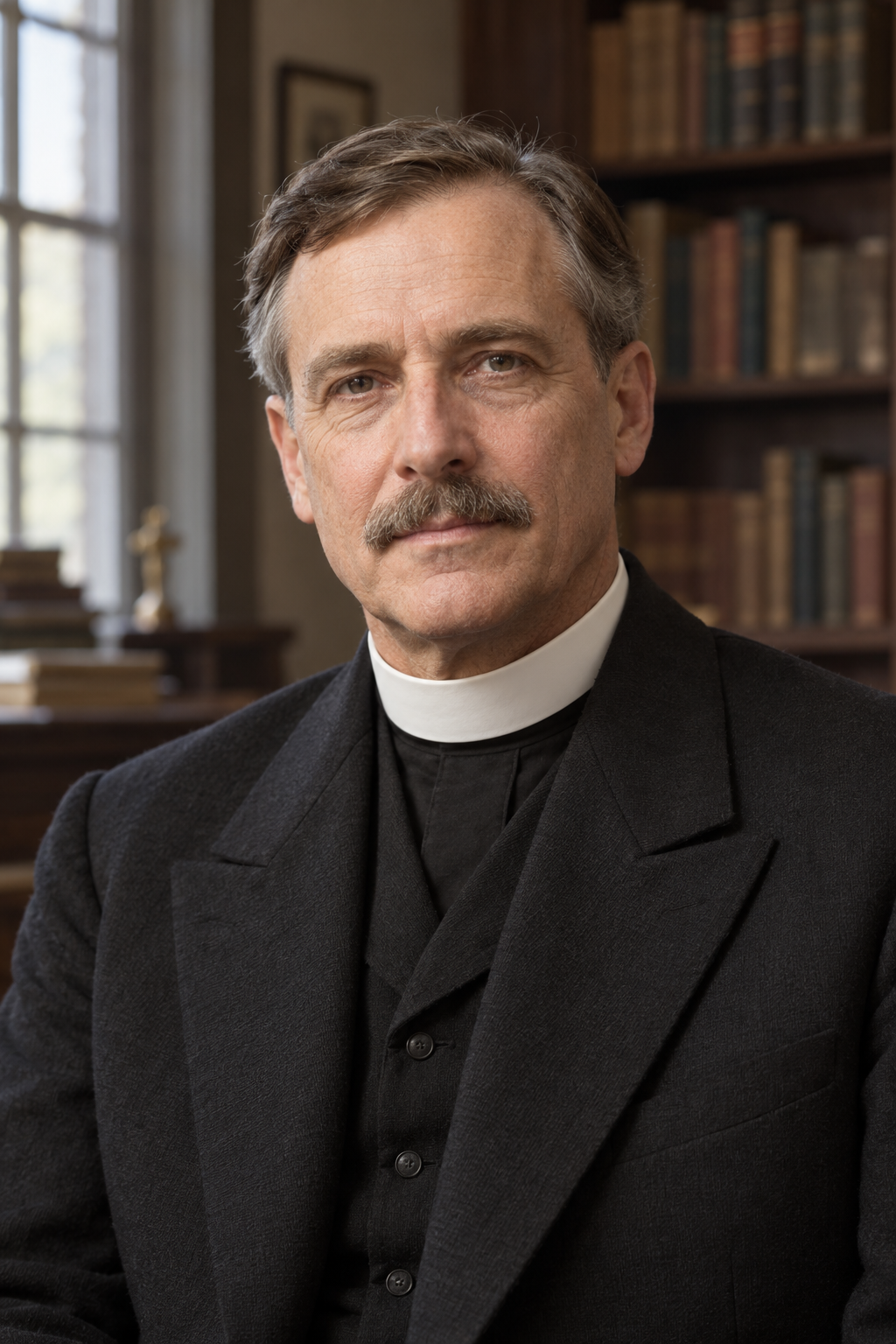
About William Dwight Porter Bliss
William Dwight Porter Bliss was an Episcopal priest who treated social reform as part of Christian responsibility. His work ranged across preaching, organizing, editing, and research. Historian Richard Dressner places him among the leading figures on the left wing of the Social Gospel, a movement concerned with the social consequences of Christian belief.
Born in Constantinople on August 20, 1856, Bliss studied at Robert College, Phillips Academy, Amherst College, and Hartford Theological Seminary. He entered Congregational ministry and served churches in Denver and South Natick, Massachusetts. In 1885 he joined the Episcopal Church; ordination as a deacon followed in 1886 and as a priest in 1887. His early Episcopal appointments included Lee and Grace Church in South Boston.
He helped organize the Society of Christian Socialists in 1889 and edited its journal, The Dawn. Other editorial work included The American Fabian and the Encyclopedia of Social Reform. These publications belonged to a career that combined parish responsibilities with sustained attention to economic questions. He later served churches in California and on Long Island, while remaining involved in reform organizations.
Organizing was as important to him as writing. Dressner’s account identifies a Boston settlement and inner-city mission, his work as an organizer and traveling secretary for the Christian Social Union, and his role in the Boston Fabian Society. He also worked with Josiah Strong on studies of social Christianity. These undertakings connected church life with wider debates over industrial society.
An earlier essay gives his own account of how those convictions developed. In Why Am I a Christian Socialist?, published in 1890, he recalled that reading Karl Marx had made him reconsider what following Christ required. He presented self-sacrifice for the common good as the connection between his faith and socialism. He defended cooperation and democratic participation while rejecting paternalism. The essay also set out his personal religious views: he treated reason as the means by which he judged claims about faith, scripture, and miracles. These statements describe his beliefs, rather than establishing the truth of his theological or political conclusions.
Bliss explained his religious reasoning in an 1894 sermon preached at the Church of the Redeemer in New York. He drew on the doctrine of the Trinity to argue that individuals and their social relationships belonged together. He criticized both an individualism that left each person to struggle alone and a paternal system that made people dependent on an organization. He regarded family, church, and political community as settings in which personal responsibility could develop.
The sermon challenged charitable advice that demanded endless thrift from struggling families while leaving their circumstances intact. It also rejected the idea that transferring industry to the state would by itself create a just society. Bliss’s Christian socialism sought changes in social arrangements alongside changes in personal conduct. His use of “Catholic” described his understanding of Anglican faith; the sermon explicitly distinguished that position from Roman Catholic authority.
His correspondence with Jane Addams reveals a less comfortable side of his political optimism. In May 1908 he responded to her writing about the treatment of anarchists and threats to free speech. He did not endorse persecution, but argued that conspicuous government wrongdoing might discredit the authorities and strengthen the cause of socialism. He expected political education and voting eventually to prevail over violence.
He called himself a socialist while distancing himself from the party’s methods. His hopes for immigrant participation were expressed through generalizations about Russian Jews that belonged to his own political outlook, rather than an account of individual immigrants’ views. He wondered whether he was too optimistic. It records a disagreement with Addams, not a shared conclusion about the consequences of repression.
Their working relationship continued. In October 1911, writing for Josiah Strong from the American Institute of Social Service, Bliss thanked Addams for agreeing to supply a paper on woman suffrage. He told her that an address she had already delivered could serve their purpose, with or without changes. The brief letter shows the practical work of gathering material and maintaining cooperation behind public reform campaigns.
His later work took him beyond parish and publishing offices. From 1907 to 1909 he served as a special investigator for the United States Bureau of Labor, traveling in Europe to study unemployment and women in trade unions. During and after the First World War, he worked in Switzerland among interned French and Belgian soldiers. Returning to the United States in 1921, he became rector of St. Martha’s in the Bronx. He helped develop that small mission until poor health led him to retire in 1925. He died the following year.
His October 8 commemoration is observed in Episcopal worship alongside economist Richard Theodore Ely.
Wondering how to weigh the stories and sources? Learn how to read a saint biography.