Biography
Wulmar of Samer
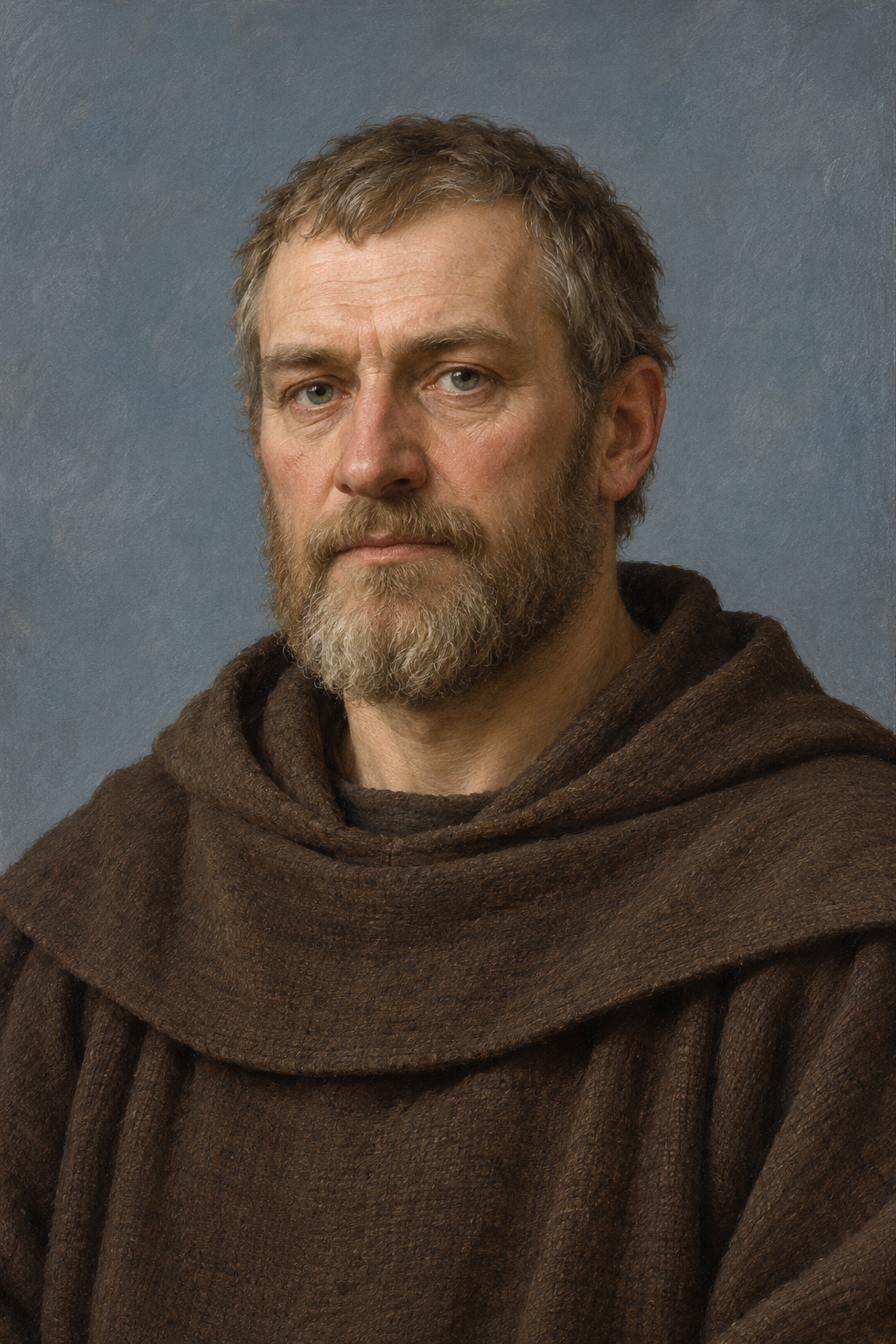
About Wulmar of Samer
Wulmar is remembered as the founder of the monastery at Samer, near Boulogne. His life belongs to the late seventh or early eighth century, but its chronology is uncertain. The anonymous biography was written after his lifetime, drawing on stories told by others.
The biography says that a ruler ordered his wife returned to another claimant. Wulmar then entered Hautmont, tended cattle and learned to read before becoming a priest. Later he gathered separate communities of men and women, placing his niece over the women’s house.
It portrays him releasing a horse thief after admonishing him. Other episodes are harsher: women are denied a final visit, and a cloud allegedly prevents them seeing his body. Flood and storm stories punish people who work on his feast. These are religious narratives, not independently established events.
His memory also survives in the church at Parenty, dedicated to Wulmar. The building developed in several stages: its choir vault is dated to the early sixteenth century, while the central tower bears the date 1614. These later structures belong to the history of his remembrance, rather than to his own lifetime.
The Catholic Church in Norway’s account lists him as a patron of coachmen and carriage drivers. This traditional association should be distinguished from the biographical account of his work with cattle; the surviving story alone would not establish a patronage.
Wondering how to weigh the stories and sources? Learn how to read a saint biography.