Biography
Zbigniew Strzałkowski
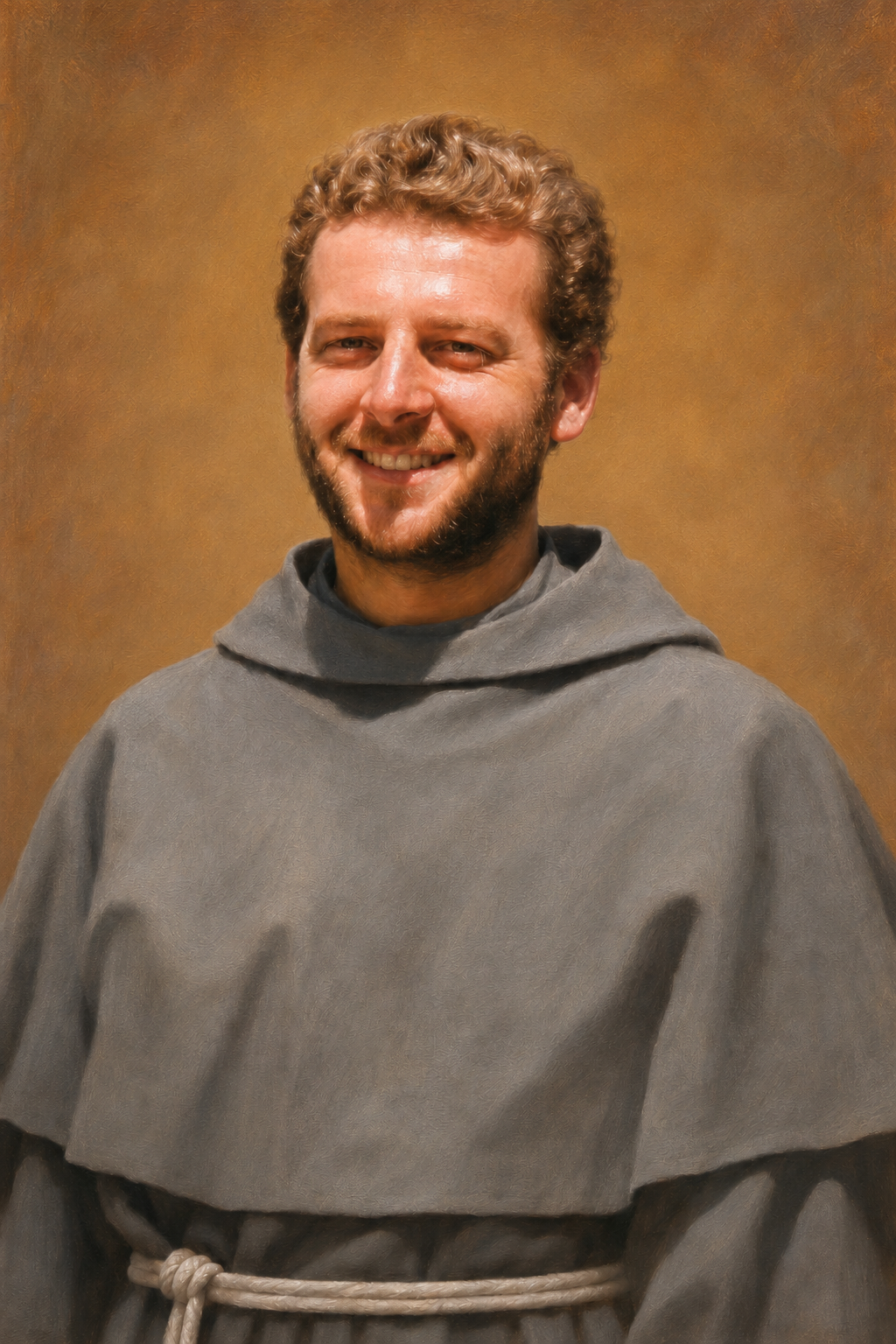
About Zbigniew Strzałkowski
Zbigniew Strzałkowski was born in Tarnów, Poland, on July 3, 1958, and grew up at nearby Zawada with two older brothers. His parents had a small farm, and his father also worked as a glazier. Zbigniew trained as a mechanical technician before entering the Conventual Franciscans in 1979. After his novitiate at Smardzewice he studied in Kraków. He made his lifelong religious profession on December 8, 1984, and was ordained a priest on June 7, 1986. His first assignment was at the Franciscan minor seminary in Legnica, where he served as deputy rector, teacher and catechist. He subsequently prepared for missionary work and left for Peru with Jarosław Wysoczański in November 1988.
His mother Franciszka remembered a boy who enjoyed serving at church and became a lector. Interviewed in 2017, she said he had read missionary books before entering the seminary. She had initially hoped he would study in Tarnów, but he was determined to become a Franciscan. She accepted his choice and prayed for him. Her recollection also included an incident from his school years. An older woman struggled home with shopping while other boys laughed at her. Franciszka had heard that Zbigniew helped the woman carry her purchases and accompanied her home. She offered the story as an example of his willingness to help. The interview retains a mother's personal memories rather than presenting a complete record of his childhood. It also reveals her fear when he went to a country where she knew people were being killed. Franciszka described the family’s limited means and the work of raising three sons. All three served at the altar during their childhood.
Jerzy Żebrowski, a fellow novice, recalled a friendship shaped by their shared desire for mission work. They organized missionary activities at Smardzewice and stayed in contact after going to different seminaries. Żebrowski remembered Strzałkowski's devotion to Mary, Maximilian Kolbe and the missionary brother Zenon Żebrowski. When his own departure for Kenya approached, he visited Zbigniew at Legnica to say goodbye. At that point Zbigniew hoped to go to Latin America without yet knowing the destination. They promised to pray for each other. In the later interview Żebrowski described his friend as direct, sincere, cheerful and practical. The memory combined strong religious conviction with an approachable manner. He also recalled their farewell with affection and sadness because neither knew when they would meet again. Such testimony gives a glimpse of Strzałkowski among companions before Peru became his home. After their paths separated, both continued organizing missionary activities among fellow seminarians, Żebrowski at Łódź and Strzałkowski at Kraków.
Gogola's historical study follows his preparation into concrete responsibilities in Peru. During his initial stay at Moro, Strzałkowski helped replace the parish priest, worked with a boarding school and assisted with its building project. The assignment also involved a small agricultural holding. Learning Spanish remained a central task. The study describes six months of language preparation with the local priest, Pablo Fink. These early duties combined education, manual organization and pastoral work before the friars established their community at Pariacoto. The boarding school at Moro housed forty boys, and the agricultural holding covered about two and a half hectares. Strzałkowski also helped continue construction of a new boarding building.
At Pariacoto the friars served a large parish whose communities were scattered among Andean villages. They taught catechism, helped organize access to drinking water and distributed food with Caritas. The mission commission particularly remembers Strzałkowski's care for sick people during a cholera outbreak. His practical abilities belonged within that work of accompanying parishioners.
Tadeusz Pobiedziński remembered him as quieter and more measured than Michał Tomaszek, who joined the mission in 1989. Their different temperaments complemented each other. In the same account, Strzałkowski's concern for nature was connected with the Franciscan ecological movement REFA. His religious outlook included respect for creation as well as care for people. Pobiedziński also recalled both friars' diligence and persistent desire to work as missionaries. These memories show interests and habits that preceded the final crisis in Peru.
On August 9, 1991, members of Sendero Luminoso abducted Strzałkowski and Tomaszek at Pariacoto. Before being taken away, the friars sought safety for the postulants. They were killed at Pueblo Viejo and buried in the parish church. Their beatification took place at Chimbote on December 5, 2015.
Franciszka later spoke about forgiving the men who killed her son. She described grief without wishing harm to the perpetrators. Her testimony placed the family's loss within a continuing practice of prayer and forgiveness.
In 2023 Poland's presidential chancellery reported the presentation of posthumous decorations to both friars' families at the Vatican. Strzałkowski received the Grand Cross of the Order of Merit of the Republic of Poland. The stated grounds included assistance to people in need, education among the population of Peru and missionary service.
Wondering how to weigh the stories and sources? Learn how to read a saint biography.