Biography
Zygmunt Gorazdowski
About Zygmunt Gorazdowski
Zygmunt Gorazdowski was born in Sanok on November 1, 1845. The catalog currently stores the birthplace as "Sanok, Poland," while an English Vatican biography uses "Sanok, Ukraine" and the Dicastery profile uses Polish wording.
This draft preserves the existing catalog wording and records the tension for final review. Sanok's modern and historical jurisdictional language can be handled later in structured fields without weakening the basic claim that he was born in Sanok.
The page should not make geography the whole story. Zygmunt's life belongs to a borderland Catholic setting, but his witness is most clearly seen in priestly ministry, pastoral writing, and organized mercy in Lviv.
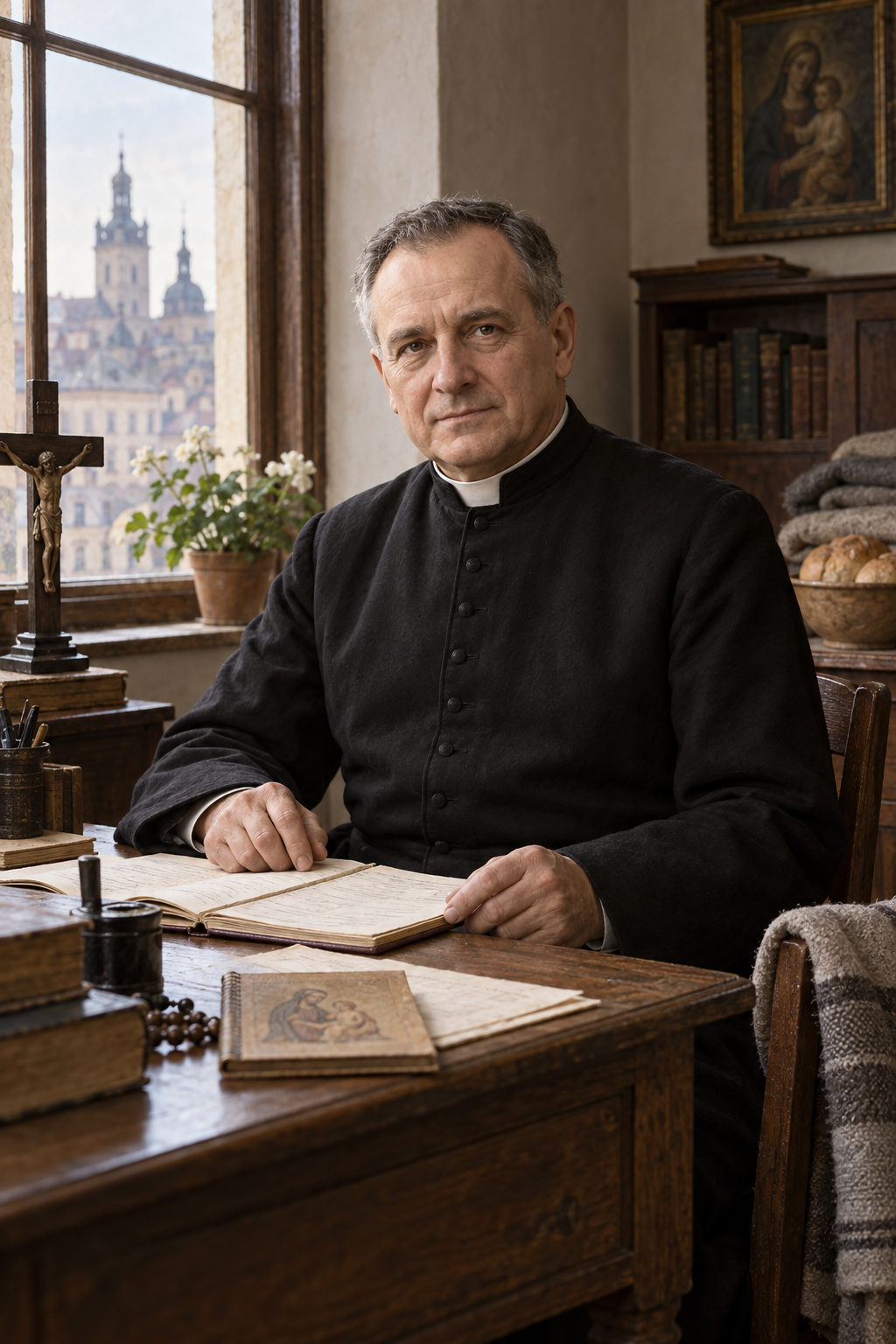
He became a Roman Catholic priest. The catalog classifies him as "Priest / Deacon," and this draft preserves that class. The artwork should show a diocesan priest in a black cassock, not a bishop, monk, or religious founder in distinctive habit.
The priestly class matters because his charitable work came through pastoral responsibility. His service was not only private generosity; it was public, organized, sacramental, educational, and tied to the needs he met as a priest.
Vatican biographical sources describe a ministry that included preaching, teaching, catechetical writing, and service to people in material distress. The page should keep those strands together rather than choosing only one.
Catechetical writing should be mentioned carefully. It shows that Zygmunt cared about formation, not only emergency help. Books, papers, and a desk are useful visual cues, but no readable text should appear in the artwork.
His Lviv ministry should also be concrete. Sources associate him with works for poor people, sick people, children, students, and vulnerable mothers. The page can present that range without turning the biography into a list of institutions.
Organized mercy is the key phrase for this packet. A bowl of bread, folded blanket, ledger, crucifix, and parish office can suggest charity that was both human and disciplined.
The sources remember him as a pastor who helped build durable forms of service. That durability should be described as part of his priestly intelligence: mercy needed preaching, administration, money, collaborators, and daily persistence.
His pastoral writing belongs in that same pattern. It was not a separate literary career detached from ministry, but another way of giving people clear Christian formation and practical help for living the faith.
The draft should therefore treat books, ledgers, and parish papers as pastoral tools. They show a priest trying to make care teachable, repeatable, and less dependent on one moment of enthusiasm.
This is why the public page should avoid sentimental poverty scenes. Zygmunt's works served real people, but the dignity of those people is better protected by showing the priest's responsibility and the tools of service than by crowding the image with suffering.
Lviv is the main setting of his mature ministry and death. The existing catalog records Lviv as his death place, and this draft preserves it. A Lviv city view or modest office background is appropriate for the portrait.
He died in Lviv on January 1, 1920. The date is already stored as a full signed date, so the draft does not alter it or convert it through calendar APIs.
The current catalog leaves `feast_day_roman_catholicism` blank. This draft preserves the blank field because feast observance needs final calendar review, even though the death date is clear.
That restraint is useful. A death date often becomes a feast date, but the database should not infer an observance merely because a date is available. The final packet can add or preserve the feast field only from direct evidence.
Zygmunt was beatified in 2001 and canonized in 2005. Those recognitions should be present, but they should not overpower the biography. His most readable legacy is the priestly joining of Eucharistic and pastoral devotion with practical charity.
The Dicastery profile and canonization context support his public Catholic identity and recognized sanctity. The page can use them without quoting homily language or expanding into the wider 2005 canonization group.
The article should also avoid national simplification. Zygmunt can be described as Polish and connected with Sanok and Lviv, but flags or political shorthand would flatten a complicated region and distract from pastoral service.
His witness is especially strong for clergy and lay collaborators who organize care for people who might otherwise remain invisible. He shows that preaching, writing, administration, and personal charity can belong to one pastoral life.
The final page should leave readers with a diocesan priest at a desk and in the street, attentive to doctrine and bread, prayer and paperwork, church life and the wounded edges of the city.
Artwork should show a late nineteenth- or early twentieth-century diocesan priest in black cassock, in a modest Lviv office with crucifix, papers, book or ledger, blanket, and bread. Avoid bishop vestments, national flags, modern objects, crowded distress, readable text, halos, and exact-likeness claims.
The badge crop should keep his face, cassock, desk, and charity cues legible. It should read first as priestly pastoral charity, not as a generic scholar or political figure.
Wondering how to weigh the stories and sources? Learn how to read a saint biography.