What Is a Saint?
Explore Saints · 3 min read · Updated
What Catholics mean by saints, why the Church canonizes some people, and how an ordinary life fits the story.
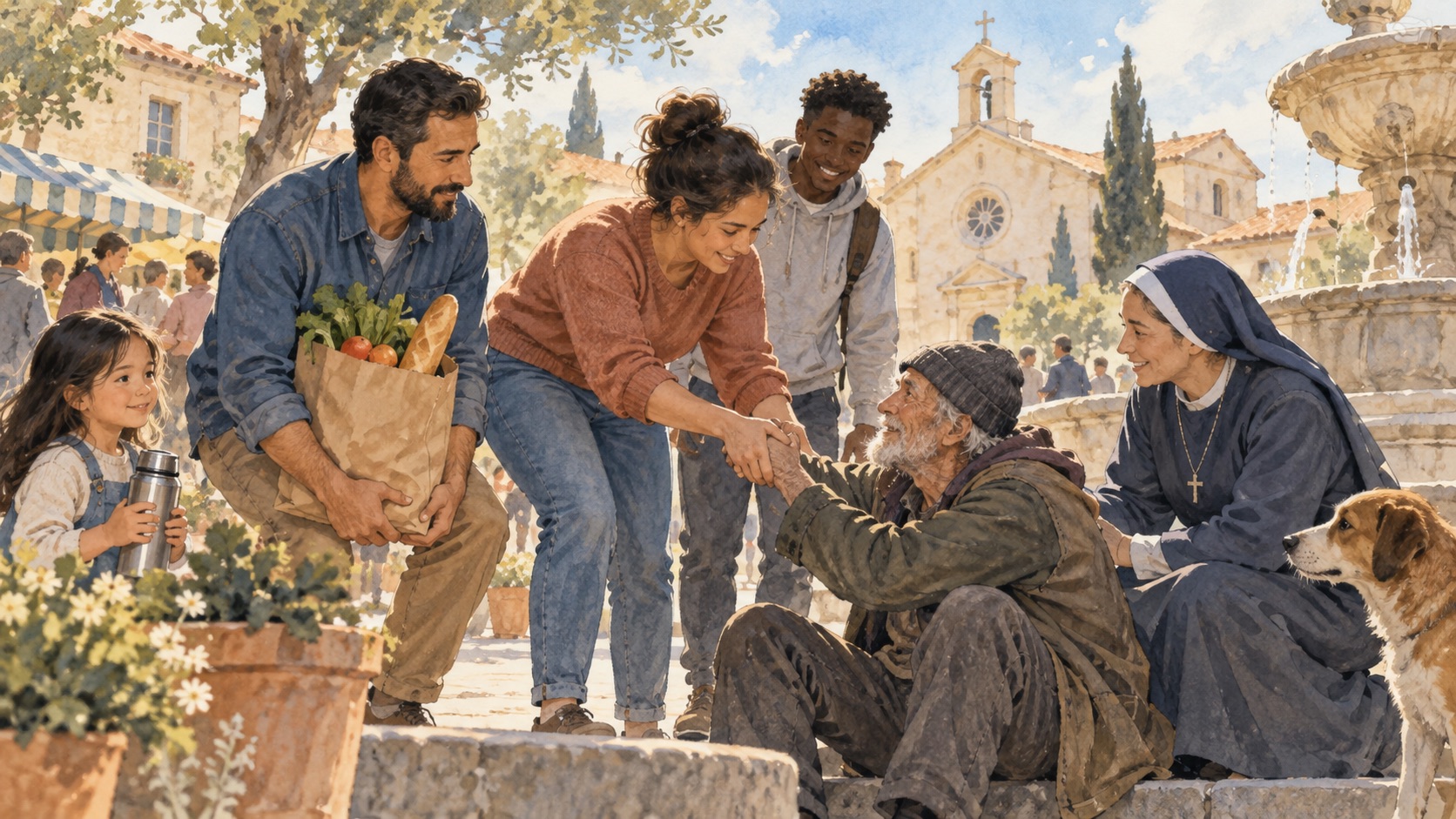
Saint can mean more than one thing
If 'saint' makes you picture a halo, a stained glass window, and someone who never misplaced a key, the picture needs more people in it. In Catholic teaching, all Christians are called to holiness: a life shaped by love of God and neighbor. The Church calls its members 'saints' in that broad sense. It also publicly honors particular people as Saints.
The way that recognition happens has changed over time. In the Church's first millennium, local churches honored martyrs and later other witnesses of faith; today's formal canonization process developed later. So a name with 'Saint' before it in a Catholic calendar might belong to an ancient figure honored long before modern procedures, or to someone formally canonized in recent times. Either way, the title invites you to meet a person, not just admire a label.
Sources: Catechism 823–828 · Dicastery for the Causes of Saints on early recognition
What does a canonized life look like?
It rarely looks like a straight line. Elizabeth Ann Seton was a wife, mother, and widow before founding a religious community that served families through education and charity. Óscar Romero was a bishop whose concern for poor and marginalized people became inseparable from his ministry during violence in El Salvador. Their circumstances were worlds apart. Both examples pull the word 'holy' away from vague perfection and toward costly attention to other people.
The Church's teaching calls every Christian to holiness in whatever state or walk of life they occupy. A parent caring for a child, a student telling the truth, and a neighbor bringing food to someone in need all face real choices. Holiness belongs in those ordinary settings too.
Explore further
Sources: Paul VI on Elizabeth Ann Seton · Pope Francis on Óscar Romero · Catechism 2013
Does canonization mean only these people are in heaven?
No. The Church remembers many holy people whose names never entered a formal cause. Canonization publicly recognizes a particular person. No one has published a complete list of everyone with God. The Catechism describes a communion that joins people still living, those being purified after death, and those already blessed in heaven.
A saint's title can also flatten a complicated human story. Read with curiosity. Ask what evidence supports the key events, what belongs to later tradition, and who was affected by the person's actions. A dramatic anecdote may be memorable; a life of steady service is often more revealing.
Sources: Catechism 828 · Catechism 954–962
Try one life, then one action
Choose a person whose story interests you, read a source that gives context, and find one concrete decision they made. If Seton's work in education catches your attention, help someone learn something this week. If Romero's attention to neglected people stays with you, listen to someone whose concern usually gets waved away. Ask how faith became action in that life, then decide what one such action might look like in yours.
Sources: Catechism 2013–2014 · Paul VI on Elizabeth Ann Seton · Pope Francis on Óscar Romero