Biography
Adrian of Canterbury
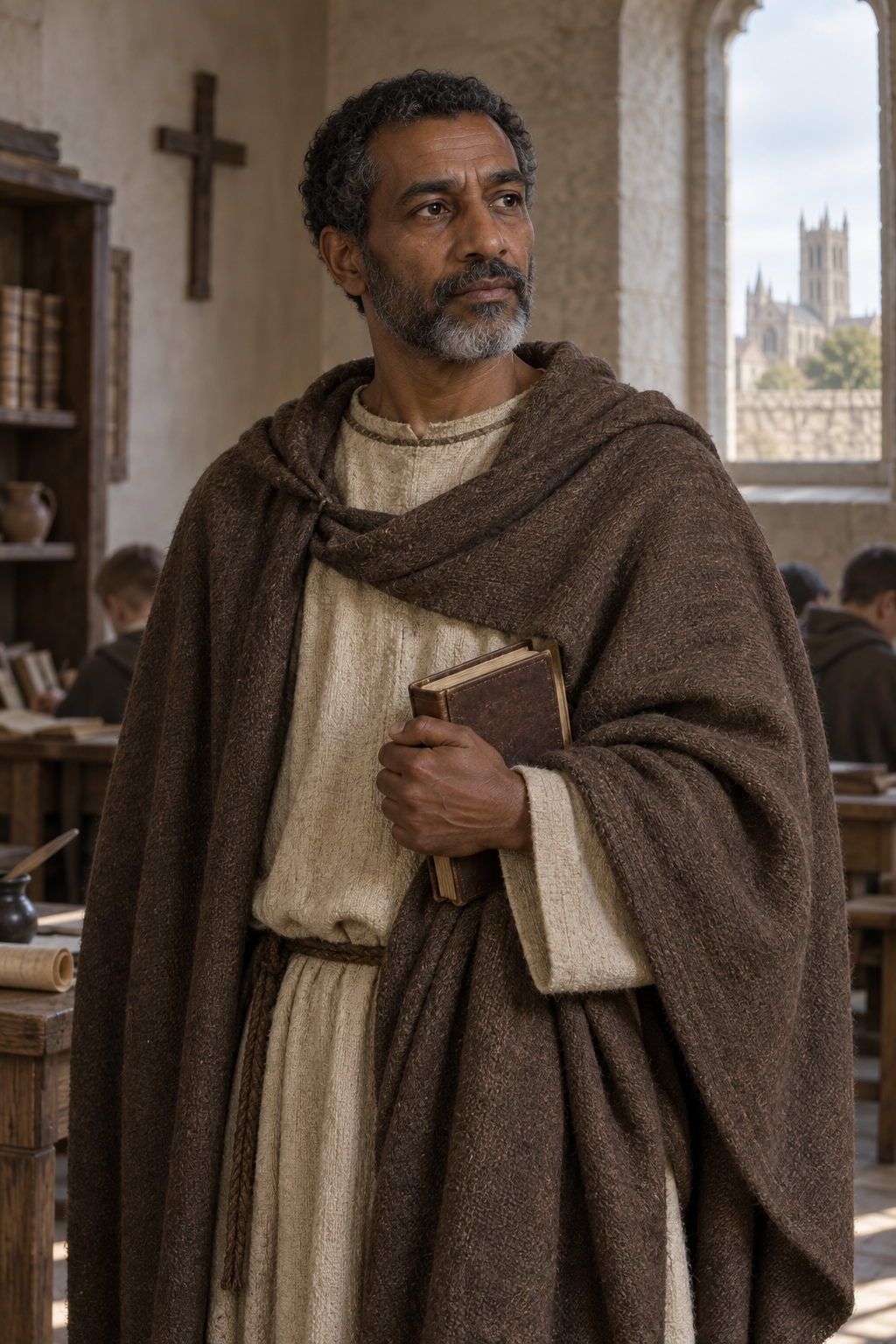
About Adrian of Canterbury
Bede’s Ecclesiastical History is the principal early narrative for Hadrian’s work in England. Bede calls him an African by birth and describes him as an abbot at a monastery near Naples. When Pope Vitalian sought someone to lead the English church, Hadrian declined the archbishopric and suggested Theodore of Tarsus instead. He agreed to accompany Theodore, drawing on his earlier travels through Gaul and his knowledge of Greek and Latin. The pair left Rome in 668 and traveled north, but political suspicions delayed Hadrian in the Frankish kingdom before he could cross to Britain.After Hadrian arrived, Theodore gave him the monastery of St Peter and Paul at Canterbury. Bede credits both men with teaching and organizing learning. They instructed students in Scripture and church practice, but also in grammar, astronomy, and ecclesiastical calculation. Their pupils, Bede says, became capable in Greek and Latin as well as their native language. This account connects Hadrian’s significance to the school and scholarly community at Canterbury rather than to a record of missionary journeys or political office.Bede’s closing account says Hadrian died after Theodore and was buried in the church of the Blessed Mother of God at his monastery. He notes that Hadrian had arrived in England thirty-nine years earlier and that Albinus, one of his students, succeeded him. The episode places his death around 709–710, but the text does not give a day or month. Bede presents him as a learned abbot and teacher whose students carried that education forward. His African origin is stated broadly, with no reliable source here for a more exact birthplace.
Wondering how to weigh the stories and sources? Learn how to read a saint biography.