Biography
Augustine Webster
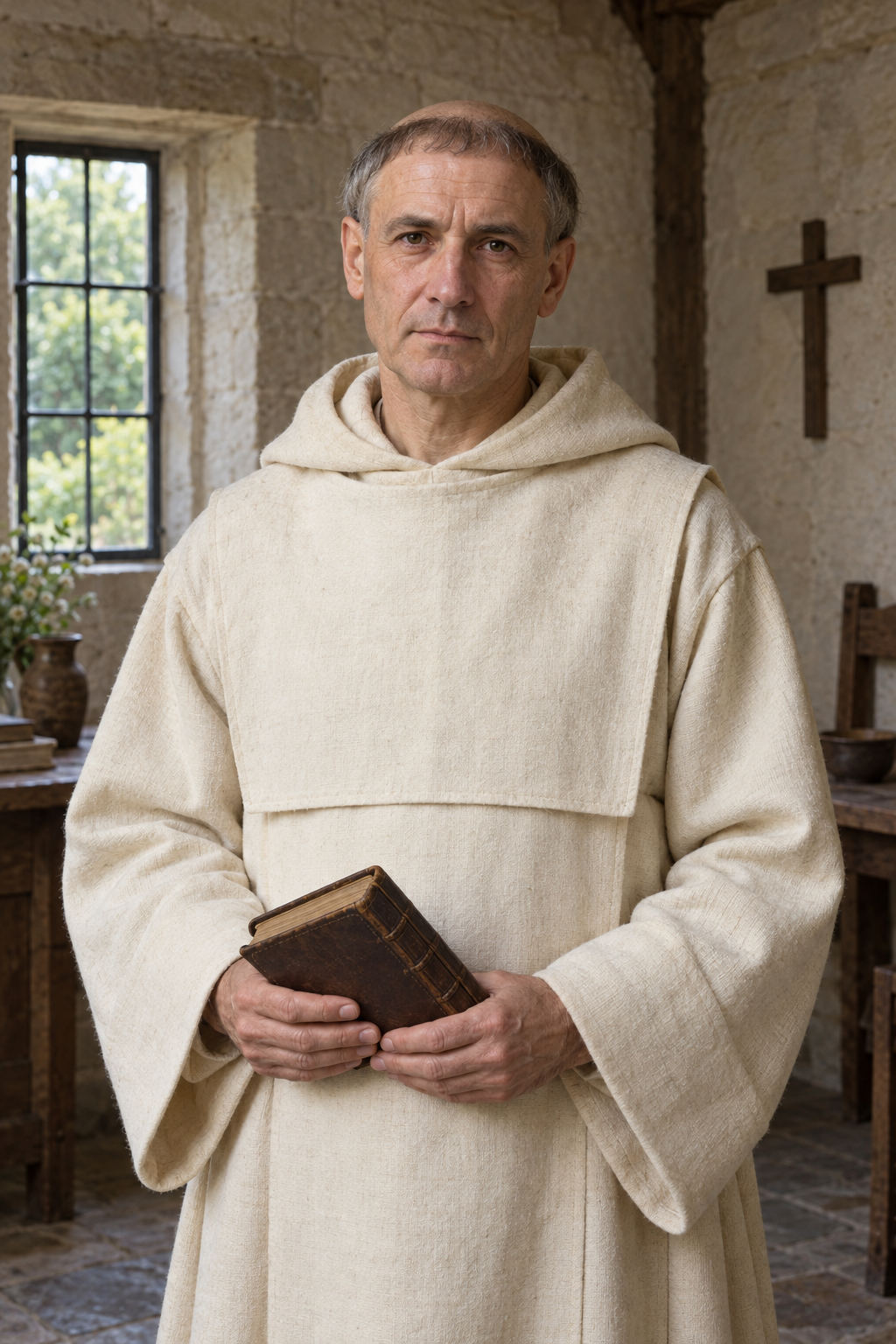
About Augustine Webster
Augustine Webster was the Carthusian prior of Axholme, in Lincolnshire. He appears in the records of the royal proceedings that condemned several religious men during Henry VIII’s assertion of authority over the Church in England.
His birth date and particular birthplace are unknown. The Catholic Church in Norway’s account identifies him as English and records his priestly ordination, but the surviving evidence used here does not establish a detailed early chronology.
The dispute cannot be reduced to a single, unchanging oath. Historian Jonathan Michael Gray distinguishes the oath of succession, acknowledgements of royal supremacy, and the later demands made on the Carthusians. He points out that the Act of Supremacy itself did not prescribe an oath. His wider interpretation explains why swearing mattered so deeply: an oath was understood as adding a spiritual bond to political obedience, with God invoked as its enforcer. Refusal, conditional agreement, and outward compliance could therefore have different meanings. This analysis makes Webster’s predicament clearer without treating every formula or occasion as identical. It also preserves the distinction between an individual’s beliefs and the legal or public acts used to test them. Gray’s argument concerns the means by which the Reformation was imposed and negotiated, as well as the doctrinal content of the changes.
In Maurice Chauncy’s received account, Webster and the other priors approach Cromwell in the hope of avoiding a confrontation with an expected royal commission. They express willingness to obey the king within the limits of divine law. Cromwell rejects a qualified response and demands an unreserved acknowledgement of royal headship. The priors’ position is presented as a matter of religious conviction. This account explains their attempt to find an acceptable response, but its reported conversations should be distinguished from the surviving official record of questioning.
That official record is specific. An interrogatory dated April 20, 1535 names Robert Lawrence and Augustine Webster and reports that both could not consent to or believe the king’s claim. The later indictment charges Webster, Houghton, Lawrence, and Richard Reynolds with denying royal supremacy at the Tower. The proceedings distinguish their case from the different accusations against John Hale and Robert Feron. They also record an initial plea of not guilty followed by a guilty plea on April 29. That change is part of the record and should not be omitted, although the record alone does not explain its circumstances or prove a change of religious belief.
Edward Keogh’s later Catholic study acknowledges the recorded change of plea and suggests coercion as its explanation. He draws on Chauncy and a later manuscript account when discussing pressure on the jury. This remains an interpretation of how the proceedings developed; it is not a circumstance explicitly established by the court summary itself. The different kinds of evidence need to remain visible together. A legal record can identify the charge, pleas, and sentence without settling every claim about the methods used to secure a conviction.
A letter from Archbishop Thomas Cranmer adds another perspective. Writing to Cromwell on April 30, he expresses surprise that Webster and Reynolds, whom he regards as learned men, have been convicted. He reports that Webster had previously promised not to support the disputed opinion; that is Cranmer’s assertion, not an independently confirmed account of Webster’s earlier position. Cranmer asks whether they could be sent to him to be persuaded by teaching rather than executed. His proposed outcome is a public change of conviction that would influence others. The letter therefore shows an attempt to secure conformity through persuasion, rather than an unconditional defence of their right to retain their beliefs.
An anonymous report preserved through a later copy describes the execution on May 4, 1535. It records hanging, beheading, and quartering, and remarks on the condemned men’s constancy. The report qualifies the suggestion that they saw one another’s executions; that detail should not be turned into an unqualified eyewitness claim. Webster’s death at Tyburn is also recorded in the judicial proceedings. His fate belonged to the punishment imposed for high treason, while the Catholic tradition remembers him as a martyr for refusing the king’s claim over the Church.
The report also says they were taken from the Tower to the place of execution and that parts of their bodies were subsequently displayed in public. It remembers them exhorting bystanders to behave well and obey the king in matters that did not conflict with the honour of God and the Church. This describes a limit placed on obedience, rather than a rejection of every duty to the king. It is the report’s account of the group, without separately preserved words from Webster.
In the England and Wales calendar described by the Catholic Church in Norway, he is remembered with the English Martyrs on May 4.
The Carthusian Order’s current history identifies Webster, Houghton, and Lawrence as saints and martyrs. It records their beatification in 1886 and canonization in 1970. Their names remain recorded together in the Order’s history.
Wondering how to weigh the stories and sources? Learn how to read a saint biography.