Biography
Áurea of San Millán
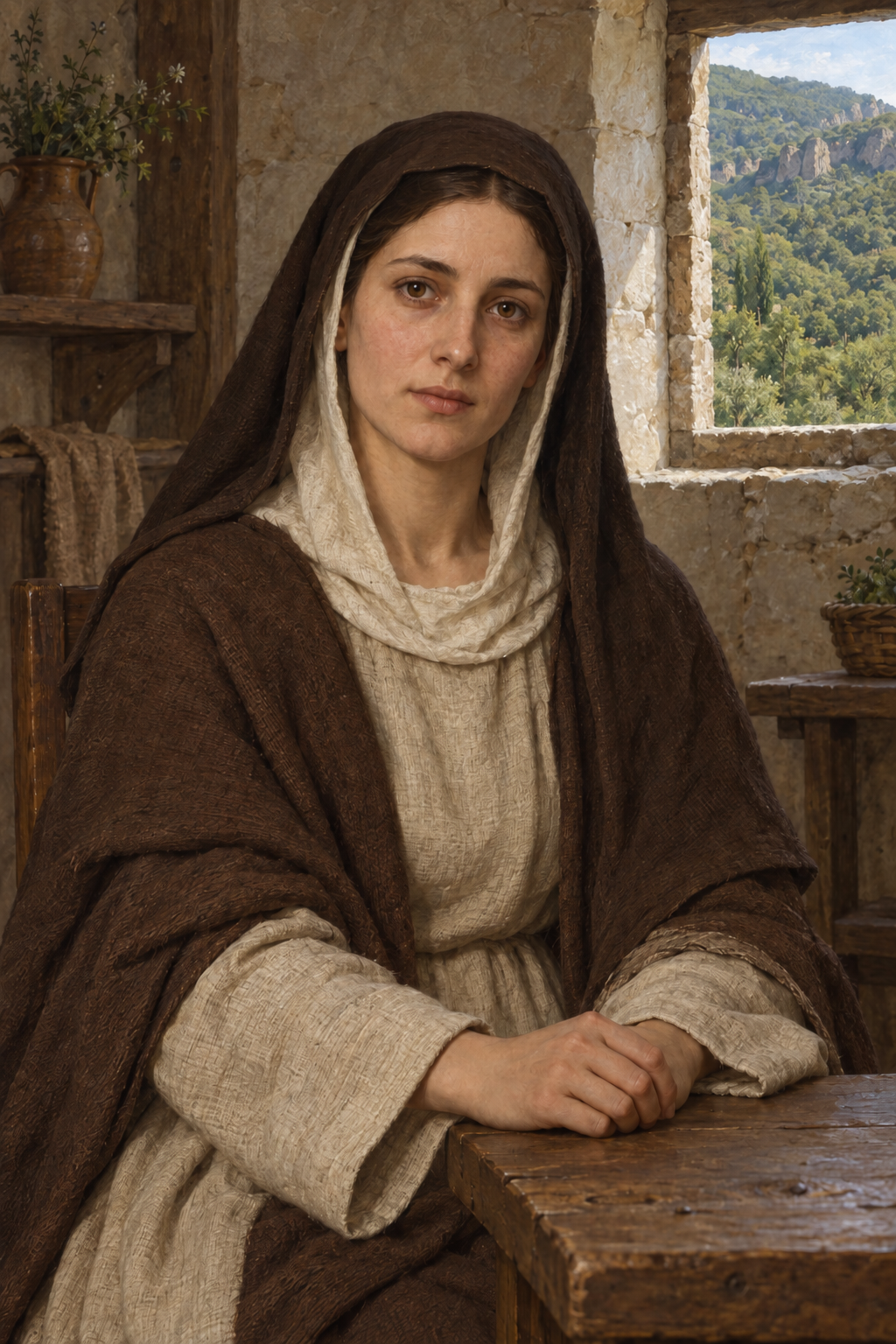
About Áurea of San Millán
Áurea, also known as Oria, is remembered as a recluse of San Millán. Berceo’s poem places her in a narrow cell, praying the psalms. Its story joins her religious life with that of her mother, Amunia, and portrays visions that belong to medieval hagiography.
Isabel Uría Maqua distinguishes her from another Oria associated with Dominic of Silos. This matters because combining the two women creates an apparent spiritual relationship that the separate narratives do not establish. Her chronological study reconstructs a birth around 1043 and death around 1070, while acknowledging that authorities also allow the dates to fall a year earlier. These are reconstructed years, rather than dates supplied by a surviving contemporary biography.
The account has passed through several stages of transmission. Uría’s introduction explains that Berceo used a Latin Life associated with the monk Munio, who knew Oria and her mother. That Latin text is lost. The surviving poem also has missing material and displaced stanzas, making its sequence harder to reconstruct. Its vivid scenes should therefore be read as literary and devotional testimony, with care about their historical precision.
In her study of the poem’s structure, Uría argues that its visionary episodes form the center of the work. She identifies seven sections and places the visit of Mary at the central point, with earlier and later scenes arranged around it. This is a reading of Berceo’s literary design, not confirmation that the visions occurred as described. Her proposed reconstruction of a missing passage likewise remains hypothetical. The work preserves an unusually sustained poetic remembrance of a religious woman.
The remembrance continues in Villavelayo, which identifies Áurea as its daughter and patron. The municipality describes a chapel dedicated to her and a celebration on 11 March. Its historical page also records summer patronal festivities, though its own notices differ about their exact scheduling. Those living customs show her place in local memory without independently proving the medieval life dates or identifying an original childhood house.
Wondering how to weigh the stories and sources? Learn how to read a saint biography.