Biography
Bavo of Ghent
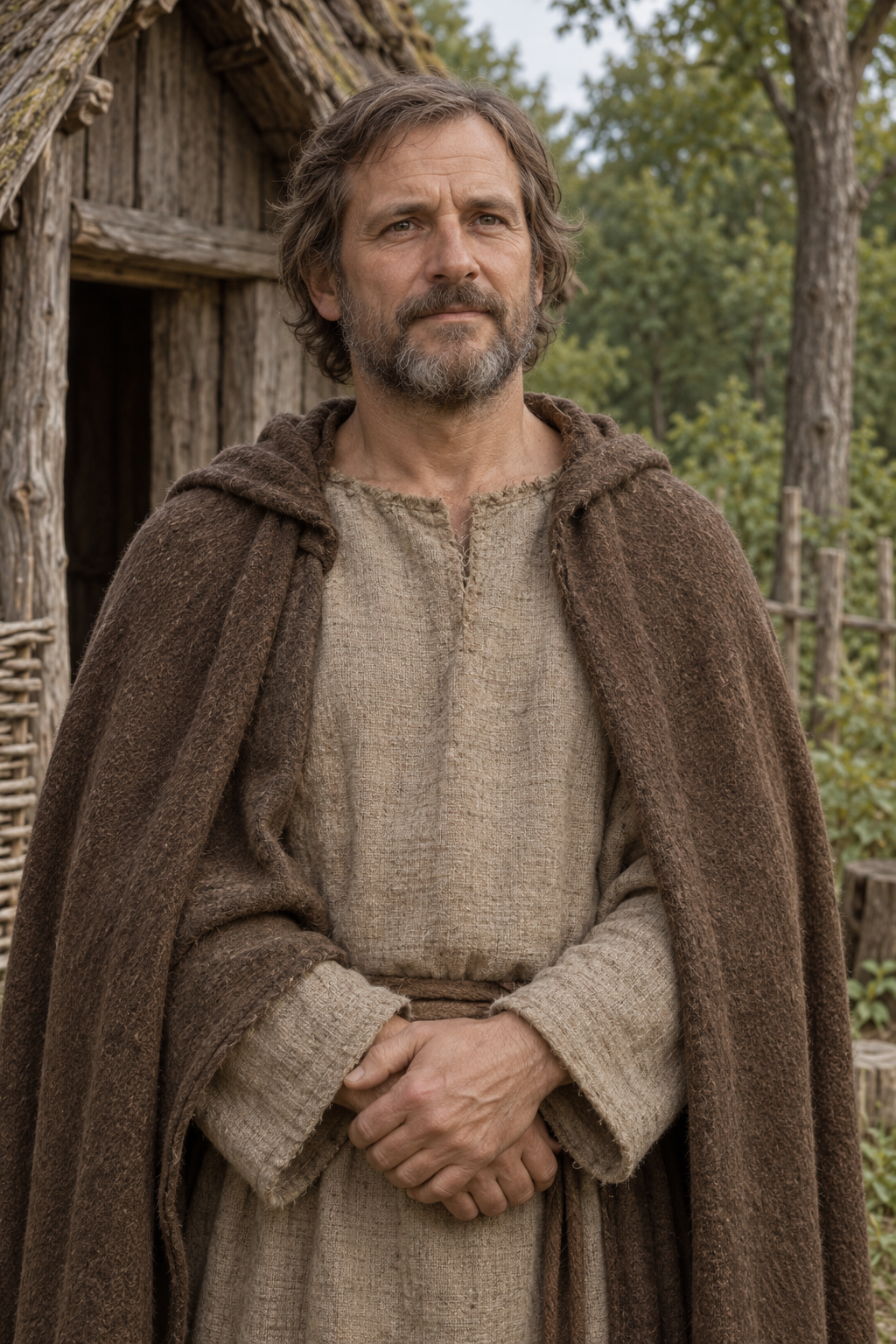
About Bavo of Ghent
Bavo, also called Allowinus, is remembered as a seventh-century recluse at Ghent. His medieval Life makes repentance, generosity and prayer central to his story.
After his wife’s death, the Life says, he sought Amand’s guidance. Amand answered with scriptural teaching about reconciliation, repentance and care for the poor. Bavo then distributed property to religious communities and to people in need. The narrative places him under Amand’s direction at Ghent. Its later pages describe his demanding life of seclusion and conclude with his burial at the community called Ganda.
Historian Adriaan Verhulst dates that Life to about 825, long after Bavo’s lifetime. His study distinguishes the recluse from a securely documented monk and examines the uncertain relationship between Bavo’s cell, his burial and the earliest city church. Verhulst proposes that the cell stood at the site of today’s cathedral, but presents the reconstruction as a historical hypothesis. The discussion accompanying his paper also records archaeological reservations. The evidence does not establish a precise modern point for Bavo’s dwelling or death.
The religious community’s remembrance of Bavo eventually helped give the abbey its familiar name. The buildings visible at the former abbey today belong to later periods. Ghent’s heritage account describes a Romanesque church dedicated in 1067 and marks its lost pillars with hornbeams. The surviving chapter room, refectory and other remains recall the community’s medieval life. Their history reaches beyond the lifetime of the recluse whose name the abbey carried.
The cathedral is another stage in that remembrance. Its official history records the abbey’s dissolution in 1536, the demolition of much of it after the Ghent uprising in 1540, and the chapter’s move to Saint John’s Church. That church took Bavo’s name and became the cathedral when the Diocese of Ghent was established in 1559. The present cathedral should therefore be distinguished from both the early religious community and its later abbey buildings.
Catholic remembrance keeps his feast on October 1. The received estimates of his birth around 590 and death around 655 remain traditional; other proposed death years range from 624 to 658. The early Life does not settle this chronology.
Wondering how to weigh the stories and sources? Learn how to read a saint biography.