Biography
Blathmac
About Blathmac
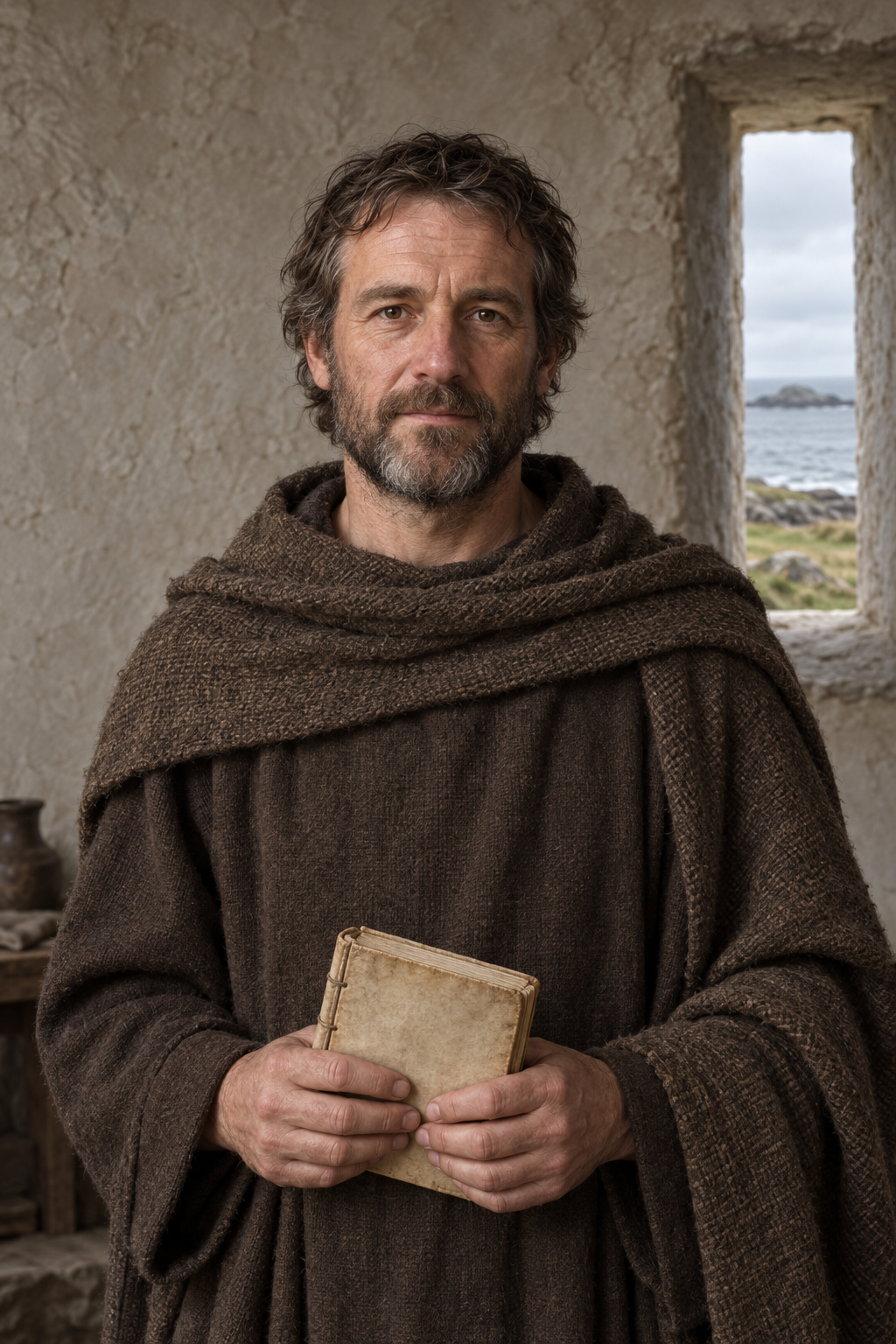
Blathmac was an Irish monk killed on Iona during a Viking raid. The Annals of Ulster identify him as the son of Flann and record his violent death there. Modern scholarship places that entry in 825. The notice is brief. It establishes the event without supplying the fuller story that later readers associate with his name.
That story survives in a Latin poem by Walahfrid Strabo. It presents Blathmac leaving a royal inheritance for religious life, then leading other monks and travelling to Iona. As danger approaches, he allows his companions to choose whether to remain or escape. The account describes a raid during worship and a demand for the precious shrine containing Columba’s remains. Blathmac refuses to disclose its hiding place and is killed. These details belong to the poet’s commemorative narrative; they are more extensive than the annalistic record.
The poem also shows how his memory travelled. Its opening addresses a patron named Felix and gives its author’s German background. The scholarly catalogue Geschichtsquellen describes the work as 172 hexameters and dates its composition within the period 827–840. It lists surviving manuscripts at St Gallen and a later Vatican witness. The account therefore belongs to a wider history of transmission, beyond the island where Blathmac died. The catalogue’s discussion of different proposed dates cautions against assigning the poem a precise year merely because its subject lived during the author’s lifetime.
Aidan MacDonald’s study draws a further distinction between leadership in the poem and a recorded office. Blathmac leads his companions, but the poem does not name his formal position at Iona. MacDonald also notes that Walahfrid wrote at a distance from the island. A survivor may have informed him, yet the surviving text does not identify such a witness. The account can be close to the event in time while still requiring care about the source of its details.
The description of the shrine raises a similar question. MacDonald considers its precious decoration and portability plausible, while asking whether the poet’s picture reflects information from Iona or reliquaries familiar to him elsewhere. The poem gives no precise location for the shrine’s ordinary housing. Those limits matter: the story does not amount to an archaeological plan of the monastery or an authenticated description of a surviving object. MacDonald nonetheless regards the shrine’s presence as central to the narrative.
Thomas Owen Clancy examines a different feature of Walahfrid’s account: its association of Iona with the Picts. He suggests that this wording may preserve a contemporary political relationship rather than a geographical mistake. His argument considers the reach of Pictish kingship into the western regions during the early ninth century. The proposal remains an interpretation of the evidence, not a precise jurisdiction supplied by Blathmac himself. It places the poem within a landscape of changing power and shows why even a short description of an island can carry historical significance.
Blathmac’s commemoration has more than one calendar history. MacDonald records 24 July in Irish martyrologies, while the Catholic Church in Norway’s reference gives 15 January and mentions 19 January as another date. The dates should not be turned into an exact day of death. His memory rests on the brief annalistic notice and a fuller poem that made the death of a monk on Iona known far beyond the island.
Wondering how to weigh the stories and sources? Learn how to read a saint biography.