Biography
Calogerus the Anchorite
About Calogerus the Anchorite
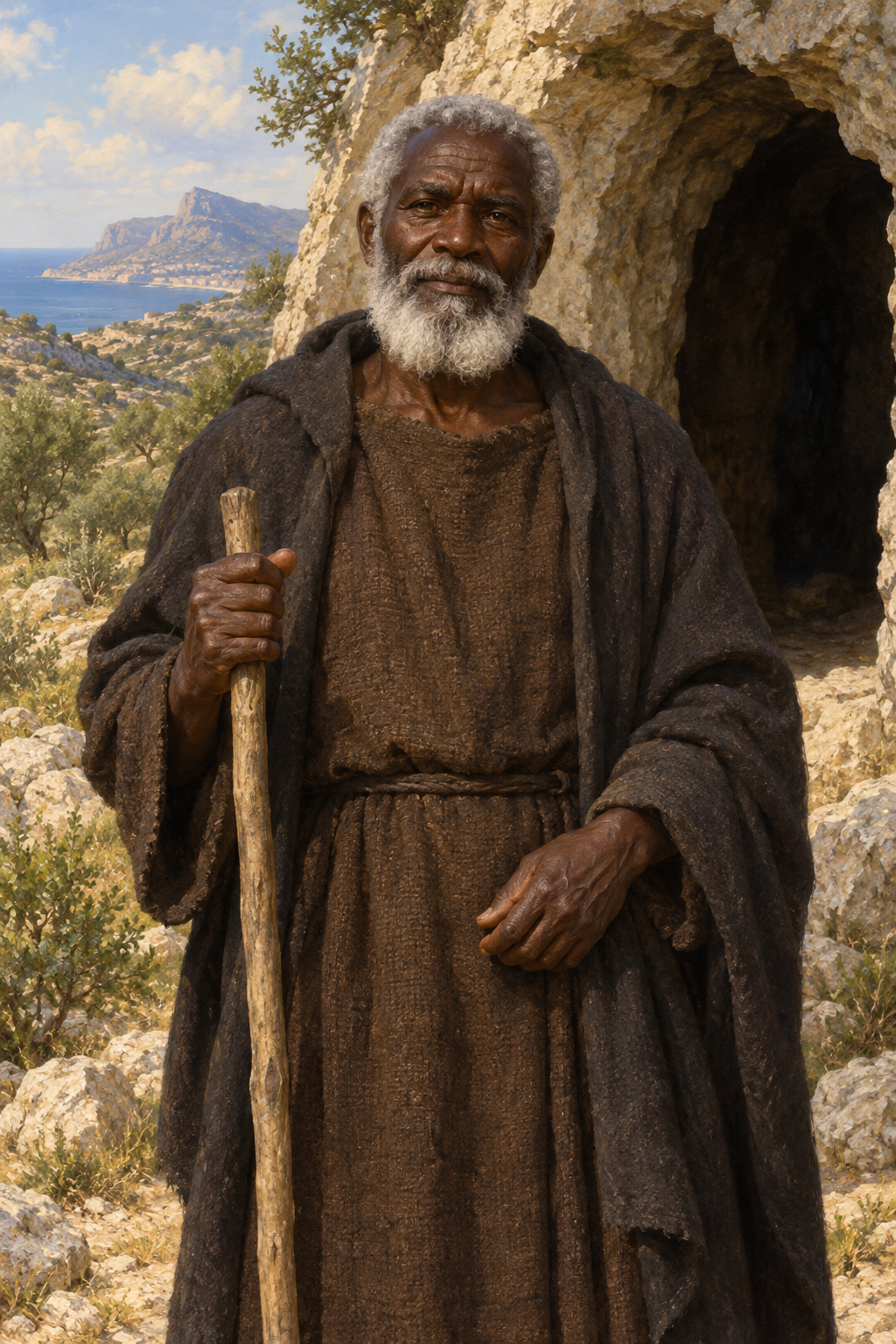
Calogerus the Anchorite, known in Sicily as San Calogero, is remembered as a hermit whose prayer was joined to care for the sick. At Sciacca, the sanctuary associates him with a cave on Mount Kronio. Its account describes the cave as a place of solitude, hospitality and religious teaching. This is the centre of a tradition that spread across Sicily, although many details of his life remain uncertain.
The principal early evidence is liturgical rather than biographical in the modern sense. The municipality of San Salvatore di Fitalia identifies hymns attributed to the monk Sergius and later Latin readings as the main sources. It acknowledges that the evidence does not permit a certain reconstruction of the saint’s history. Texts composed for worship preserve the qualities a community admired; they also need to be read with attention to their date and purpose.
The traditions disagree about his origins. A Greek hymn places his birthplace at Chalcedon, while another medieval Greek account makes him a refugee from Carthage. The Orthodox Encyclopedia surveys these differences and records a scholarly proposal that he lived in the eighth century. Other reconstructions place him much earlier. These are competing interpretations, not details that can safely be combined into a precise birth date or travel history.
The Sciacca tradition describes his arrival in Sicily with Gregory and Demetrius and remembers preaching alongside the care of those who were ill. His withdrawal to a cave did not, in this account, mean indifference to people outside it. Solitude prepared him for service. The sanctuary’s account presents that union of prayer and practical care as the enduring character of his vocation, rather than supplying a continuous record of his daily life.
Later stories add a deer that feeds the aged hermit and a hunter who becomes his helper. Korolyov explains that such episodes belong to the developed Latin legend and local folklore. The thermal springs associated with the saint were already known in antiquity. Claims that he first discovered them therefore require caution. His reputation as a healer should not turn every story about the landscape into an established event.
Devotion to Calogero became especially prominent in several Sicilian towns. The archconfraternity’s account describes pilgrimages, processions and offerings of bread, sometimes shaped to represent parts of the body for which healing was sought or gratitude expressed. At Agrigento, a story about the saint collecting bread for people in need accompanies the bread distributed during his festival. These customs show how communities have connected religious hope with illness, food and mutual help.
San Salvatore di Fitalia honours him as its patron. Its municipal account points to a reference in the diocesan synodal constitutions of 1537 and describes a later sanctuary that opened in 1901. Those records establish a local history of devotion without proving that the hermit personally lived there. His remembrance reaches beyond a recoverable itinerary: communities that adopted his name and feast made his example part of their own religious life.
Wondering how to weigh the stories and sources? Learn how to read a saint biography.