Biography
Eric IX of Sweden
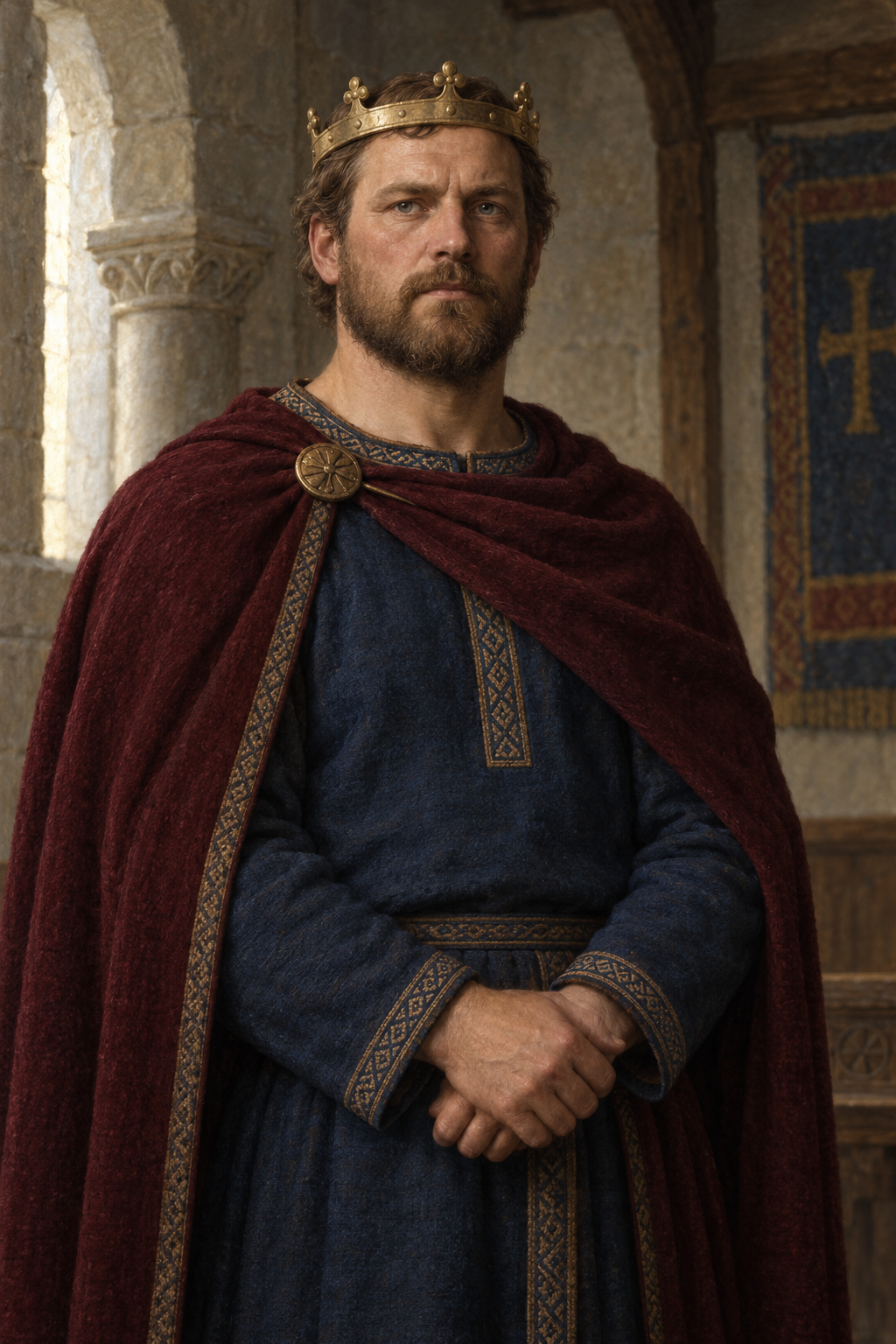
About Eric IX of Sweden
Eric IX of Sweden, also known as Erik Jedvardsson, was a twelfth-century king whose life is poorly documented. No records from his own lifetime survive. He was married to Kristina and was the father of the later king Knut Eriksson. His origins remain uncertain.
The surviving detailed legend was written long after his death. It portrays a just Christian ruler who supported the Church and campaigned in Finland with Bishop Henry. Its account of his death places him at Mass before an attack by a rival claimant. These are traditions preserved in a saint’s Life, rather than a contemporary record of his actions.
Eric’s cult developed after his violent death around 1160. Scholars disagree about the role of his descendants in promoting it. Papal indulgences later supported visits to his shrine, although he was never formally canonized.
The bones attributed to him at Uppsala Cathedral have also been studied scientifically. A 2014 investigation, published in 2016, identified twenty-three bones probably belonging to one man, together with an unrelated shinbone. Radiocarbon results were consistent with a death in 1160. The principal skeleton belonged to a man estimated to be thirty-five to forty years old. The researchers also found injuries inflicted around death, including a cut through a neck vertebra. They considered the injuries compatible with the later account of his killing. Compatibility does not establish the individual’s identity or independently verify every episode in the legend. The study reported that genetic analyses were still pending; it did not announce a definitive DNA identification.
The Catholic Church in Sweden honours Eric as the country’s patron and celebrates his feast on May 18. Its calendar points to the Vallentuna calendar of 1198 as early evidence of his veneration. It also preserves the traditional image of a just king who died after attending Mass. That remembrance gives his story its religious significance: the ruler is honoured for an ideal of Christian kingship, even though the historical details of his reign cannot all be recovered. His relics remain associated with Uppsala Cathedral.
Wondering how to weigh the stories and sources? Learn how to read a saint biography.